
Why Franchise My Business? The Smart Path to Rapid Growth
Franchise my business is a strategic decision that lets you scale your successful concept without the capital risk of opening every location yourself. Here’s what you need to know:
Quick Answer: How to Franchise Your Business
- Assess readiness – Ensure your business is profitable, replicable, and scalable
- Develop legal documents – Create your Franchise Disclosure Document (FDD) and franchise agreement
- Build your system – Document operations, create training programs, establish support infrastructure
- Market and sell – Develop a franchise sales strategy and attract qualified franchisees
- Launch and support – Onboard franchisees and provide ongoing assistance
Timeline: 90-120 days | Investment: $20,000-$100,000+
You’ve built a profitable business with a proven model. Now you’re wondering: How do I take this to the next level?
Franchising is how brands like McDonald’s and Subway expanded from single locations to global systems. It’s a proven path for business owners who want to grow faster by leveraging other people’s capital and talent. The process requires navigating legal requirements, developing comprehensive systems, and creating a sustainable model for you and your franchisees. This guide will walk you through it step-by-step.
As Monique Pelle-Kunkle, Vice President of Operations at Franchise Genesis, I’ve helped business owners franchise their businesses from concept to launch. My focus is making the complex process of franchising straightforward, strategic, and sustainable for entrepreneurs ready to replicate their success.
Common franchise my business vocab:
Is Your Business Ready for Franchising?
Before you franchise my business, an honest readiness check is crucial. Not every successful business is franchisable. The difference comes down to having a proven business model that’s profitable, scalable, and—most importantly—replicable.

When I work with business owners, I look for key indicators. Is the business financially viable? Does it have repeatable systems that don’t rely on the owner’s personal touch? Can it appeal to customers in different markets? These are the foundation of a successful franchise system. For a deeper understanding, check out What is Franchising?.
Assessing Your Business Model
Your business model is the blueprint for franchisees. Here’s what needs to be rock-solid:
- Consistent profitability: Franchisees are investing their future in your concept. They need to see that your model generates reliable profits.
- Market demand: Your business must have broad appeal beyond your hometown. We need to validate that customers in different cities will respond positively.
- Strong customer base: Recurring demand and brand recognition indicate a business that can build loyalty anywhere.
- Competitive advantage: What makes you different? Your unique value proposition is what will attract both customers and potential franchisees.
- Owner’s commitment: Franchising changes your role from serving customers to supporting franchisees. You must be ready to become a teacher, mentor, and brand guardian.
Evaluating Your Systems and Support
Franchising is about replication. If someone can’t follow your systems and get similar results, you don’t have a franchisable business.
- Documented processes: Your franchise’s instruction manual must detail every task, from customer greetings to closing procedures. If it’s all in your head, it’s not replicable.
- Training capabilities: You need a structured training program covering every aspect of the business, including initial and ongoing education.
- Supply chain management: Can your suppliers handle orders from multiple locations while maintaining quality? A robust supply chain is critical for consistency.
- Financial resources for support: You need capital to develop documents, create training, and build support systems before royalty payments create sustainable revenue.
- Technology systems: Modern tools for CRM, sales tracking, and communication are essential for maintaining consistency and providing support across your network.
The Pros and Cons of Franchising Your Business
Deciding to franchise my business is a major step with exciting advantages and real challenges. It’s a strategic growth model with trade-offs, and you need to understand both sides of the coin before diving in.

The Benefits: Fueling Rapid Growth
When you franchise your business, you multiply yourself through motivated partners who are invested in success.
- Faster expansion: You leverage the time, effort, and capital of franchisees to grow much more rapidly than you could alone.
- Franchisees fund their own businesses: This allows you to expand without taking on crippling debt or depleting your savings, diversifying operational risk.
- Increased brand awareness: Every new franchise is a billboard for your brand, solidifying your market position.
- New revenue streams: You generate income from initial franchise fees, ongoing royalties, marketing funds, and potentially the sale of proprietary products.
- Motivated owner-operators: Franchisees have invested their own money, which translates to better performance and customer service than you’d typically see with corporate managers.
- Economies of scale: As your system grows, you benefit from better purchasing power and more efficient marketing.
To dig deeper, check out our insights on the Benefits of Franchising.
The Drawbacks: Understanding the Challenges
Franchising also comes with genuine challenges that you must be prepared for.
- Upfront investment: You’ll need capital for legal fees, operations manuals, training programs, and marketing materials, often ranging from $20,000 to over $100,000.
- Legal complexity: The industry is heavily regulated by federal and state laws. Compliance is mandatory, and mistakes can be costly.
- Reduced control over daily operations: Franchisees are independent business owners. You set the standards, but you can’t dictate every daily decision.
- Ongoing support obligations: Your success depends on your franchisees’ success. You have a continuous responsibility to provide training, marketing, and operational guidance.
- Potential for disputes: Conflicts over standards, territories, or support can arise. Clear agreements and a dispute resolution process are essential.
- Slower initial profit timeline: Due to high upfront costs and the time it takes to sell and onboard franchisees, the profit timeline for a new franchisor can be slower than anticipated.
The Essential Steps to Franchise My Business
So you’ve decided to franchise my business. Where do you start? The process unfolds in three major phases: legal and financial groundwork, building your system, and then marketing and selling your opportunity. Skipping steps can create legal problems down the road.

Step 1: Legal and Financial Groundwork
This phase establishes the framework that protects both you and your future franchisees.
- The Franchise Disclosure Document (FDD): This is a legal document mandated by the Federal Trade Commission that provides full transparency about your franchise opportunity. It covers 23 specific sections, must be updated annually, and is governed by The FTC’s Franchise Rule.
- Your Franchise Agreement: This is the contract defining the relationship, covering fees, territory rights, support obligations, and brand standards.
- Protect your intellectual property: You must register your trademarks (name, logo, taglines) to enforce brand standards.
- Establish your financial structure: Determine your initial franchise fee, ongoing royalties, and any marketing fund contributions. These numbers must be attractive to franchisees while funding your support system. Learn more at How Much Does It Cost to Franchise My Business?.
- Form a separate legal entity: Creating a separate LLC or corporation for your franchising operations can protect your assets and simplify financial reporting.
Step 2: Building Your Franchise System
Now, you’ll turn your successful business into a replicable system.
- The operations manual: This is your comprehensive guide documenting every aspect of running the business, from opening procedures to quality standards. It’s a confidential, living document essential for consistency. We cover this at Franchise Operations Manual.
- Training programs: Develop comprehensive initial and ongoing training to transform your manual into franchisee skills.
- Your support infrastructure: Build a system for franchisee support, including site selection, grand opening assistance, marketing guidance, and regular check-ins.
- Quality control standards: Establish clear metrics and evaluation processes to protect your brand and ensure a consistent customer experience across all locations.
- Technology systems: Implement consistent POS, CRM, and other software to streamline operations and maintain quality control.
Step 3: Marketing and Selling Your Franchise
With a solid system in place, you need to find the right people to join it.
- Franchise sales strategy: Define your growth goals, target markets, and what makes your opportunity compelling.
- Define your ideal franchisee profile: Identify the capital requirements, business acumen, and personal qualities (like being coachable and resilient) of your ideal candidate.
- Marketing materials: Create a franchise opportunity page on your website, brochures, and presentations to tell your story.
- Lead generation: Use a multi-channel approach, including franchise brokers, SEO, paid advertising, and PR to attract prospects.
- The findy process: Guide prospects through a structured evaluation journey. If they are a good fit and meet your criteria, you’ll award them a franchise.
Key Considerations and Success Factors
Franchising is about building a lasting network of successful businesses that carry your brand forward. This requires a long-term vision, strong franchisee relationships, and continuous innovation.

Franchising vs. Other Growth Strategies: Understanding the Difference
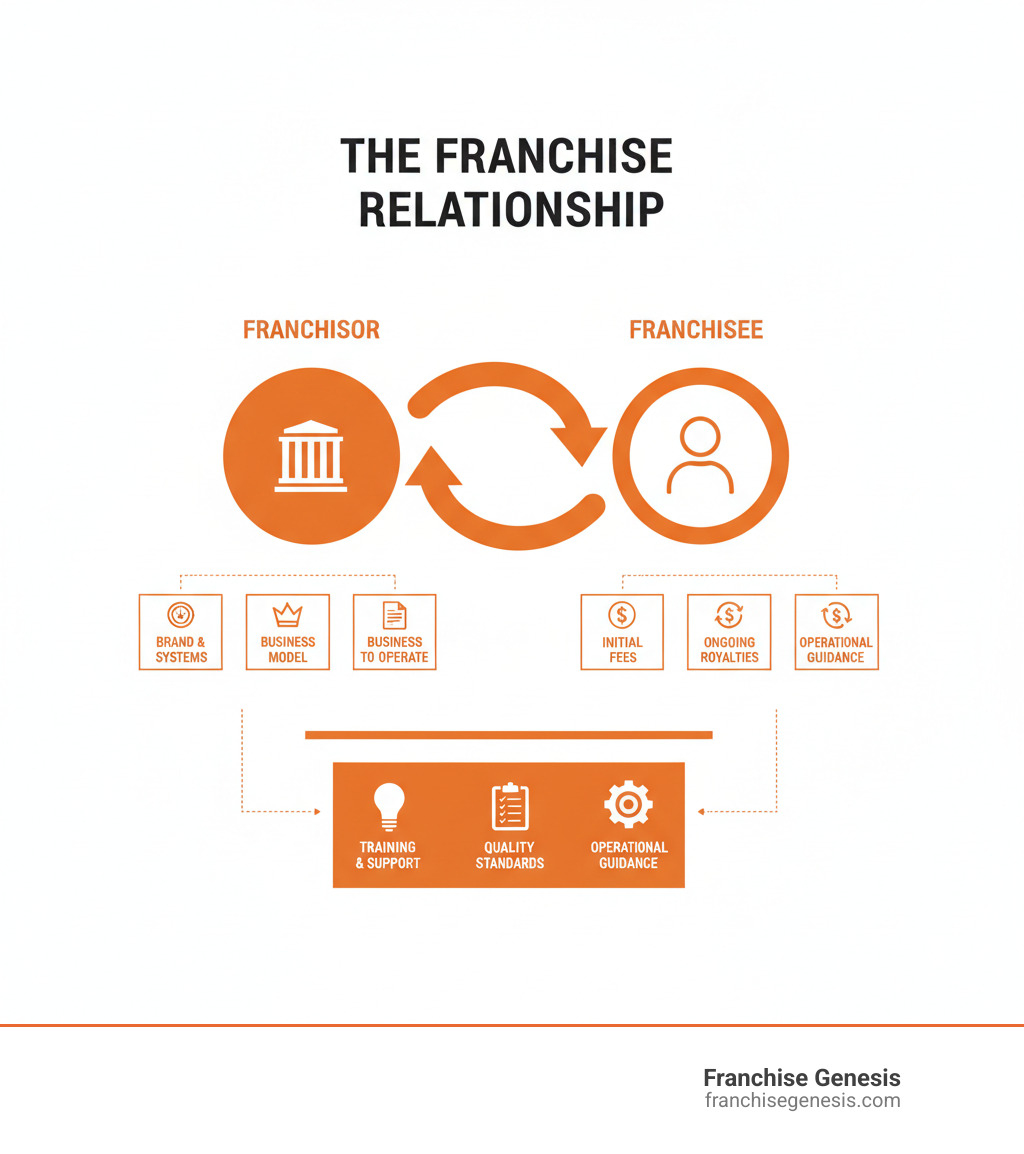
When you franchise my business, you choose a path different from opening corporate-owned locations. Instead of maintaining complete control and shouldering all financial risk, you partner with independent business owners who invest their own money. Your role shifts from managing employees to supporting fellow entrepreneurs. Your revenue comes from initial franchise fees and ongoing royalties, and the entire relationship is governed by a complex legal framework designed for systematic replication.
Timeline and Costs: What to Expect When You Franchise My Business
How long does it take to franchise my business, and what will it cost?
The foundational work—strategic planning, legal documentation, and operations manual creation—has a typical timeline of 90 to 120 days. More complex businesses may take longer.
Development costs typically range from $20,000 to over $100,000. This covers legal fees for your FDD and franchise agreement, consulting fees for strategic and operational development, and a marketing budget to attract candidates. You’ll also have state registration fees in certain states. For a detailed breakdown, see How Much Does It Cost to Franchise My Business?.
Critical Factors for Success When You Franchise My Business
Thriving franchise systems focus on these critical factors:
- Strong unit economics: If your franchisees aren’t making money, your system will fail. Each location needs healthy profit margins and a clear path to ROI.
- Excellent franchisee support: Your success is tied to theirs. Comprehensive initial training and ongoing, proactive support are essential.
- Effective marketing: You must market the franchise opportunity to attract qualified candidates and provide franchisees with local marketing tools that work.
- Brand consistency: The customer experience must be the same at every location. This is maintained through your operations manual, training, and quality control.
- Positive franchisee validation: When prospects talk to your current franchisees, what will they hear? Happy, successful franchisees are your best sales tool.
- Continuous innovation: Stay ahead of market changes and competitors by refining systems and developing new products or services.
- Long-term vision: Franchising is a commitment to sustainable expansion, brand integrity, and lasting franchisee relationships. The International Franchise Association is a great resource for industry best practices.
Frequently Asked Questions about Franchising a Business
When considering the leap to franchise my business, you likely have many questions. Let’s tackle the most common ones.
What are the different types of franchise models?
When you’re ready to franchise my business, understanding the different models helps you choose the right approach.
- Business Format Franchise: This is the most common model, where you provide the entire business system: brand, operating procedures, marketing, and support. It offers the strongest brand consistency.
- Product Distribution Franchise: This model focuses on licensing your trademark and selling your products through franchisees who act as distributors, like car dealerships. You have less control over their daily operations.
- Multi-Unit Franchise Development: In this model, a qualified franchisee commits to opening multiple locations in a specific territory. This accelerates growth and establishes a strong regional presence quickly.
Do I need to hire a franchise attorney or consultant?
Yes, you need both, as they play two very different but essential roles.
A franchise attorney is non-negotiable. They are legally required to prepare your Franchise Disclosure Document (FDD) and franchise agreement, ensuring compliance with federal and state laws. They protect you from legal pitfalls and handle trademark registration. Skipping this step is a critical mistake.
A franchise development company like Franchise Genesis is your strategic partner. While the attorney handles legal compliance, we focus on business strategy. We assess your readiness, develop your operations manual, design training programs, create your marketing strategy, and build the support infrastructure your franchisees need to succeed. We work with your attorney to ensure the legal documents reflect a sound, profitable business strategy.
In short: your attorney ensures you are legally compliant, while we ensure your franchise system is strategically and operationally excellent.
How do franchisors make money?
When you franchise my business, you create multiple revenue streams that build long-term wealth.
- Initial franchise fees: A one-time, upfront payment from franchisees ($20,000 – $50,000+) that grants them the right to use your brand and receive initial training. This helps offset your development costs.
- Ongoing royalties: The core of your revenue. This is a recurring fee, typically 4% to 8% of a franchisee’s gross sales, for the continued use of your brand and ongoing support.
- Marketing fund: Franchisees often contribute 1% to 3% of sales to a collective fund for national or regional advertising, benefiting the entire system.
- Product or supply sales: You may generate revenue by selling proprietary products or supplies directly to franchisees or through approved vendors.
- Vendor rebates: As your system grows, you can negotiate rebates from suppliers for directing a large volume of business their way, creating another revenue stream.
Conclusion
You’re serious about taking your business to the next level. Deciding to franchise my business is a defining moment that opens the door to incredible growth possibilities.
Franchising allows you to expand your brand and revenue by partnering with motivated entrepreneurs who invest in your proven system. You create opportunities for others to succeed alongside you. It’s growth with leverage.
However, it’s not a shortcut. Franchising demands meticulous preparation: a profitable and replicable model, documented systems, and a solid legal foundation. You’ll shift from running a business to building a brand and supporting franchisees who depend on your guidance.
The good news? You don’t have to do it alone. Franchise Genesis exists to walk this path with you. We know the pitfalls and how to set you up for sustainable, long-term success.

The journey from business owner to franchisor is transformative. When you see your brand thriving in new locations and hear success stories from your franchisees, you’ll know it was worth it.
Ready to take the next step and grow your business through franchising? Learn how to franchise your business with us.