At a Glance: A franchise operations manual is a detailed document that outlines the day-to-day operations, legal obligations, and best practices of a franchise. It serves as both a guide and a legal reference for franchisees and franchisors. This manual helps maintain consistency and efficiency across all franchise locations.
What is a Franchise Operations Manual?
A franchise operations manual is the backbone of any successful franchise system. It acts as a reference tool that provides step-by-step instructions for running a franchised business.
This document serves multiple purposes at once. It functions as an instruction guide for new franchisees. It works as a legal document that outlines agreements and requirements. It also acts as a training resource for staff at every franchise unit.
The manual helps protect brand identity across all franchise locations. For any business owner considering franchising, the operations manual forms the foundation that makes replicating your business model possible.
How the Operations Manual Works With the FDD and Franchise Agreement
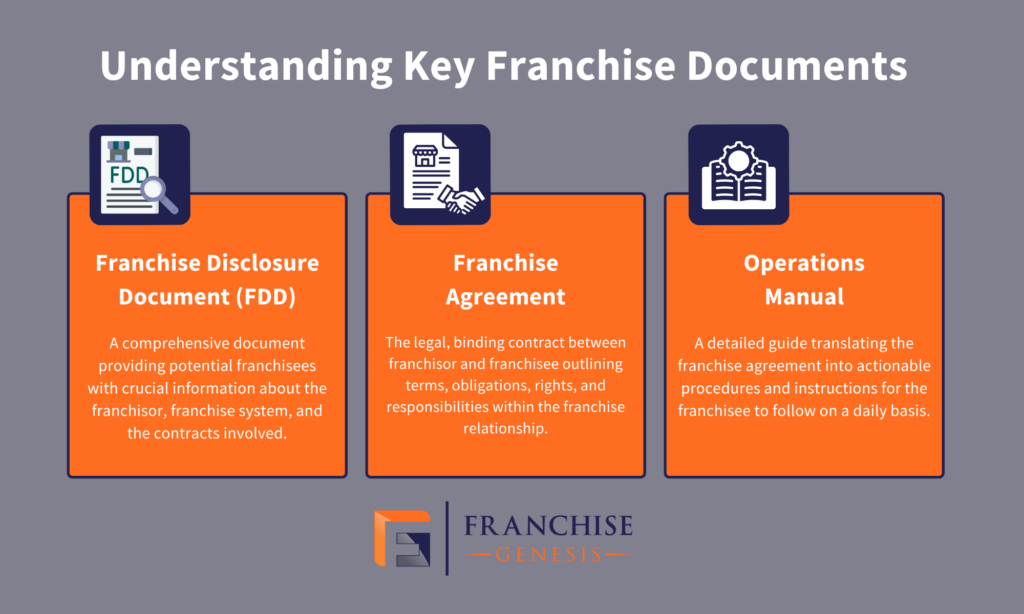
The franchise operations manual works alongside two other legal documents: the Franchise Disclosure Document (FDD) and the Franchise Agreement.
The FDD provides potential franchisees with detailed information about the franchisor before any proposed franchise sale. The franchise agreement is the binding contract that establishes the franchise relationship between the franchisor and franchisee.
The operations manual translates these legal documents into practical, everyday guidance. While the franchise agreement states what franchisees must do, the operations manual shows them how to do it. The operations manual is a binding part of the franchise system and can be referenced in legal disputes related to compliance.
Who Uses a Franchise Operations Manual?
Several groups rely on the franchise operations manual daily.
- Franchisors use the manual to communicate expectations and maintain quality control.
- Franchise owners reference the manual for guidance on running their franchise unit.
- First-time franchisees use it during initial training to learn the business model quickly.
- Staff and independent contractors follow the manual for their specific job duties.
- Potential franchisees review portions of the manual during the evaluation process.
Components of a Franchise Operations Manual
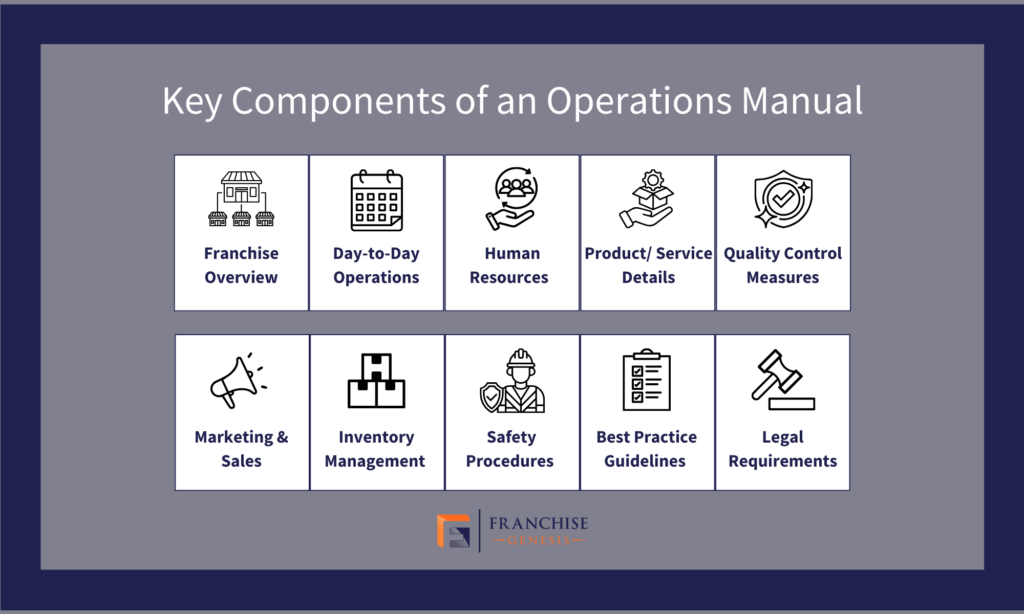
A well-structured franchise manual covers all aspects of running the business. Here are the key components:
1. Franchise Overview
Provides a summary of the franchise and the foundational business model that guides it. This includes the mission, vision, and values that form the backbone of the franchise identity. These elements should align directly with operational processes to maintain corporate culture and brand consistency across all franchise locations.
2. Day-to-Day Operations
This segment provides a clear description of the daily activities of the franchise. Think of it as a recipe for running franchise operations. Instructions should be step-by-step and, if necessary, hour-by-hour.
4. Product or Service Details
Detailed information on what the franchise offers, whether a product or service. This section may go into granular details depending on the complexity of what the franchise is selling.
5. Quality Control Measures
Provide procedures and practices designed to maintain product and service quality. These measures increase customer satisfaction and maintain brand consistency across the franchise network.
6. Marketing and Sales
A clear guide on how advertising campaigns should be conducted, along with sales techniques, customer management, and adherence to brand standards. This section should also address co-op advertising arrangements and shared marketing costs between franchisors and franchisees if applicable.
7. Inventory Management
An overview of how to manage stock effectively. This includes preventing excessive or inadequate stock levels and explaining ordering and restocking procedures.
8. Safety Procedures
Details regarding how franchise units should adhere to safety policies to prevent accidents at each franchise location.
9. Best Practice Guidelines
Highlight proven methods and operating practices that franchisees should follow to achieve maximum efficiency and profitability.
10. Legal Requirements and Agreements
Explain legal issues about the franchise, such as the franchise agreement, confidentiality agreement, and other legal requirements related to operating a franchise location. Include intellectual property protection guidelines covering trademarks and how franchisees can use the franchisor’s branding elements. Address ongoing legal requirements as well.
The operations manual should include points of contact for franchisees who need clarification or experience difficulties. Outlining key personnel and their contact details helps franchisees immensely when questions arise.
Step-by-Step Guide to Creating Your Franchise Operations Manual
Follow these steps to build an effective franchisee operations manual from scratch.
Step 1: Identify Areas to Cover
Start by listing all operational areas that need documentation. This includes inventory management, marketing materials, customer service, and quality control procedures.
Step 2: Develop Procedures for Each Area
Write clear, detailed procedures for each operational area. Franchisees should be able to implement these instructions effectively without guesswork or missing steps.
Step 3: Collaborate with Legal Experts
Work with franchise attorneys to make sure the manual meets legal standards. Include necessary franchise agreements, confidentiality clauses, and compliance guidelines.
Step 4: Organize the Manual for Easy Use
Break down the manual into clear sections. Use tables of contents, checklists, and templates to make it user-friendly. A well-organized manual serves as a better reference tool.
Step 5: Test and Review the Manual
Share the manual with a pilot franchisee and gather feedback on usability. Make adjustments based on their experiences and any challenges they faced during implementation.
Step 6: Roll Out the Manual
Distribute the manual to your franchise network. Make sure all franchisees have access to the most current version.

How to Update and Access Your Franchise Operations Manual
Franchise operations manuals require regular updates to stay relevant.
- Digital Formats: Many franchise systems now use digital manuals. Digital versions allow instant updates across all franchise locations and make version control simpler.
- Update Protocols: Establish a schedule for reviewing the manual. Quarterly reviews work well for most franchise systems.
- Version Control: Always date your manual and track version numbers. Franchisees need to know they are using the most current information.
Challenges and Solutions in Creating a Franchise Operations Manual
Building a franchise operations manual presents several challenges.
Challenge: Balancing Legal and Practical Content
Solution: Work with a franchise consultant who understands both aspects.
Challenge: Keeping Up With Business Changes
Solution: Build flexibility into your update process. Schedule regular reviews.
Challenge: Starting From Scratch
Solution: Use a manual template as a starting point. Customize it for your specific franchise business.
Challenge: Addressing Legal Complexities
Solution: Partner with franchise lawyers who specialize in this area.
Best Practices for Using Your Franchise Operations Manual
- Train with the Manual: Use the operations manual as your primary training resource.
- Reference It Regularly: Encourage franchisees to consult it whenever questions arise. This improves customer experience by maintaining consistency.
- Report Gaps and Provide Feedback: When franchisees encounter situations the manual does not address, they should report these gaps. Feedback keeps the manual practical and relevant.
- Stay Current: Always use the latest version. A restaurant franchise especially needs current food safety information.
Operations Manual Support from Franchise Genesis
Creating a franchise operations manual requires expertise in multiple areas. Franchise Genesis provides the support you need throughout this process.
Our team analyzes your current business model to identify what elements will work in your franchise system. We help you build a comprehensive manual that covers every aspect of your operations.
Our services include:
- Sound legal proceedings through our third-party franchise lawyers
- Operating procedures and policies development
- Marketing materials and sales guidelines creation
- Brand identity and standards documentation
Whether you are a first-time franchisor or expanding an existing franchise network, we can help.
Frequently Asked Questions
What is a franchise operations manual?
A franchise operations manual is a detailed document that outlines how to run a franchised business. It includes operational procedures, brand standards, training programs, and legal requirements.
How often should a franchise operations manual be updated?
Most franchise systems should review their manuals quarterly. Updates should occur whenever regulations change or the business model evolves.
What is the difference between a franchise agreement and the operations manual?
The franchise agreement is a legal contract between the franchisor and the franchisee. The operations manual explains how to fulfill the obligations in that agreement.
Can franchisees share their operations manual?
No. The operations manual contains proprietary information protected by confidentiality agreements.
What should be included in a franchise operations manual?
A franchise manual should include: franchise overview, daily operations procedures, brand standards, marketing guidelines, customer service protocols, quality control measures, inventory management, safety procedures, and legal requirements.
Do I need a franchise consultant to create an operations manual?
While not required, a franchise consultant significantly improves the quality of your manual.
What happens if there are missing steps in the manual?
Missing steps lead to inconsistent operations across franchise locations. Franchisees should report gaps immediately.