
At a Glance: A franchise agreement is the binding contract covering term length, renewal rights, territory definitions, operating standards, royalty payment structures, termination provisions, and transfer requirements. Understanding these components helps both the franchisor and franchisee establish clear expectations, responsibilities, and business operations from day one.
What Is a Franchise Agreement?
A franchise agreement is a legal document that governs the franchise relationship between a franchisor and franchisee. This contract defines how the franchise business will operate and outlines both parties’ rights and responsibilities throughout their partnership.
The agreement covers everything from the initial franchise fee to ongoing fees, intellectual property usage, and operational standards. It protects the franchisor’s brand while giving the franchisee the right to operate under the brand, sometimes with a protected or exclusive territory, depending on the agreement.
For any prospective franchisee, this document represents the foundation of their investment. For business owners looking to expand through franchising, it establishes the framework for growth.
Why Understanding the Franchise Agreement Matters
Reading and understanding your franchise agreement prevents misunderstandings and legal disputes down the road. Many potential franchisee candidates rush through this process, only to discover unexpected legal obligations later.
Working with a franchise attorney before signing provides valuable legal advice. A franchise consultant can also help you interpret complex terms and negotiate favorable conditions.
Key Components of a Franchise Agreement
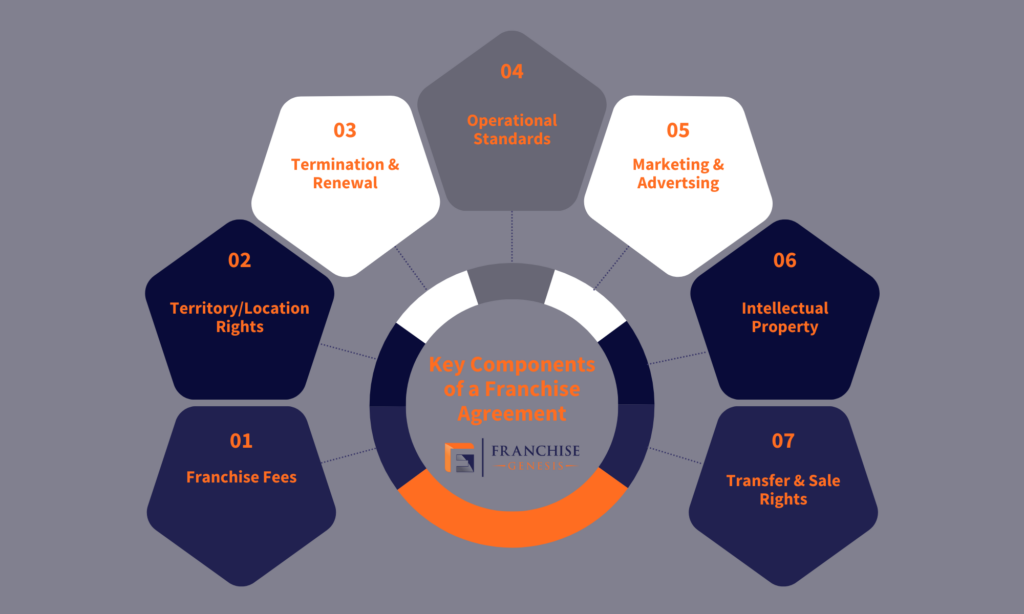
Franchise Fees
Every franchise agreement outlines the financial commitments required from the franchisee. These typically include:
- Initial franchise fee: A one-time payment granting rights to operate under the brand
- Royalty payment: Ongoing fees calculated as a percentage of gross sales (usually 4% to 8%)
- Advertising contributions: Funds dedicated to national or regional marketing efforts
- Other required start-up fees: Additional costs for training, equipment, or technology systems
The initial investment varies significantly by franchise brand. Review the franchise disclosure document for detailed financial statements and cost breakdowns.
Territory and Location Rights
Territory definitions determine where a franchisee can operate and whether they receive an exclusive right to that market. However, not all agreements grant exclusivity. Some offer protected territories while others reserve rights for franchisor channels like online sales or alternate formats.
Key territory considerations include:
- Geographic boundaries (zip codes, counties, or radius from location)
- Population requirements
- Protection from company-owned outlets in your area
- Rights to open additional locations
- How your territory relate to any existing franchisee nearby
Without clear territory language, you may risk competing against your own franchise brand. This section deserves careful attention during your review.
Termination and Renewal
Most franchise agreements run for 5 to 10 years. The termination and renewal section covers:
- Agreement duration and renewal terms
- Conditions allowing either party to end the relationship early
- Cure periods for fixing violations before termination
- Financial obligations upon termination
- Rights to inventory, equipment, and customer lists
Understanding renewal requirements protects your long-term investment. Some agreements require franchisees to pay renewal fees, update their locations, or sign new terms calculated on an annual basis.
Franchisee and Franchisor Obligations
This section defines the franchisor’s obligations and what the individual franchisee must deliver in return.
Franchisor responsibilities typically include:
- Providing initial training programs
- Offering ongoing operational support
- Maintaining brand standards and marketing materials
- Supplying proprietary systems and technology
Franchisee responsibilities typically include:
- Meeting customer service standards
- Following operational procedures
- Submitting regular reports and financial data
- Maintaining facility appearance and equipment
The Federal Trade Commission requires franchisors to disclose their support obligations in the franchise disclosure document. Compare what different brands offer before making your decision.
Marketing and Advertising
Franchise agreements specify how marketing funds are collected and used. Most systems require contributions to a national advertising fund, typically 1% to 3% of gross sales.
The agreement should address:
- Required contribution amounts
- How funds are allocated
- Local marketing requirements
- Approval process for custom advertising
- Use of brand logos and messaging
Some agreements allow franchisees to give input on marketing decisions. Others maintain strict corporate control. Ask a current franchisee about their experience with the brand’s marketing support.
Intellectual Property
The intellectual property section grants franchisees rights to use the franchisor’s trademarks, logos, proprietary systems, and trade secrets. This access is what makes the franchise opportunity valuable.
Typical provisions include:
- Trademark and logo usage guidelines
- Proprietary recipe or process protections
- Software and technology licensing
- Confidentiality agreement requirements
- Restrictions on using intellectual property after termination
Brand consistency across all locations depends on strict intellectual property controls. Violating these terms can trigger termination, though most agreements include notice and cure periods, except for certain incurable defaults.
Training and Support
The franchisor’s obligation to provide training appears in both the franchise agreement and the disclosure document. Initial training programs typically cover:
- Operations and daily procedures
- Point-of-sale systems and technology
- Customer service standards
- Marketing and sales techniques
Beyond initial training, look for ongoing support commitments.
Transfer and Sale Rights
Eventually, you may want to sell your franchise business or transfer ownership to a family member. Every franchise owner should understand this section, which outlines:
- Conditions for selling or transferring the franchise
- Franchisor’s right of first refusal
- Approval process for new owners
- Transfer fees and requirements
- Training obligations for new owners
Most franchisors maintain strict control over transfers to protect brand quality.
Franchise Agreement and Its Relationship with the Operations Manual and FDD
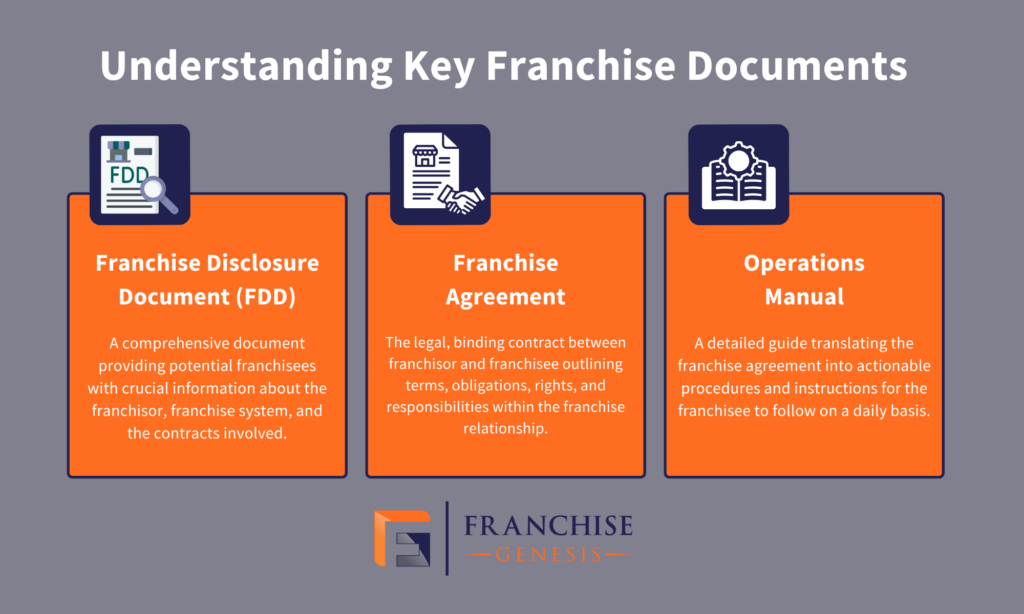
The Franchise Operations Manual
The Franchise Operations Manual serves as the day-to-day playbook for running your franchise business. While the franchise agreement establishes the legal framework, the FOM provides detailed guidance on:
- Opening and closing procedures
- Product preparation or service delivery standards
- Employee hiring and training protocols
- Inventory management systems
The franchise agreement typically incorporates the FOM by reference, making compliance mandatory. Franchisors update these manuals regularly, and franchisees must follow current versions.
Ask what preview or summary materials are available, and confirm how and when you will receive the manual and updates.
The Franchise Disclosure Document
The Franchise Disclosure Document (FDD) is a separate legal document required by the Federal Trade Commission. Franchisors must provide this disclosure document to any potential franchisee at least 14 days before signing agreements or accepting payment.
The FDD contains 23 required items with additional information, including:
- Franchisor background and litigation history
- Initial fees and ongoing fees breakdown
- Financial statements audited by independent accountants
- Contact information for current and former franchisee operators
- Earnings claims (if provided)
- Franchise registration status in applicable states
- Estimated initial investment (Item 7), including startup costs and funds needed to operate the business through the first three months
This document exists to protect prospective franchisee candidates from fraud. Review it carefully with your franchise attorney before proceeding.
Some states require franchise registration before selling franchises within their borders. Your FDD will indicate where the franchisor holds active registrations.
Compliance and Contractual Requirements
Franchise agreements must comply with federal and state franchise law. These contracts carry significant legal obligations for both parties.
Compliance elements typically include:
- Disclosure obligations tied to the FDD
- Insurance requirements and coverage minimums
- Performance standards and reporting requirements
- Audit rights for the franchisor
- Dispute resolution procedures (mediation, arbitration, or litigation)
- Non-compete clause restrictions after termination
- Record retention requirements on a fiscal year basis
Failure to meet compliance standards can result in penalties or termination. Work with qualified legal counsel to understand your obligations.
Start Your Franchise Journey with Franchise Genesis
Franchising your business requires more than ambition. It demands a proper legal structure. A well-crafted franchise agreement forms the backbone of a successful franchise system, establishing clear expectations for fees, territory, training, marketing, and intellectual property use.
Franchise Genesis is a full-service franchise consulting firm that guides business owners through every step of franchising. Their team helps you:
- Structure and prepare your Franchise Disclosure Document and franchise agreement
- Define fee structures and territory plans
- Build operational systems and training
- Develop marketing strategies and sales support
They work alongside franchise law professionals to protect your interests while positioning your brand for growth.
Ready to build a thriving franchise system? Contact Franchise Genesis today.