
Quick Answer: To franchise a restaurant you already own, your concept needs to be profitable, documented, and replicable without you running daily operations. From there, the process involves building an operations manual, completing your legal documents, protecting your brand, and recruiting the right franchisees. Most restaurant owners complete this process in four to six months with the right guidance.
Many Restaurant Owners Who Try to Franchise Struggle Not Because Their Concept Is Weak, But Because They Treat It Like Opening Another Location
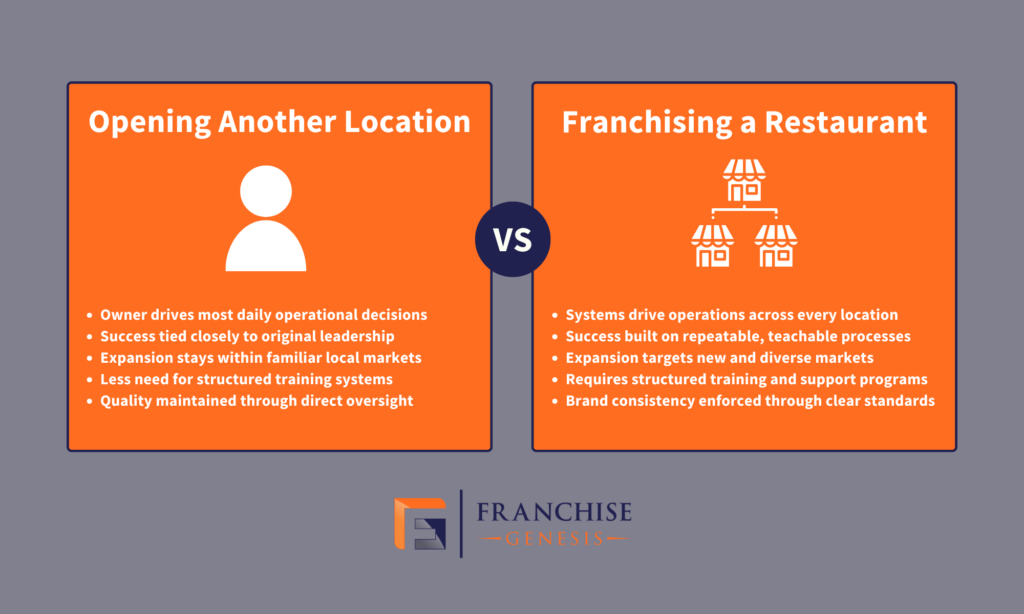
Many restaurant owners who attempt restaurant franchising do not fail because their food is bad. They struggle because they approach the franchising process the same way they approached opening a second location. Franchising is a different business model entirely. It requires a different legal foundation, a different support structure, and a completely different approach to growth. This guide walks through what doing it right actually looks like.
The Difference Between a Great Restaurant and a Franchisable One
A great restaurant and a franchisable restaurant are not the same thing. The difference comes down to systems.
A great restaurant often depends on its owner. The owner knows the recipes, manages the staff, and sets the tone for every shift. That works for one location. It does not work for ten.
A franchisable restaurant runs on documented systems that a franchise owner can follow without the original owner present. Think about what separates successful chain restaurants from beloved local spots that never scale. It is almost never the food. It is the systems behind the food.
A franchise-ready concept has:
- Consistent quality across every shift and every location
- Written procedures for every position in the restaurant
- A brand identity that travels beyond the original market
- Operations that do not depend on any single person to function
The Mindset Shift That Most Restaurant Owners Miss
Before getting into the steps, there is one shift that matters more than any of them. You are no longer a restaurant owner. You are becoming a franchisor.
That means your job changes completely. You are no longer focused on running your own restaurant. You are focused on building a system that supports other people who run restaurants under your brand.
This is the operator-first model in reverse. Instead of being the operator, you become the support structure behind operators. The restaurant business you built becomes the proof of concept. The franchise business you are building is the system around it.
Many restaurant owners underestimate how different this transition is. Getting the mindset right before starting the process saves significant time and money.
Step 1: Honestly Assess Whether Your Concept Is Ready
A franchise-ready restaurant concept is profitable, teachable, and in demand beyond its current market. It operates consistently without the founder managing every detail. If those conditions are not in place, the steps below will not fix them.
What Franchise-Ready Actually Means
Whether your concept is fast casual, fine dining, or anything in between, franchise ownership starts with the same requirements. A concept ready to become a food franchise meets a specific set of standards:
- Proven profitability over at least two to three years
- A concept that can be taught to someone with no prior experience in your Industry
- Demand that exists in markets outside your current location
- Operations that function without your daily involvement
- Brand recognition that customers respond to consistently
Not sure where your concept stands? Take our franchise feasibility questionnaire to find out if your restaurant is ready to scale.
Why Restaurant Owners Rush This Step
Excitement about the concept is understandable. But skipping a real assessment creates problems that are expensive to fix later. Gaps in profitability, consistency, or brand strength do not disappear once franchising begins. They get amplified across every new location. A real franchise development process starts with an honest evaluation before anything else.
Step 2: Build the Operations Manual Before Anything Else
The franchise operations manual is what makes replication possible. Every process that makes your restaurant work needs to be written down in a format any franchisee can follow. Without it, brand standards cannot be maintained across restaurant locations.
If It Is Not Written Down, It Does Not Exist
Think about everything that happens in a restaurant setting on a daily basis. Food preparation, service standards, vendor relationships, staffing protocols, opening and closing procedures, and site selection criteria for new locations. All of it needs to be documented.
This is not a casual reference guide. It is the operational backbone of your entire franchise system. Real estate standards, approved suppliers, and daily operational expectations all belong here.
This Is What Protects Your Brand Across Every Location
Brand standards only hold when they are written, trained, and enforced. An operations manual gives you the ability to do all three. When a new restaurant opens in a different city, the manual is what keeps the experience consistent. It also protects you legally when disputes arise over how the brand should be operated.
Step 3: Work Toward Protecting Your Brand Before You Sell a Single Franchise
Before selling franchises, you should work toward protecting your brand through trademark registration with the USPTO. Your brand name, logo, and core systems are among the most valuable assets you will license to a franchisee.
Moving forward without addressing trademark protection early is one of the most avoidable missteps in restaurant franchising. It also strengthens your position with investors and gives future franchisees confidence in the franchise opportunity they are investing in. Work with a qualified attorney to review what protection your brand currently has and what steps are needed before the sale of franchises begins.
Step 4: Get Your Legal Documents Done Right
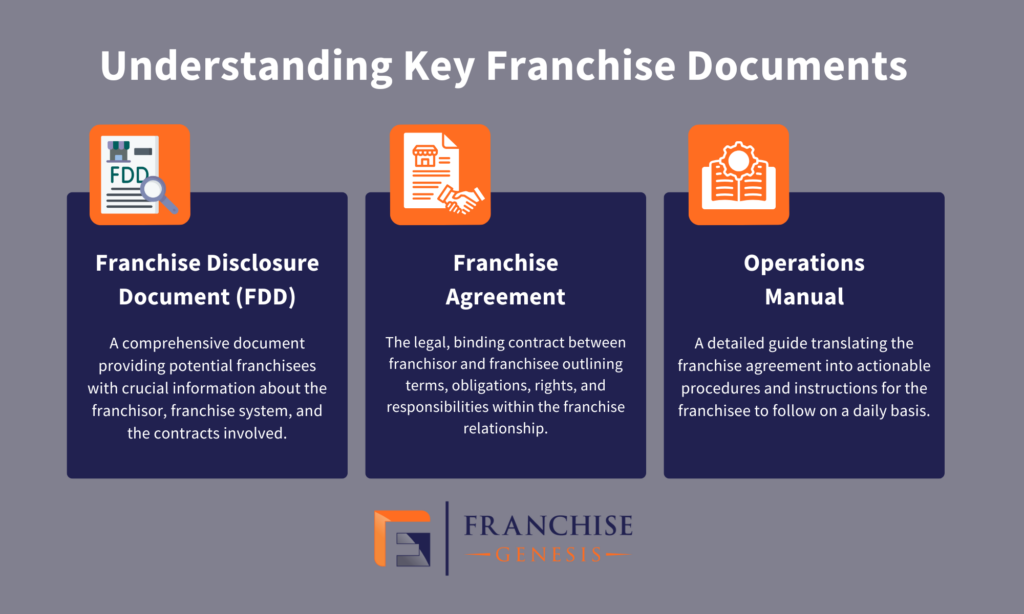
Franchising in the United States requires two foundational legal documents before you can offer or sell a franchise: the franchise disclosure document and the franchise agreement. Both need to be built by a qualified franchise attorney.
The Franchise Disclosure Document
The franchise disclosure document (FDD) is a federally required document. Franchisors are generally required to provide it to prospective franchisees at least 14 calendar days before any agreement is signed or payment is made. It gives every candidate a detailed picture of your business before they commit to franchise ownership.
The FDD covers:
- Your business history and management team
- Startup costs and startup investment requirements
- Franchise fee structure, royalty fee, and marketing fee
- Territory rights and restrictions
- Revenue streams and financial performance of existing locations
- Disclosure requirements that vary by state, with certain states requiring FDD registration before offering or selling franchises there
Accuracy across all of these areas matters. Ongoing fees, initial investment figures, and disclosure requirements must all be presented correctly. It needs to be done right from the start.
The Franchise Agreement
The franchise agreement is the contract that governs each individual franchisee relationship. It outlines the obligations of both parties, territory boundaries, brand standards, the royalty fee structure, and the term length.
A generic contract is not sufficient for a specific franchise in the restaurant industry. The agreement needs to reflect the exact system you are building and the real estate and operational standards your franchisees are expected to meet.
Step 5: Build a Franchise Sales Strategy Around Your Brand Story
Franchise sales does not start with advertising. It starts with a clear brand story and a documented track record that gives franchise candidates a reason to believe in the business opportunity.
Stop Leading With the Opportunity, Start With the Story
Franchise candidates evaluate many concepts before making a decision. What separates a restaurant franchise is not the royalty structure or the territory map. It is the story behind the brand, proof that the business model works, and evidence that the franchisor supports its franchisees.
Build your franchise sales and marketing presence around those elements before investing heavily in lead generation. Marketing materials should communicate the brand story clearly and answer the core question every candidate is asking: can I run my own business successfully with this concept?
Use a Discovery Process to Find the Right Franchisee
Not every candidate who expresses interest is the right fit. A structured discovery process helps both sides evaluate alignment before signing anything.
The right franchisee has the working capital to invest, the background to operate their own restaurant successfully, and the values that align with your brand standards. An independent operator who is not aligned creates inconsistency across locations. That inconsistency is difficult to reverse once it sets in.
Step 6: Train Your First Franchisees Like the Brand Depends on It
The training program for your first franchisees sets the standard for your entire franchise system. It needs to be structured, thorough, and tied directly to the operations manual.

What Year One Actually Looks Like
The first franchise location is where your system gets stress-tested. Plan for close communication, regular check-ins, and real-time adjustments. Gaps in the operations manual will surface. Respond to them quickly and update the documentation.
Year one is not about rapid expansion. It is about proving the model works when someone other than the original owner is running it. That proof becomes the foundation for every future franchise sale.
Ongoing Support Is What Separates Strong Franchise Systems
The franchisors who build strong systems stay invested in franchisee performance after the opening. Ongoing marketing support, operational guidance, and regular performance reviews keep brand standards consistent and franchisees profitable.
A profitable franchisee validates the model. That validation drives future franchise sales better than any advertising campaign.
Why Restaurant Owners Who Work With Franchise Genesis Build Systems That Scale
Restaurant owners who treat franchising like opening another location struggle. Those who approach it as building a new business with the right franchise development team behind them build systems that last.
The difference is not the quality of the food. It is the quality of the process.
Franchise Genesis has guided restaurant owners and business owners across industries through every stage of the franchising process. Here is what working with our team looks like:
- End-to-end development support: From feasibility through launch, we manage the full franchise development process so nothing gets missed.
- Legal and operational buildout: We coordinate with franchise attorneys to prepare your FDD and franchise agreement, and we build the operations manual that becomes the backbone of your system.
- Franchisee recruitment and sales strategy: Our team builds the lead generation systems, marketing materials, and discovery process needed to attract and qualify the right franchise candidates.
- Training and launch support: We prepare your first franchisees to open with confidence and give you the tools to support them long after launch.
- A team that knows the restaurant industry: We understand what makes food franchise concepts work at scale and what causes them to fall apart. That experience is built into everything we do.
If your own restaurant is ready to become a franchise, contact Franchise Genesis to start the conversation. You can also explore our food franchise opportunities to see what thriving restaurant franchise concepts look like in action.
Frequently Asked Questions
How do I franchise my restaurant?
Starting a restaurant franchise begins with a feasibility assessment to confirm your concept is profitable, teachable, and scalable. From there, the process includes building an operations manual, completing legal documents like the franchise disclosure document and franchise agreement, protecting your brand, and developing a franchise sales strategy. Working with an experienced franchise development team helps you move through each stage correctly.
How much does it cost to franchise a restaurant?
The cost to franchise a restaurant varies depending on the complexity of the concept and the scope of development needed. Most restaurant owners should plan for legal fees, operations manual development, trademark registration, and marketing infrastructure. For a detailed breakdown, visit our guide on how much it costs to franchise your business.
Do I need a franchise disclosure document to sell franchises?
Yes. In the United States, franchisors are generally required to provide a franchise disclosure document to prospective franchisees at least 14 calendar days before any agreement is signed or payment is collected. Certain states also require FDD registration before franchises can be offered or sold in those markets. Learn more about the franchise disclosure document and what it must include.
What makes a restaurant concept ready to franchise?
A franchise-ready restaurant concept is consistently profitable, operationally documented, and capable of being replicated without the original owner running daily operations. Brand recognition, a teachable system, and demand beyond the current market are all factors that indicate readiness. If you are unsure, take our franchise feasibility questionnaire to evaluate where your concept stands.
What is the difference between a franchise fee and a royalty fee?
A franchise fee is a one-time upfront payment made by the franchisee to the franchisor when the franchise agreement is signed. A royalty fee is an ongoing fee, typically a percentage of gross sales, paid to the franchisor throughout the life of the agreement. Both are disclosed in the franchise disclosure document before any commitment is made.
How long does it take to franchise a restaurant?
Most restaurant owners complete the franchise development process within four to six months, depending on the complexity of the concept and how quickly decisions are made. This includes feasibility review, legal document preparation, operations manual development, trademark work, and franchise sales preparation. Partnering with an experienced franchise development services keeps the process on track and moving forward.