
At a Glance: A franchise works by allowing a business owner (the franchisor) to license their brand, systems, and operations to an independent operator (the franchisee). The franchisee pays fees and follows a proven business model, while the franchisor provides training, ongoing support, and oversight to maintain consistency across every franchise location.
What Is a Franchise?
A franchise is a legal and commercial relationship between the owner of a brand name, system, or intellectual property and an individual who wants to operate a business using that brand. The franchisee pays fees and follows a defined system in exchange for the right to operate under an established brand.
This model is one of the most widely used growth strategies for small businesses and large corporations alike. A business format franchise goes beyond just using a name. It includes the full operating system, training, and marketing structure.
How Does a Franchise Work?
A franchise business operates through a licensing agreement between two parties. The franchisor owns the system. The franchisee buys the right to use it.
Here is how the process typically unfolds:
- A business develops a franchise model with repeatable systems
- A prospective franchisee applies and signs a franchise agreement
- The franchisee pays an initial franchise fee and launches with training
- The franchisee pays ongoing royalties and receives continued support from the franchisor
Key Roles in a Franchise System
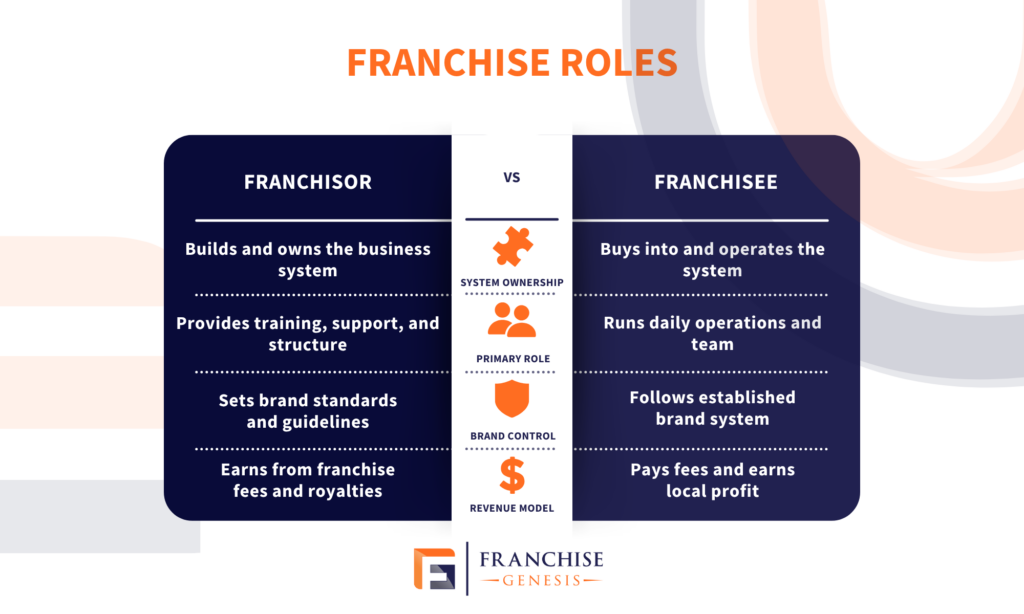
Franchisor
The franchisor owns the franchise brand and the system behind it. Responsibilities include:
- Setting brand standards and operating procedures
- Providing training and ongoing support to new franchisees
- Managing marketing campaigns at the national level
- Protecting the brand’s intellectual property
Franchisee
The franchisee is the independent franchise owner who invests capital and runs the business locally. Responsibilities include:
- Funding the franchise opportunity
- Managing day-to-day operations
- Following the franchisor’s system and standards
- Paying ongoing royalties and fees
How Does a Franchise Work for a Franchisee?
For the franchisee, the appeal is being your own boss while operating within a proven business model. Instead of building from scratch, you buy into a successful business system with built-in brand recognition.
Researching and Selecting a Franchise
The first step is identifying the right franchise opportunity. Prospective franchisees evaluate industry fit, total investment, and the strength of the franchise system. Reviewing the FDD for any brand you are considering is a key part of this research phase.
Signing the Franchise Agreement
Before opening, every franchisee signs a franchise agreement. This is the binding contract that outlines territory rights, fees, operating standards, and termination terms. The Federal Trade Commission requires franchisors to provide a franchise disclosure document (FDD) at least 14 days before signing the franchise agreement.
Training and Opening the Business
After signing, the franchisor provides onboarding and training. Many franchisors also assist with the grand opening to help new locations build early momentum. Support during this phase covers staffing, marketing, and operational setup.
Operating the Franchise
Once open, the franchisee manages business operations daily while following the franchisor’s system. Ongoing royalties are paid on a regular schedule, and the franchisor remains available for continued guidance.
How Does a Franchise Work for a Franchisor?
For the franchisor, franchising is a way to scale a successful business without funding every new location directly. Growth comes from franchisee investment and operator-driven execution.
Developing a Franchise Model
Before selling franchises, the business must have a repeatable system. This means documented processes, clear brand positioning, and a proven business model that others can follow. Learn more about how to franchise your business from the ground up.
Creating Legal and Operational Structure
The franchisor prepares a franchise disclosure document and franchise agreement. These documents govern the relationship and protect both parties. In the United States, the FDD is required by federal law under FTC guidelines.
Selling and Awarding Franchises
Franchisors recruit qualified franchisees through targeted outreach and lead generation. Territory planning determines where each franchise location operates to avoid internal competition. A master franchise arrangement allows a single operator to develop an entire region.
Supporting and Scaling the Brand
After awarding franchises, the franchisor provides ongoing training, operational support, and marketing campaigns to protect brand recognition across all locations. Consistency is what makes the franchise brand valuable.
How Franchise Fees and Revenue Work
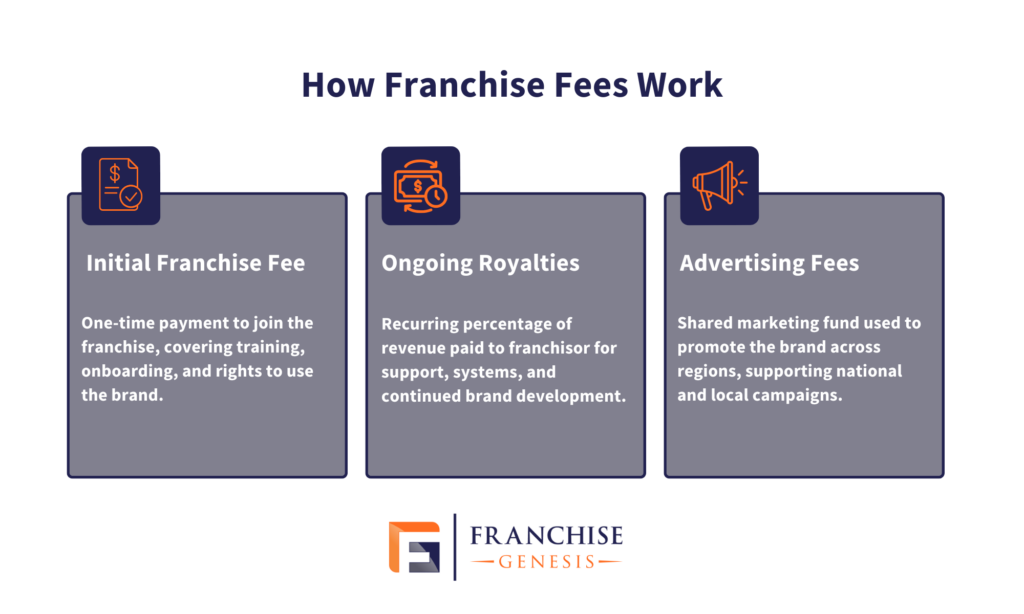
Initial Franchise Fee
The initial franchise fee is a one-time payment made when the franchisee joins the system. It covers onboarding, training access, and the right to use the brand. The average initial fee typically ranges from $40,000 to $60,000 depending on the brand and industry.
Ongoing Royalties
An ongoing royalty is paid by the franchisee to the franchisor, usually as a percentage of gross revenue. This is the primary income stream for franchisors and funds continued support and brand development.
Advertising Fees
Many franchise systems charge advertising fees that fund national or regional marketing campaigns. These fees pool resources across all locations to build brand awareness at a scale individual operators could not achieve alone.
Benefits of Franchising for Both Sides
Benefits for Franchisees
- Access to an established brand with existing customer trust
- A documented, repeatable operating system
- Training and ongoing support from day one
- A faster path to becoming your own boss than starting from scratch
Benefits for Franchisors
- Scalable growth without direct capital investment in every location
- Owner-operators who are invested in local success
- Expansion into new markets through franchisee networks
- A recurring revenue stream through royalties and fees
Franchise vs. Starting a Business From Scratch
Franchise | Independent Business | |
Brand | Established | Built from zero |
System | Provided | Self-developed |
Support | Ongoing | Self-directed |
Control | Guided by agreement | Full autonomy |
Risk | Lower upfront | Higher early stage |
Franchising offers structure and support. An independent business offers full control and flexibility. The right path depends on the business owner’s goals, risk tolerance, and available capital.
What This Means for Business Owners Looking to Franchise
If you have a successful business with repeatable systems and market demand, franchising may be the right growth path. The advantages and disadvantages of franchising are worth understanding before moving forward. Done right, a franchise business can scale faster than a company-owned expansion model.
Is Your Business Ready to Franchise?
Not every business is ready to franchise. Look for these signs before moving forward:
- Proven profitability over at least one to two years
- Repeatable systems that others can be trained to follow
- Demand in markets beyond your current location
- The ability to document and teach your business model
- Capacity to support new franchisees after they open
Start Franchising Your Business with Confidence
You have already proven your concept works. The next step is turning it into a system others can replicate under your brand.
If you are asking how to franchise your business, start by documenting your operations, validating your unit economics, and aligning your franchise model with legal and financial requirements. These steps lay the foundation before a single franchisee ever signs on.
Franchise Genesis helps business owners navigate that process from start to finish. From building your franchise business plan and defining your fee structure to developing your FDD and recruiting the right owner-operators, the goal is a franchise system built to last.
You have done the hard part. Now it is time to scale it.
FAQs About How Franchises Work
What is the difference between a franchisor and a franchisee?
The franchisor owns the brand and the system. The franchisee licenses the right to operate under that brand. The franchisor earns revenue through fees and royalties. The franchisee earns revenue from running the business.
How does a franchisor make money?
Franchisors earn revenue through the initial franchise fee, ongoing royalties based on franchisee sales, and advertising fees. Some also generate revenue through required vendor relationships or approved supplier arrangements.
Can any business become a franchise?
No. A business needs proven profitability, documented systems, and transferable operations before it can support a franchise system. Without those foundations, franchising creates more problems than it solves.
Is franchising a good way to scale a business?
Yes, when structured properly. Franchising allows a brand to expand using franchisee capital and owner-operator drive. The industries most likely to franchise successfully share consistent, repeatable service or product models.