
At a Glance: The average initial franchise fee is typically $40,000 to $60,000. This varies by industry, brand strength, and support offered. The initial franchise fee is a one-time payment that covers onboarding, training, and access to the franchisor’s systems. It is not the total cost to open a franchise location.
What Is an Initial Franchise Fee?
The initial franchise fee is the upfront cost a prospective franchisee pays to join a franchise system. Understanding what this fee includes helps potential franchise owners make informed decisions.
One-Time Join Fee
The franchise fee is a one-time payment for the right to operate under the franchisor’s brand. You pay this fee when signing the franchise agreement. It grants you entry into the franchise system and access to the business model. This one-time fee is separate from ongoing fees like royalties and marketing contributions.
What It Covers
The initial fee typically funds several startup elements:
- Training programs for you and your team
- Onboarding and launch support
- Access to operations systems and portals
- Marketing materials and brand resources
The fee pays for the franchisor’s cost to get you up and running.
Initial Fee vs Total Startup Cost
Many people confuse the franchise fee with the total investment required to open. These are two different numbers.
Why People Mix Them Up
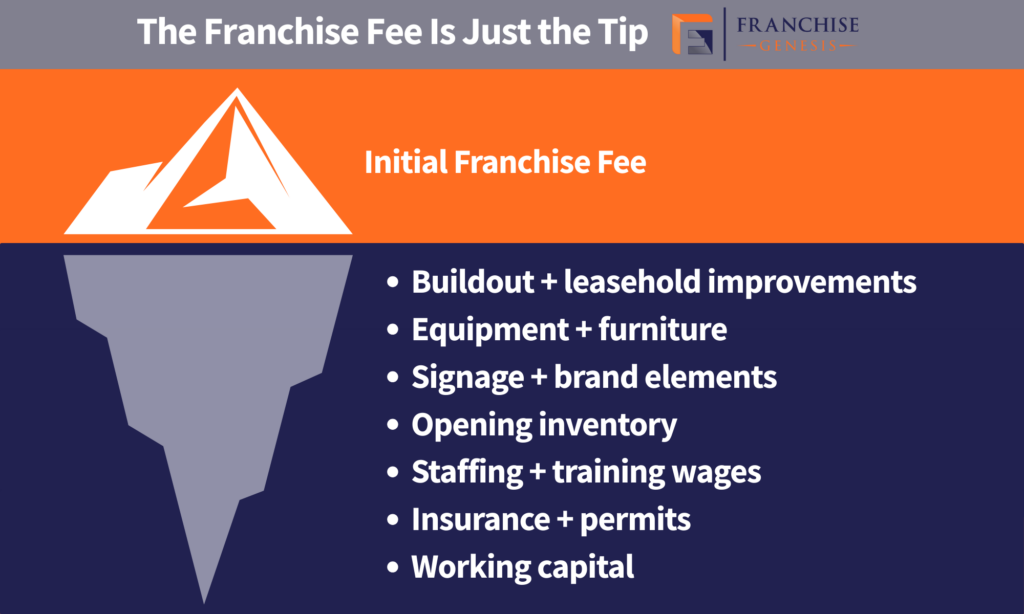
The initial franchise fee is just one line item in your estimated initial investment. Many assume the franchise fee equals the total startup cost. This is rarely true. The fee gets you into the system. The total investment gets your doors open and keeps them open until you reach profitability.
What Startup Costs Include
Your total start-up costs go well beyond the initial fee. A typical franchise business requires:
- Buildout and leasehold improvements
- Equipment and furniture
- Signage and branding elements
- Opening inventory
- Initial staffing and training wages
- Insurance and local permits
- Working capital for the first 3 months
The franchise disclosure document lists the estimated initial investment range. Review this carefully before committing.
Average Franchise Fee Range
Franchise fees vary widely across the franchise industry. Location, brand strength, and support level all influence pricing.
Typical National Range
In the United States, typical franchise fees fall between $40,000 and $60,000. Some franchise opportunities charge as little as $10,000 to $20,000. Others exceed $100,000 for premium brands.
The average initial franchise fee depends on the industry. Food franchises often land in the middle range. Service-based models may charge less. Established national brands with strong recognition typically charge more.
Why Some Are Higher
Higher fees often reflect greater value delivered to the franchisee:
- Stronger brand equity and customer recognition
- More extensive training programs
- Proprietary technology and intellectual property
- Better unit economics and faster payback
- Deeper ongoing support infrastructure
A higher fee does not always mean a better opportunity. Evaluate what you receive for the investment.
What Drives the Fee Amount?
Several factors determine how franchisors set their initial fee. Understanding these helps potential franchisees assess whether a fee is reasonable.
Industry and Unit Economics
The franchise business model influences the fee structure. Higher margin businesses with strong gross sales can support higher entry fees. Industries with longer payback periods often have lower fees. Average ticket size and gross revenue potential also play a role.
Training and Support Load
More intensive onboarding costs more to deliver. Franchisors factor in:
- Number of training days required
- Field visits during launch
- Dedicated support staff time
- Materials and resources provided
A new franchisee joining a complex system needs more support. The fee reflects this investment.
Systems and Tools Access
Modern franchise systems provide extensive tools:
- Point-of-sale and CRM systems
- Operations playbooks and SOP libraries
- Marketing materials and campaign templates
- Quality assurance programs
Access to these systems adds value. Franchisors price their fee to recover development costs.
Not a Profit Center
Smart franchisors do not treat the initial fee as their primary income source. The fee should recover costs, not generate windfall profits.
Cost Recovery Mindset
The franchise fee should mainly cover real franchisor expenses:
- Marketing to recruit prospective franchisees
- Broker commissions on the sale of franchises
- Training delivery and materials
- Onboarding staff time and travel
Viewing the fee as cost recovery keeps it reasonable. This attracts better candidates.
Healthy Expectations
Charging excessive fees to maximize upfront profit often backfires. High fees can attract passive investors instead of engaged owner-operators. They may leave insufficient capital for proper franchise location buildout. Franchise ownership works best when both parties succeed together.
Ongoing Fees in a Franchise System: What They Fund
The initial fee is not where successful franchisors build their business. Ongoing revenue streams matter more.
Ongoing Royalties
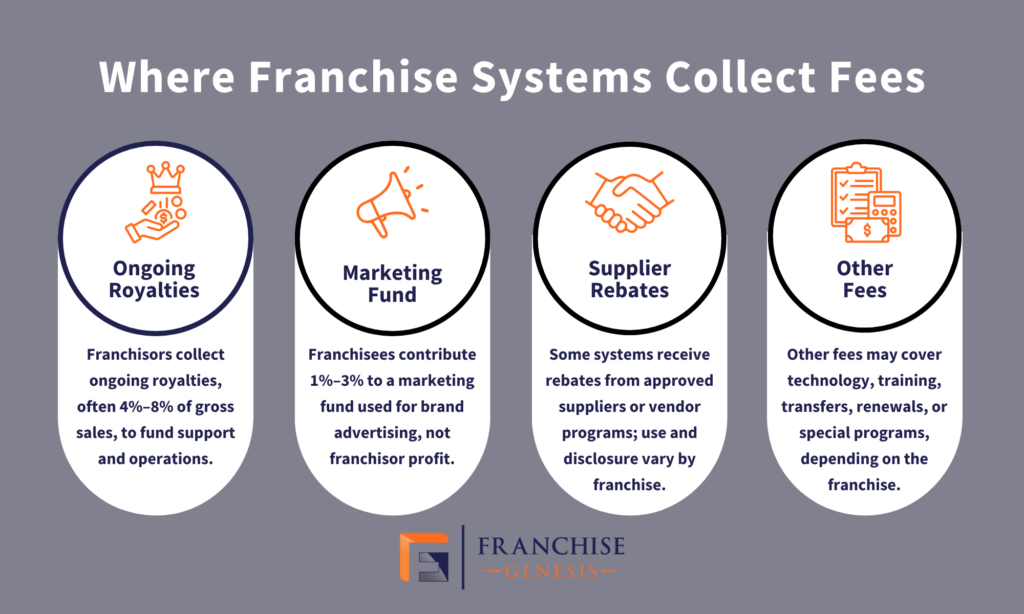
The royalty fee is the main revenue engine for franchisors. Most charge 4% to 8% of gross sales as an ongoing royalty fee. This franchise royalty fee funds field support, ongoing training, brand development, and technology updates.
Franchise royalties align franchisor and franchisee interests. When your location succeeds, the franchisor earns more.
Ad Fund Contributions
Most franchise systems collect an advertising fee or marketing fund contribution. These funds are typically held separately and used for brand-wide marketing that benefits the system (not treated as franchisor “profit” in the same way royalties are). Contribution rates often range from 1% to 3% of gross sales, and many systems allow franchisees to request reporting and, in some cases, audits of fund spending.
Other System Fees (Often Used to Cover Costs)
Depending on the franchise, there may be other ongoing fees that either generate revenue or help the franchisor recoup specific expenses, such as:
- Approved supplier rebates
- Technology platform fees
- Advanced training programs
- Special marketing programs
These should be disclosed clearly in your franchise agreement.
Setting Your Own Initial Fee
If you are franchising your business, pricing the initial fee requires careful thought.
Start With Costs
Calculate your real expenses to onboard each new franchisee:
- Training development and delivery
- Recruitment marketing and sales costs
- Legal and compliance work
- Staff time for onboarding support
- Reasonable overhead allocation
Your initial fee should recover these costs while remaining competitive.
Pressure-Test the Market
Compare your fee to similar franchise opportunities in your industry. Validate that your business model delivers returns justifying the investment. The fee must fit within reasonable payback expectations for your unit economics.
Document It Correctly
The franchise disclosure document must accurately state your initial fee and what it includes. Disclosure requirements in the U.S. are strict. Some states have applicable pre-sale registration requirements. Your support obligations must match what you promise in the FDD.
Mistakes to Avoid
Two common errors hurt both franchisors and franchisees when it comes to fee structure.
Overpricing Entry
Setting a high fee to maximize upfront revenue often reduces lead volume. It can attract “check writers” looking for passive income rather than committed owner-operators. The best potential franchisee is not always the wealthiest one.
Underselling Support
Charging a reasonable fee but failing to deliver adequate onboarding creates problems. A new franchisee who struggles early often fails. Early failures increase churn and damage your brand reputation. The fee and the support must align.
Build Your Franchise the Right Way With Franchise Genesis
The initial franchise fee is a one-time payment covering access, training, and systems. It is not the total startup cost. Real franchisor income comes from ongoing royalties and the long-term success of each franchise location.
If you are thinking about franchising your business, the fee structure is only one piece of the system you need to get right. Franchise Genesis helps business owners convert a proven operation into a repeatable franchise model. We build systems around real costs, clear support deliverables, and a strategy designed for long-term royalties.