
Table of Contents
At a Glance: A franchise marketing plan outlines strategies for building brand awareness, attracting potential franchisees, and supporting franchisees with their local marketing efforts. By developing a clear plan, franchisors can reach the right audience and create a strong foundation for franchise growth.
What Is Franchise Marketing?
A franchise marketing plan is a comprehensive strategy that helps a franchisor build brand recognition, attract new franchisees, and support franchisees in their local marketing efforts. Unlike traditional consumer marketing, which focuses on attracting customers, franchise marketing focuses on reaching prospective franchisees who are interested in replicating the business model in new locations.
The goal of franchise marketing is to raise awareness of your franchise opportunity, while also supporting franchisees in their own marketing campaigns. A well-rounded franchise marketing plan will include digital marketing, public relations, social media, and local strategies tailored to each franchise location.
Why Franchise Marketing Matters
The Role of Marketing in Franchise Growth
Marketing is a critical element of a franchise’s success. It helps increase brand awareness, generate leads from qualified franchise candidates, and empower franchise owners to effectively promote their own locations. A strategic marketing plan helps create a strong and unified brand presence, making it easier for franchisees to operate with a consistent message.
Effective franchise marketing promotes brand visibility and encourages potential franchisees to invest in your business. As your franchise expands, marketing helps maintain consistency and brand recognition across all locations.
Franchise Lead Generation vs. Traditional Marketing
Franchise marketing differs from traditional marketing in that its goal is to attract potential franchise owners, not just customers. Franchise lead generation focuses on reaching individuals who align with the brand’s business model and can run a franchise location successfully.
In contrast, consumer marketing focuses on appealing to the general public. By focusing on franchise leads, the marketing strategy should attract prospective franchisees who can understand and promote the brand’s values and offerings. Whether through digital marketing, content marketing, or social media, the focus is on driving leads to the franchise sales pipeline.
Core Elements of a Franchise Marketing Plan
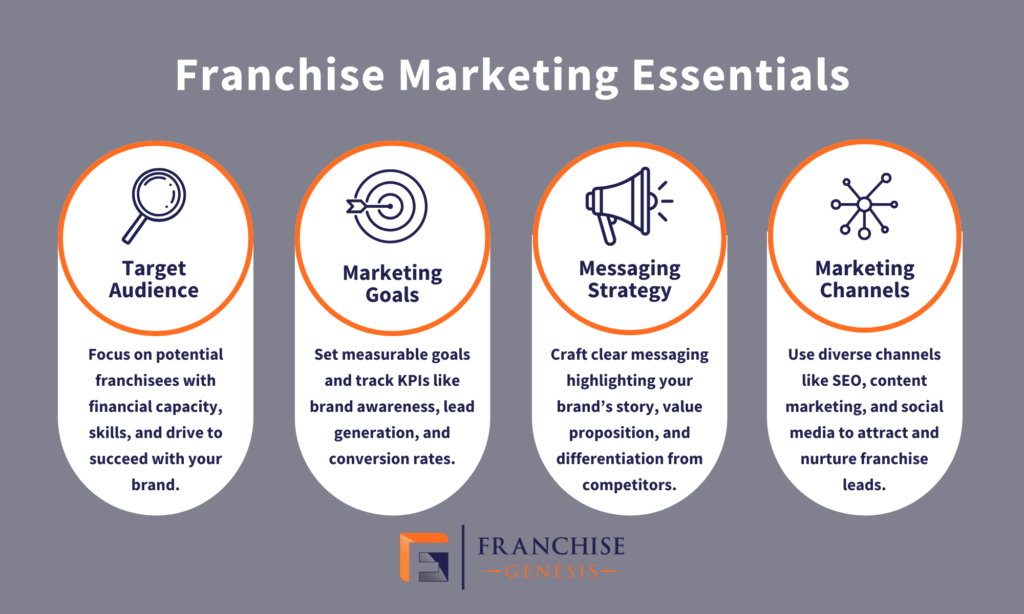
Target Audience: Who You’re Marketing To
Understanding who you’re marketing to is one of the most important steps in creating a franchise marketing strategy. While traditional marketing targets consumers, franchise marketing is aimed at potential franchisees who have the financial capacity, skills, and drive to succeed with your brand.
Key factors to consider:
- Demographics: Age, financial capabilities, experience level.
- Psychographics: Entrepreneurial drive, motivations, long-term goals.
- Geographic Fit: Does the candidate fit the location requirements for your franchise?
A well-defined target audience will help refine the marketing campaign and brand positioning, ensuring that efforts reach the right people who are ready to invest.
Marketing Goals and KPIs
To track the success of your franchise marketing plan, it is important to set clear goals and key performance indicators (KPIs). Some goals might include increasing brand recognition, generating franchise leads, and improving franchisee satisfaction through marketing support.
Common marketing KPIs:
- Brand Awareness: Reach, impressions, and engagement metrics.
- Lead Generation: The number of qualified franchise leads generated.
- Lead Conversion Rates: How many leads turn into franchise signings?
- Cost per Lead: The average cost required to generate a qualified franchise lead.
- Cost per Deal: The total marketing cost required to acquire a new franchisee.
By setting measurable goals, you can monitor the success of your marketing efforts and make adjustments as needed to stay on track toward achieving business goals.
Messaging & Unique Value Positioning
Clear and consistent messaging is essential to any franchise marketing strategy. To stand out from competitors, your messaging should highlight what makes your franchise unique and attractive to potential franchise owners.
Consider the following when crafting your messaging:
- Brand Identity: What is your brand’s story and mission?
- Value Proposition: Why should franchisees invest in your business model?
- Brand Positioning: How is your franchise different from others in the market?
By developing a clear, unique value positioning, your marketing messages will resonate with prospective franchisees and help them understand the benefits of joining your franchise system.
Marketing Channels & Tactics
An effective marketing strategy for a franchise should incorporate multiple marketing channels to ensure broad visibility and engagement. Each channel serves a specific purpose in attracting potential franchise owners.
Popular marketing channels include:
- Content Marketing: Educational blog posts, whitepapers, and case studies that build authority and attract leads.
- Social Media: Platforms like Facebook, LinkedIn, and Instagram allow you to engage with potential franchisees.
- Search Engine Optimization (SEO): Optimize your website and content to rank on search engines for franchise-related keywords.
- Email Marketing: Directly communicate with leads and nurture them through the sales process.
- Public Relations: Leverage media opportunities to strengthen brand recognition.
By strategically using a mix of digital marketing tactics and traditional methods, you can reach your target audience at various touchpoints and drive them to take action.

Local Franchisee Support in Marketing
Supporting local franchisees is an essential part of a successful franchise marketing plan. It’s important to give franchisees the tools, resources, and marketing materials they need to promote their franchise location.
Providing local marketing materials and guidelines helps franchisees maintain brand consistency across all locations. Support might include digital ad templates, co-branded collateral, or guidelines for implementing local SEO strategies to increase visibility in specific regions.
Implementation Roadmap: Step-by-Step
How to Execute Your Plan
Once you have your franchise marketing strategy in place, it’s time to implement it. Here’s a step-by-step approach to bring your plan to life:
- Define Messaging: Craft clear and consistent messaging that reflects your brand identity.
- Choose Marketing Channels: Select channels that align with your target audience and marketing goals.
- Create a Content Calendar: Plan your marketing activities in advance to ensure timely execution.
- Track & Optimize: Use tools to measure the effectiveness of your marketing efforts and refine your tactics over time.
By following a clear implementation roadmap, your franchise marketing efforts will be organized and measurable.
Track, Test, Repeat
Effective franchise marketing requires constant evaluation and optimization. Use data from your marketing tools and analytics platforms to identify which tactics are working best. Testing and tweaking your approach regularly ensures that your marketing plan continues to generate the best results.
Franchise Marketing Best Practices
How to Approach Franchise Marketing
Best practices for franchise marketing include consistency, tracking, and communication. Your franchise marketing strategy should remain consistent across all locations while being flexible enough to cater to local markets.
Some best practices include:
- Maintaining Brand Consistency: Ensure that all marketing materials adhere to your brand guidelines.
- Tracking Leads: Use CRM systems and marketing automation to track and nurture franchise leads.
- Ongoing Franchisee Support: Provide your franchisees with continuous marketing support, training, and resources to help them succeed locally.
By following these best practices, franchisors can develop and execute marketing strategies that drive both brand recognition and qualified franchisee leads.
Start Your Franchise Marketing Journey with Franchise Genesis
Creating an effective franchise marketing plan requires careful planning, a clear understanding of your target audience, and a strategic approach to generating leads and supporting your franchisees. By combining digital marketing, content creation, and local marketing efforts, your franchise brand can gain the visibility it needs to thrive.
Successful franchise growth also depends on tapping into the broader franchise ecosystem. New and emerging franchisors often build awareness and attract potential franchisees through industry trade shows, franchise publications and media exposure, and trusted consultant networks that connect qualified candidates with new opportunities. Franchise Genesis helps brands navigate these channels while building strong marketing and recruitment systems designed to attract the right franchise partners.
However, implementing and maintaining a marketing strategy can be challenging without expert guidance. Franchise Genesis offers tailored solutions and marketing support to ensure that your plan is not only effective but sustainable over time.
If you’re looking to understand how to franchise your business and refine your marketing efforts, Franchise Genesis can help you build a comprehensive strategic marketing plan that aligns with your goals and drives long-term franchise growth.