
Quick Answer: The franchisor owns the brand, the business model, and the system, and licenses the right to use them. The franchisee pays for that right and runs an individual location day to day. In short, the franchisor builds and supports the system, and the franchisee operates a business within it. Understanding the franchisee vs franchisor relationship is the first step for anyone weighing either side of a franchise.
Franchisee vs Franchisor at a Glance
The two roles sit on opposite sides of the same franchise agreement, and each carries different responsibilities, rights, and risks.
Franchisor | Franchisee | |
Owns | The brand, trademarks, and business model | Their individual franchise location |
Pays | Builds the system and funds corporate support | An initial franchise fee plus ongoing royalties |
Controls | Brand standards across the whole franchise system | Daily operations at their location |
Responsible for | Training, marketing support, and the franchise disclosure document | Staffing, local execution, and customer experience |
Earns from | Franchise fees and ongoing royalties | Profit from their own location’s sales |
Legal status | The company granting the license | Usually an independent business owner |
The rest of this guide breaks down each role, how they work together, and what someone on either side should understand before signing anything.
What Is a Franchisor?
A franchisor is the company that owns a proven business model and licenses the right to operate under it. The franchisor developed the concept, built the brand, and turned a single successful operation into a repeatable system that other people can run. Within the franchise industry, the franchisor is the party that creates the opportunity that others buy into.
The franchisor’s job does not end at the sale. In exchange for the franchise fee and ongoing royalties, the franchisor is responsible for the parts of the business that hold the whole franchise system together.
- Protecting the brand. The franchisor owns the trademarks, the trade name, and the intellectual property, and sets the brand standards every franchise owner follows so the experience stays consistent across every franchise location. Protecting the franchisor’s trademark is central to keeping the brand strong.
- Providing the system. The operations manual, the business format, the approved suppliers, and the trade secrets that make the concept work all come from the franchisor.
- Supporting franchisees. Initial training, site selection and real estate guidance, a marketing plan, and ongoing support are all part of what the franchisor delivers.
- Handling compliance. The franchisor prepares the franchise disclosure document and manages the disclosure requirements that federal and state laws impose.
In practice, the franchisor is building and running a business whose customers are its own franchisees. A master franchisee sits one level down, holding the rights to develop and support franchisees across a larger territory on the franchisor’s behalf.
What Is a Franchisee?
A franchisee is the person or company that buys the right to operate a business under the franchisor’s brand and system. The franchisee funds the location, hires and manages the staff, and runs the day-to-day operations, while agreeing to meet the brand standards the franchisor sets. Each franchisee’s business is a separate legal entity, even though it trades under a shared name.
A franchisee is an independent business owner rather than an employee of the franchisor, and the franchisee operates as an independent contractor. They own their franchised business, take on its financial risk, and keep the profit their location generates after paying the franchise fee and ongoing royalties. That independence has limits, though. The franchise agreement defines how the business must be run, which is the trade-off a franchisee accepts in return for an established brand and a proven business model. It is a business relationship built on a shared brand, not a job.
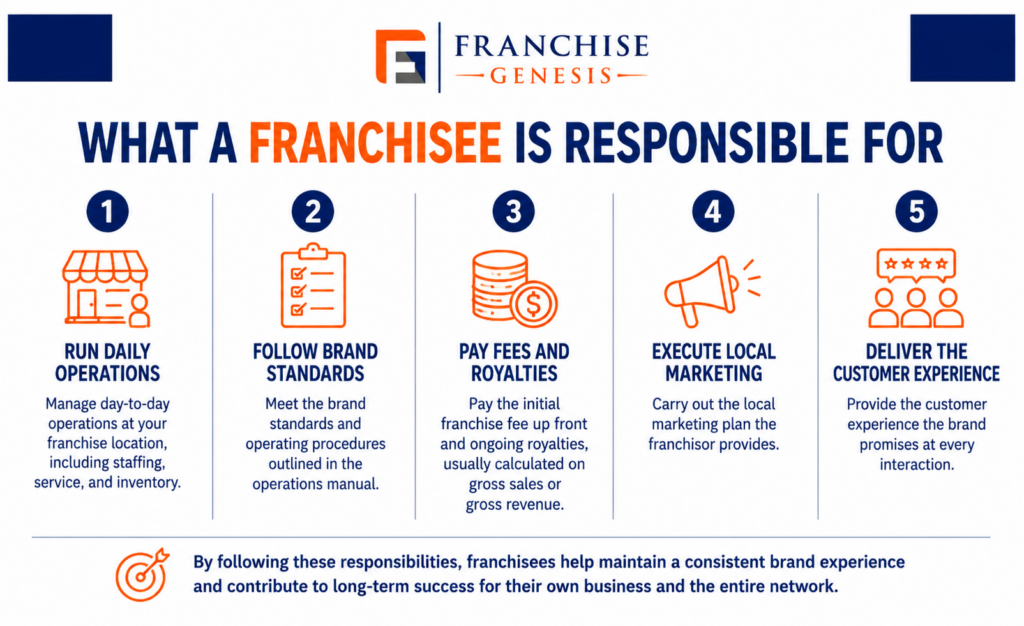
What a franchisee is responsible for includes:
- Running daily operations at their franchise location, including staffing, service, and inventory
- Meeting the brand standards and operating procedures in the operations manual
- Paying the initial franchise fee up front and ongoing royalties, usually calculated on gross sales or gross revenue
- Executing the local marketing plan the franchisor provides
- Delivering the customer experience the brand promises
The appeal for a prospective franchisee is starting with a recognized brand and a tested system rather than building a business from nothing. Every new franchise establishment inherits the brand’s reputation on day one. The responsibility is running that business well enough to make the model pay off, which is why potential franchisees should study the franchise opportunity closely before committing.
How the Franchisee and Franchisor Work Together
The franchise relationship is a partnership defined by a contract. The franchisor supplies the brand, the system, and ongoing support. The franchisee supplies the capital, the local market knowledge, and the daily effort to run a location. Neither side succeeds alone, and the agreement between them sets the terms.
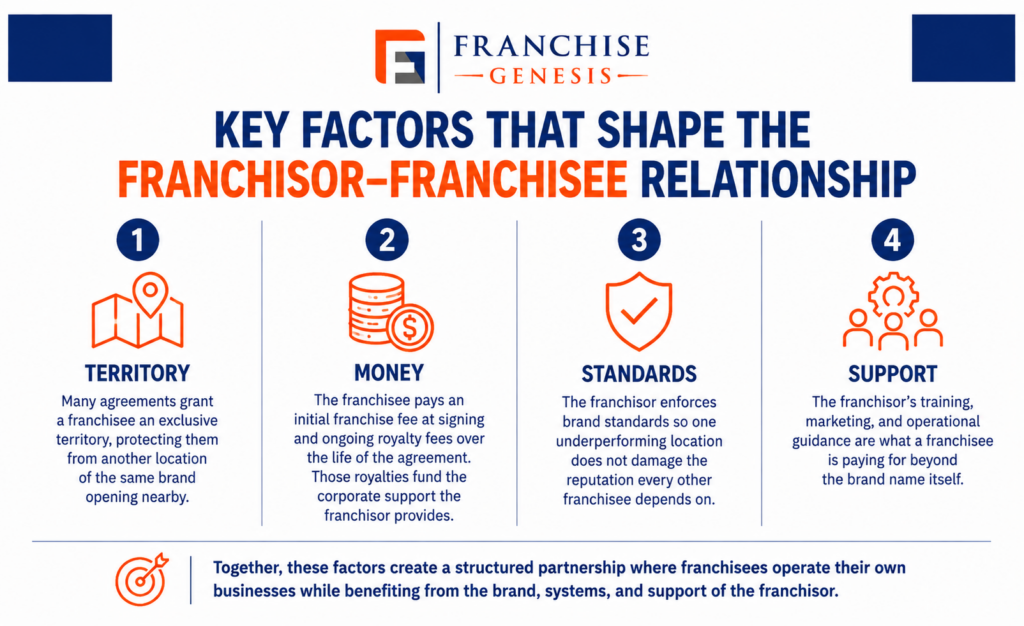
A few points shape how the two roles interact:
- Territory. Many agreements grant a franchisee an exclusive territory, protecting them from another location of the same brand opening nearby.
- Money. The franchisee pays an initial franchise fee at signing and ongoing royalty fees over the life of the agreement. Those royalties fund the corporate support the franchisor provides.
- Standards. The franchisor enforces brand standards so one underperforming location does not damage the reputation every other franchisee depends on.
- Support. The franchisor’s training, marketing, and operational guidance are what a franchisee is paying for beyond the brand name itself.
The healthiest franchise systems treat the relationship as mutual. A profitable franchisee validates the model and helps recruit the next one, and a supportive franchisor keeps its franchisees profitable enough to stay.
The Legal Framework Behind the Relationship
Franchising in the United States is regulated, and both roles are shaped by that framework. The franchising business model operates under rules that protect prospective buyers, and the Federal Trade Commission enforces the FTC Franchise Rule, which requires a franchisor to give every prospective franchisee a franchise disclosure document at least 14 calendar days before any agreement is signed or money changes hands.
The franchise disclosure document lays out the franchisor’s background, the fees, the obligations on both sides, and the terms of the franchise agreement. Some states add their own registration and disclosure requirements on top of the federal rule, and the U.S. Small Business Administration offers a plain-language overview of buying into a franchise. Because the specifics vary by state and by system, anyone on either side of a franchise should treat this overview as general information, not legal advice, and work with a qualified franchise attorney before signing.
Which Role Applies to You
These two roles are not a matter of preference. Which one applies to you depends on where you are starting, since one path is for an owner who already has a business and wants to expand it, and the other is for someone who wants to become a business owner by buying into an established brand.
Becoming a franchisee suits someone who wants to run their own business with the backing of an established brand and a proven system, and who is comfortable operating within another company’s standards. Service businesses are a common entry point, and our guide on how to start a handyman franchise shows what franchising looks like in that category. Becoming a franchisor suits an owner who has already built a successful, repeatable business and wants to grow it through other operators’ capital rather than opening every location themselves. Our guide on how to franchise your business walks through what that second path involves.
Franchise Genesis works with business owners on the franchisor side, building the systems, legal foundation, and franchise sales strategy that turn one successful business into a franchise system others can run. If you are considering franchising your own business, contact our team to talk it through.
Frequently Asked Questions
What is the main difference between a franchisee and a franchisor? The franchisor owns the brand and the business model and licenses the right to use them. The franchisee pays for that right and operates an individual location. The franchisor builds and supports the system, and the franchisee runs a business within it.
Is a franchisee an employee of the franchisor? No. A franchisee is an independent business owner, often structured as an independent contractor, who owns their own franchised business, takes on its financial risk, and keeps its profit after paying the franchise fee and ongoing royalties. Running a franchise business means operating within the franchisor’s standards while carrying the risk and reward of ownership.
What does a franchisee pay the franchisor? Typically an initial franchise fee at signing and ongoing royalties over the life of the agreement, often calculated as a percentage of gross sales. Many systems also charge a marketing or advertising fee.
Who controls the day-to-day operations of a franchise location? The franchisee runs daily operations, including staffing and customer service, while following the brand standards and procedures the franchisor sets in the operations manual.
Can a franchisee open locations in any area? Not always. Franchise agreements often grant an exclusive territory and restrict where a franchisee can operate, which protects both the franchisee and the wider franchise system from oversaturation.
Do I need a lawyer to review a franchise agreement? Yes. The franchise agreement and franchise disclosure document are technical legal documents, and requirements vary by state, so both parties should work with a qualified franchise attorney rather than relying on general information.