
At a Glance: Some industries franchise more often because they follow repeatable systems, maintain steady demand, and create predictable financial results. Food, home services, retail, wellness, and education all support predictable operations that a franchise owner can learn quickly. These industries provide clear steps that fit the franchise model in many markets.
Top Industries for Franchising
- Food and Beverage
- Home Services
- Healthcare, Wellness, and Beauty
- Senior Care
- Retail and Automotive
- Pet Care
- Education and Childcare
- Business to Business Services
Understanding Today’s Franchise Landscape
Franchising spans a wide range of industries across the United States. Many people associate it with fast food, but the business expansion model reaches far beyond restaurants. A growing number of sectors now adopt franchise systems because they can duplicate their operations in new locations.
These industries often share qualities that support expansion. They use predictable service routines, clear customer expectations, and established processes for daily work. A business owner who studies these sectors can identify where their own concept fits among long-term trends.
Strong franchise categories also benefit from consistent demand. They attract buyers because customers return often and understand what the brand offers. Recognizing these patterns helps companies plan for franchise opportunity research and early due diligence.
What Makes an Industry Franchise Ready?
The first step in franchising your business is figuring out if your concept can realistically be duplicated. Some business types grow easily because they share common features that support replication.
Proven Profitability
A concept with a reliable financial track record provides confidence for a prospective franchisee. A clear performance history helps someone evaluate a business opportunity with less risk.
Replicable Systems
Processes support daily tasks, training, and customer service. When these steps are easy to teach, new operators can follow them without confusion. This structure becomes part of the franchise system.
Brand Strength and Market Demand
Brands with strong visibility attract more customers. Brand recognition creates momentum in a new franchise location because people already know what to expect. Growing demand in a category also supports long-term expansion.
Scalability and Consistency
A scalable concept serves more customers without changing the experience that made it successful. This helps new operators maintain predictable quality across multiple sites.

The Industries Most Likely to Franchise
Some sectors appear often in franchise growth cycles because they provide clear steps, predictable customers, and easy training models.
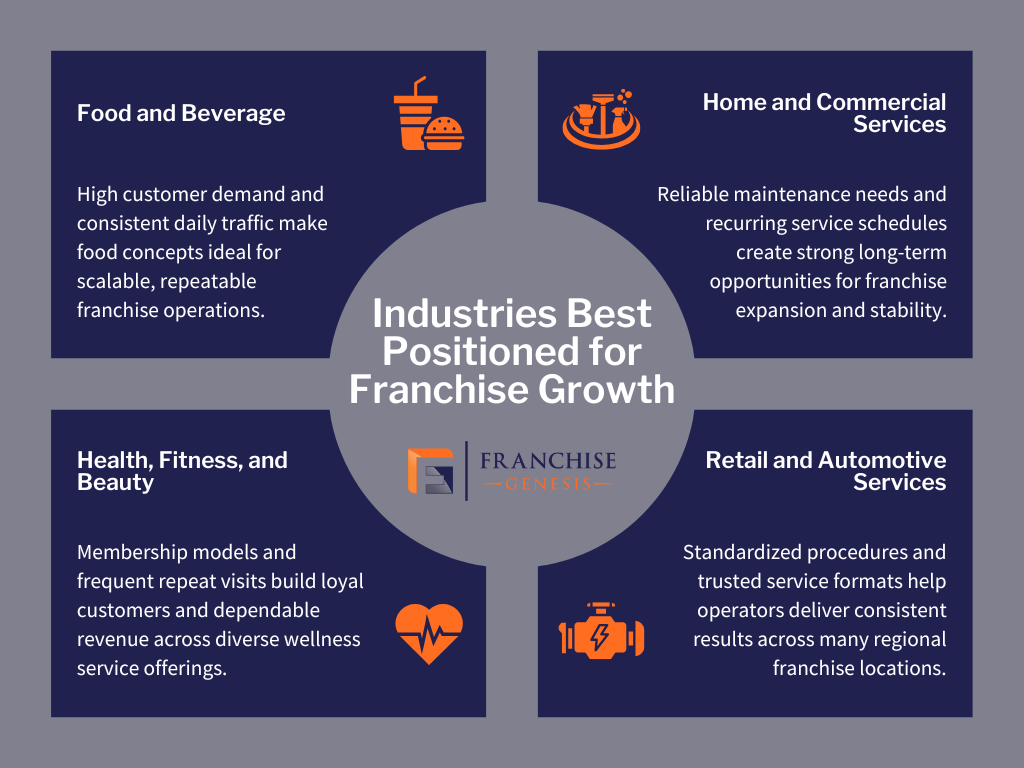
Food and Beverage
Food and beverage remains one of the largest franchise segments. Restaurant franchises thrive because customers expect a familiar experience wherever they visit. This includes quick service restaurants, fast casual dining, coffee shop concepts, food trucks, and convenience stores. They rely on tested recipes, clear staffing routines, and established supply chain structures.
Food service also benefits from high demand in many regions. People rely on convenient meal options, which creates steady traffic. These factors make it easier for new operators to follow a proven business model and duplicate the experience across multiple franchise establishments.
Home and Commercial Services
Home and commercial services continue to expand because buildings require ongoing maintenance. Many operators begin as small businesses and later adopt a franchise structure to reach new areas. Cleaning and restoration services hold a strong position inside this category because dual-income households often outsource home care tasks. A cleaning service also supports turnover in hospitality and lodging properties that depend on reliable routines. The U.S. home-services market is expected to reach more than $1.4 trillion by 2030.
Many of these companies use mobile operations with low overhead. This helps new buyers manage startup costs while following step-by-step procedures. Recurring service schedules create predictable income, which makes this segment attractive for long-term planning and the coming years. These qualities support increasing demand and long-term franchise growth in residential and commercial markets.
Health, Fitness, and Beauty
Health, fitness, and beauty concepts perform well because more people invest in personal improvement. Many businesses in this category rely on membership plans, appointments, or repeat visits. This includes gyms, boutique fitness programs, salons, spas, haircut franchise concepts, and personal services such as massage therapy, lash studios, and med spa treatments.
Childcare programs, youth development activities, and early education centers also appear in this broader category because families prioritize structured support. The aging population increases the need for senior care services as well. Families often choose brands that follow predictable routines and offer dependable help.
These trends show why wellness and personal services continue to expand. They create loyal customers and steady revenue, and they use systems that new operators can follow after extensive training.
Retail and Automotive Services
Retail and automotive services combine product knowledge with service expertise. Retail franchises often focus on specialized items or niche interests. Automotive centers handle repairs, maintenance, and inspections. Both categories use standard procedures that help operators deliver predictable results.
Common formats include tire shops, oil change centers, specialty retail stores, and battery replacement services. These models attract buyers because customers value trust, convenience, and fast service. Structured checklists and training programs support consistency across many regions.
The Fast-Growing Next Wave Sectors
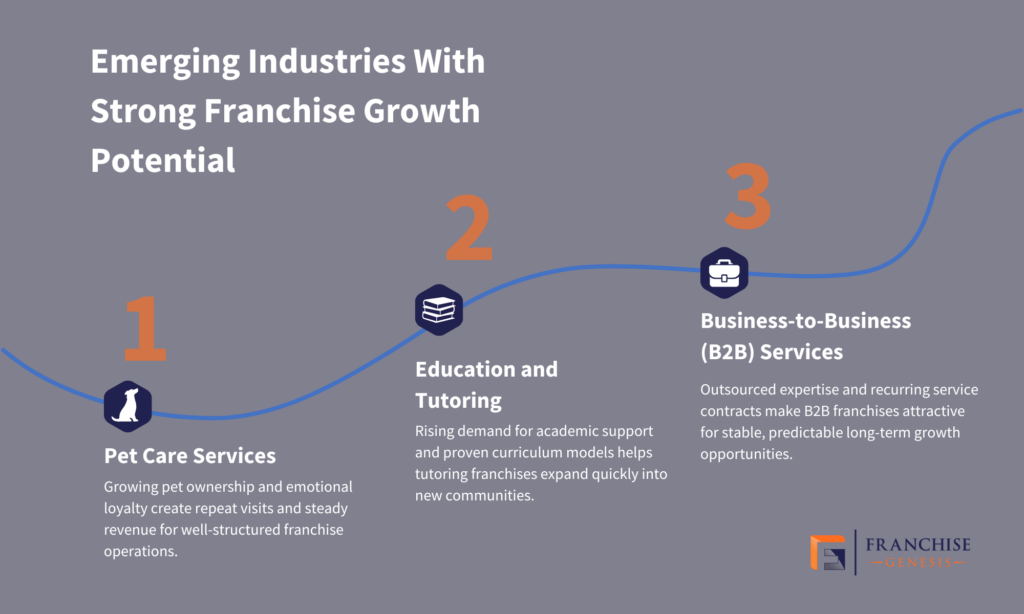
Several modern franchise sectors continue to grow quickly because they match broader social and economic patterns. Longstanding industries such as food service, retail, and hospitality remain stable for expansion. At the same time, tutoring, pet care, wellness services, and B2B companies grow at a faster pace due to shifting household needs, changing lifestyles, and wider use of technology.
Emerging Industries With Rising Franchise Potential
Pet Care Services
Pet care continues to expand because more households treat animals as family members. Spending rises across grooming, daycare, boarding, and specialty products. These companies rely on structured safety routines and clear communication, which helps franchisees follow the same customer experience.
The emotional connection between pets and owners also creates loyalty. People return to trusted providers again and again, which supports long-term revenue and a competitive edge.
Education and Tutoring
Many families seek additional learning support for their children. Tutoring companies use established lesson plans and training systems that help new operators deliver consistent sessions. This includes STEM programs, coding classes, test preparation, and reading support.
Low overhead and structured curriculum plans help these concepts expand into new areas as demand increases. The U.S. private tutoring market is expected to grow by $28.85 billion from 2025 to 2029.
Business-to-Business (B2B) Services
B2B service companies continue to grow because many organizations outsource specialized support. This includes technology services, staffing, design, and marketing strategies. Remote work and technological advancements also contribute to the demand for outside expertise.
These companies often rely on clear service packages and recurring contracts. This structure helps franchisees build predictable revenue and long-term client relationships.
What Every Business Must Have Before Franchising
Before expanding, a company should review its structure to see if it supports duplication.
Document Your Processes
Create written steps for daily work, customer communication, and training. These instructions help new operators maintain consistent service and ongoing support.
Check Financial Performance
A concept should produce steady revenue before scaling. Buyers rely on accurate financials when reviewing a Franchise Disclosure Document (FDD) or evaluating long-term stability.
Review Your Brand Strength
A strong brand identity helps attract customers and future operators. This includes messaging, design, and service quality. If you haven’t already, secure a national trademark for your name and logo before you expand.
Prepare for Legal Requirements
Franchising requires a franchise disclosure document and a franchise agreement. These documents outline expectations, rights, and responsibilities.
Build a Support System
Training, coaching, and communication tools help new operators learn the business model. These tools make growth more predictable.
Some industries do not franchise easily. Businesses that depend on a single expert, unpredictable customer patterns, or highly specialized licensing often face challenges. Understanding these limitations supports better planning and helps a franchise business identify the right fit for expansion.
How Franchise Genesis Helps You Build a Scalable Franchise
Expanding a business into a franchise is a major step that requires planning, structure, and clear guidance. Franchise Genesis helps companies develop repeatable systems, organize training programs, prepare legal requirements, and create early marketing efforts. Our team supports owners who want to turn a successful business into a franchise brand with long-term opportunity.
If you want to explore franchise growth or check if your concept is ready to expand, contact us to learn how your business can move forward with a structured plan and clear direction.
Frequently Asked Questions
How do I know if my company is ready to franchise?
A company is often ready when it can operate without the owner present. Clear processes, financial stability, and consistent customer demand support this shift.
What are the first steps to franchising a business?
Early steps include concept evaluation, operational documentation, legal preparation, and building a training system for future operators.
What challenges should I expect during expansion?
Common challenges include training, quality control, and selecting the right buyers. These challenges become easier to manage with proper planning and support.