Understanding the Financial Investment of Franchising Your Business
How much does it cost to franchise my business is one of the first questions successful business owners ask when considering expansion through franchising. The answer depends on several factors, but here’s what you can expect:
Total Cost Ranges:
- Initial Development Phase: $18,500 – $84,500
- First-Year Sales & Marketing: $22,500 – $75,500
- Complete Setup Investment: $25,000 – $150,000+
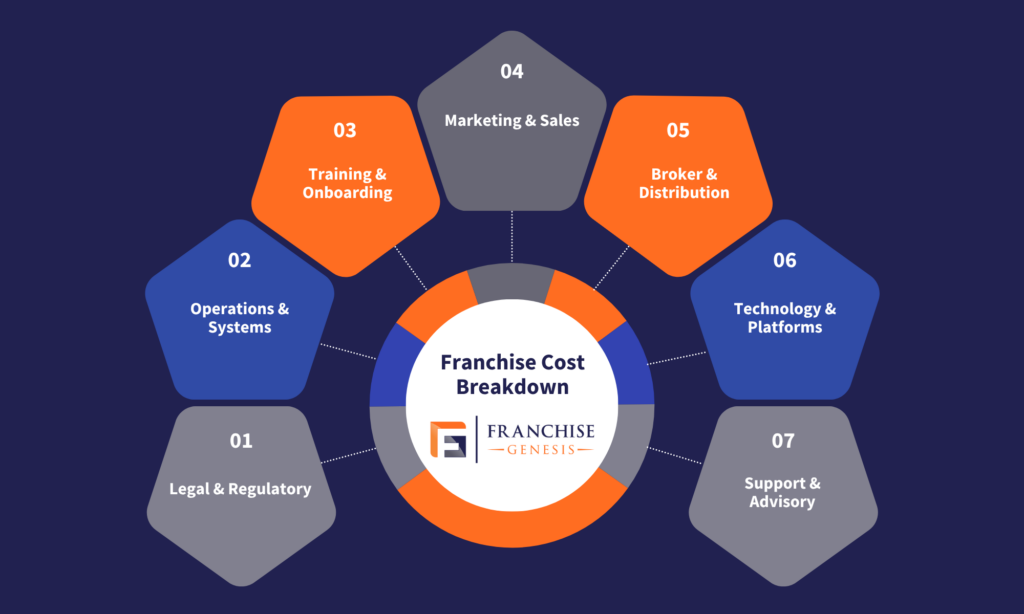
Main Cost Categories:
- Legal & FDD Development: $15,000 – $45,000
- Operations Manual: $0 – $30,000
- Financial Statements: $2,500 – $5,000
- Filing & Registration Fees: $1,000 – $4,500
- Sales Website & Marketing: $2,500 – $15,000
- Public Relations: $15,000 – $25,000
The wide cost range reflects the complexity of your business model, the level of support you want to provide franchisees, and your growth timeline. A simple service business will cost significantly less to franchise than a complex retail or restaurant concept.
As someone who has guided dozens of business owners through this process, I’ve seen how much does it cost to franchise my business varies dramatically based on strategic choices and business complexity. I’m Monique Pelle-Kunkle, Vice President of Operations at Franchise Genesis, and I’ve helped scale franchise models from single concepts to over 100 locations, giving me deep insight into both the costs and returns of franchising.

Essential how much does it cost to franchise my business terms:
How Much Does It Cost to Franchise My Business? A Detailed Breakdown
You’ve poured your heart and soul into building a successful business. Now you’re ready to help others replicate that same success through franchising – and that’s exciting! But before you can welcome your first franchisee, there are some essential upfront investments to consider.
Think of these initial development costs as building the foundation of your franchise system. Just like you wouldn’t build a house without a solid foundation, you can’t create a successful franchise without these core elements in place.
| Cost Category | Estimated Range |
|---|---|
| FDD Legal Fee Development | $15,000 to $45,000 |
| Operations Manual Development | $0 to $30,000 |
| Financial Statement Preparation | $2,500 to $5,000 |
| Filing and Registration Fees | $1,000 to $4,500 |
These aren’t just bureaucratic problems – they’re the building blocks that ensure your franchise system is legally compliant, operationally sound, and ready to be replicated by others. When you invest in getting these fundamentals right, you’re setting up both yourself and your future franchisees for success.
For a comprehensive overview of this entire journey, our Guide to Franchising walks you through every step of the process.
The Legal Foundation: FDD and Franchise Agreements
Here’s where things get serious from a legal standpoint. To legally franchise your business, you absolutely need two critical documents: a Franchise Disclosure Document (FDD) and a Franchise Agreement. These aren’t just paperwork – they’re the legal backbone of your entire franchise operation.
The FDD is a federally mandated document that gives prospective franchisees everything they need to know about your franchise opportunity. It covers your company’s history, all fees involved, what obligations each party has, and any financial performance representations you choose to share. The Franchise Agreement is the actual contract that spells out the specific terms between you and each franchisee.
Now, I know what you might be thinking: “Can’t I just draft these myself?” Trust me, trying to create these complex legal documents without professional help is like trying to perform surgery with a butter knife. You really need an experienced franchise attorney for this.
Legal fees typically range from $15,000 to $45,000 for FDD development. This investment covers drafting both your FDD and franchise agreements, helping you structure your franchise system properly, advising on financial performance representations, and handling trademark filings.
Speaking of trademarks, protecting your brand name and logo is absolutely crucial. Your franchise attorney will typically handle this, or they’ll work with an intellectual property specialist. You may also need to set up a new corporate entity specifically for your franchising operations.
Don’t forget about state registration requirements either. Depending on where you plan to offer franchises, different states have their own compliance rules. Understanding What is Franchising? at its core helps explain why these legal steps are so important.
Documenting Your Success: The Operations Manual
Picture this: you’re trying to teach someone your secret recipe, but you’ve never written it down. You just cook by feel, adding “a pinch of this” and “a dash of that.” That’s exactly what running a franchise without a proper operations manual would be like!

Your operations manual is essentially your franchise system’s playbook. It captures everything that makes your business successful and presents it in a way that others can follow. We’re talking about your standard operating procedures, brand standards, marketing guidelines, customer service protocols – basically every secret sauce ingredient that makes your business special.
The cost for developing a comprehensive operations manual ranges from $0 to $30,000. Why such a big spread? Well, if you’re already a documentation superstar who has every process clearly written down, you might be closer to the lower end. But most business owners find there’s quite a bit of work involved in formalizing everything in a clear, consistent way that a newcomer can understand.
This manual serves double duty too – it becomes the foundation for your franchisee training program. The manual itself is confidential, so while you’ll include its table of contents in your FDD, the full manual only goes to franchisees after they sign on the dotted line.
This documentation process is a crucial part of your From Business to Franchise Conversion journey.
Administrative and Financial Setup Costs
Beyond the big-ticket items, there are several smaller but important costs that add up when you’re figuring out how much does it cost to franchise my business.
First up are audited financial statements, which cost between $2,500 and $5,000. Many states require these to be included in your FDD, even if you’re creating a brand new corporate entity just for franchising. It might seem like a hassle, but it actually builds trust by giving prospective franchisees a clear financial picture of who they’re partnering with.
Then there are the various filing and registration fees that total $1,000 to $4,500. This includes incorporating your new franchising entity, USPTO trademark filing fees (usually around $250 per trademark per class), and FDD registration fees in states that require it (typically $250 to $750 per state).
These individual fees might seem small, but they’re all necessary pieces of the puzzle. Each one plays a role in creating a legally compliant, professionally structured franchise system that protects both you and your future franchisees.
Budgeting for Your First Year of Franchise Sales
Alright, you’ve done the heavy lifting! Your legal foundation is solid, your operations manual is polished, and all those administrative details are buttoned up. Now comes the exciting part – finding your first franchisees. But here’s the thing: being legally ready to franchise and actually attracting great franchise partners are two very different beasts.
This is where how much does it cost to franchise my business gets interesting, because now we’re talking about investment in growth. You’ll need a dedicated sales and marketing budget to get the word out about your amazing franchise opportunity. Think of this as your “grand opening” budget – except instead of attracting customers, you’re attracting future business partners.
Your first-year sales budget should realistically range from $22,500 to $75,500. I know that might make your eyes water a bit, but remember – you’re not just spending money, you’re building a sales pipeline that could generate franchise fees of $45,000 to $65,000 per new franchisee. The math starts looking pretty good when you think about it that way!
This investment is all about attracting the right franchisees and building credibility in the franchising world. You’re essentially launching a new business within your business, and like any launch, it requires strategic investment to succeed. For proven strategies on making this investment work, check out our comprehensive guide on Franchise Sales & Marketing.
Your Digital Storefront: Franchise Sales Website & Materials
Your franchise sales website is like the front window of your business – except instead of showcasing products, you’re showcasing an incredible business opportunity. This isn’t your regular business website with a “Franchising Available” tab tucked away in the corner. We’re talking about a dedicated, professional platform that tells your story, explains your opportunity, and gets potential franchisees excited about joining your team.

A professional franchise sales website typically costs between $2,500 and $15,000. The wide range depends on complexity – are you looking for something clean and straightforward, or do you want interactive elements, video content, and all the bells and whistles? Either way, your website needs to clearly communicate your brand positioning, showcase compelling sales presentations, and provide educational content that helps candidates understand both the opportunity and the process.
Beyond the website itself, you’ll need supporting materials like professional brochures, presentation decks, and maybe some video content. These materials work together to create a cohesive story about why your franchise opportunity is worth their investment. You’re asking people to make a significant financial and life commitment – your materials need to reflect the professionalism and success they’re buying into.
Building Credibility: PR, Advertising, and Networking
Here’s the challenge every new franchisor faces: you don’t yet have a dozen success stories to showcase. You can’t point to franchisees who’ve been crushing it for five years because, well, you’re just getting started. This is where building credibility becomes absolutely crucial, and it requires strategic investment.
Public relations is your secret weapon for gaining third-party validation. When a respected industry publication writes about your franchise launch, or when you’re featured in a business journal discussing expansion trends, you’re borrowing their credibility. A solid PR investment of $15,000 to $25,000 can generate the kind of brand validation that money can’t buy directly. It’s the difference between saying “We’re great” and having someone else say “They’re great.”
Paid advertising is another tool in your arsenal, though it’s one you can approach more cautiously. Your budget here might range from $0 to $20,000, depending on your timeline and risk tolerance. Some new franchisors prefer to start with organic growth and add paid advertising once they’ve got a few franchisees under their belt. Others dive right in with targeted campaigns on franchise portals and social media.
Don’t underestimate the power of good old-fashioned networking. Joining franchise broker organizations connects you with professionals who specialize in matching franchise opportunities with qualified candidates. Attending an IFA franchise conference puts you in the room with industry veterans, potential franchisees, and service providers who can accelerate your growth.
Budget around $5,000 to $10,000 for networking costs in your first year. This covers conference attendance, broker organization memberships, and those inevitable networking dinners where real relationships are built. Trust me, some of the best franchise partnerships start with a conversation over coffee at a conference.
Beyond the Setup: Ongoing Costs and ROI for the Franchisor
Congratulations! You’ve launched your franchise system and welcomed your first franchisees into the family. But here’s the thing – how much does it cost to franchise my business doesn’t end with that initial setup. Think of franchising like planting a garden; you don’t just plant the seeds and walk away. You need to water, nurture, and tend to it regularly to see it flourish.

Franchising is a long-term partnership that requires ongoing investment from your end. But here’s the exciting part – this investment opens the door to significant royalty streams and long-term profitability. You’re not just selling a license; you’re building a network of passionate entrepreneurs who share your vision and contribute to your brand’s success. For proven strategies to ensure this growth is both rapid and sustainable, explore our insights on Franchise Growth Strategies.
Ongoing Franchisor Expenses
Your role as a franchisor is quite different from running a single location. You’ve become the conductor of an orchestra, and every franchisee needs your ongoing support to play their part beautifully. This means you’ll have continuous operational expenses that are essential for maintaining a healthy franchise system.
Staff salaries will likely be your biggest ongoing expense. As your system grows, you’ll need dedicated team members to support your franchisees. This might include operations managers who visit locations and provide hands-on guidance, marketing specialists who develop system-wide campaigns, training personnel who onboard new franchisees, and administrative staff who keep everything running smoothly.
Marketing fund management is another crucial area. Most franchisors collect advertising fund contributions from franchisees – typically 1-4% of gross sales. While this money comes from your franchisees, managing these funds effectively and executing impactful marketing campaigns requires dedicated internal resources and expertise.
Ongoing legal compliance might not be the most exciting part of franchising, but it’s absolutely essential. Franchise laws evolve constantly, and you’ll need ongoing legal counsel to stay compliant. This includes updating your FDD annually, addressing legal issues within your system, and ensuring you’re meeting all federal and state requirements.
Technology and software investments are increasingly important in today’s digital world. You’ll need robust CRM systems to manage your franchise relationships, communication platforms to stay connected with your network, and potentially proprietary software to help franchisees run their businesses more effectively.
Franchisee support and training is where the magic really happens. Providing continuous support through site visits, webinars, annual conventions, and a dedicated support team ensures your franchisees feel valued and equipped to succeed. Their success is your success.
Finally, research and development keeps your brand competitive. You’ll need to continually innovate, develop new products or services, and refine your business model based on market feedback and franchisee insights.
Understanding Your Potential Return on Investment (ROI)
Now for the really exciting part – the financial returns that make all this investment worthwhile! While the initial costs to franchise your business might seem substantial, the potential ROI for franchisors can be incredibly attractive.
Initial franchise fees provide immediate capital when new franchisees join your system. These one-time payments typically range from $10,000 to $50,000, with most falling around $25,000. Think of these fees as covering the cost of bringing someone into your brand family – they’re gaining access to your proven business model, ongoing support, and brand recognition.
Royalty fees are the beautiful, ongoing backbone of your franchise system. Most franchisees pay 4-8% of their gross sales as royalties. This creates a win-win situation: as your franchisees grow and succeed, your revenue grows automatically. It’s truly passive income that scales with your system’s success.
Advertising fund contributions work similarly to royalties, with franchisees contributing 1-4% of sales to system-wide marketing efforts. You manage these funds to promote the entire brand, creating marketing power that individual locations could never achieve alone.
The real magic happens when you start selling multiple units. Successful franchisees often want to open additional locations, and new multi-unit developers may purchase rights to entire territories. Each new unit generates fresh initial franchise fees and ongoing royalties, creating exponential growth potential.
Perhaps most importantly, you’re building long-term brand value. As your franchise system expands and becomes more successful, the overall value of your brand and franchisor entity increases substantially. This asset appreciation can be worth millions as your system matures.
The beauty of franchising lies in leveraging other people’s capital and entrepreneurial drive to expand your brand’s footprint while generating ongoing passive income. Yes, the upfront investment requires careful consideration, but the long-term profitability and brand-building potential make franchising an incredibly compelling growth strategy for the right business.
Frequently Asked Questions about Franchising Costs
Let me address the most common questions I hear from business owners considering franchising. These are real concerns from real entrepreneurs, and I want to give you straight answers based on what I’ve seen work (and what doesn’t) over the years.
What is the average total cost to franchise a business?
When business owners ask me “how much does it cost to franchise my business”, I always tell them to think bigger than just the legal setup. The total upfront cost to franchise a business, including initial development and first-year marketing, typically ranges from about $50,000 to over $150,000, depending on the complexity and support required.
Here’s the reality: your initial development costs might fall between $18,500 and $84,500, but that’s just getting you legally ready to sell franchises. Without a proper marketing budget of $22,500 to $75,500 for your first year, you’re like having a beautiful car with no gas – all dressed up with nowhere to go!
I’ve watched too many new franchisors skimp on the marketing side, thinking they’ll just build it and franchisees will come. That rarely works. The most successful franchise launches I’ve guided invest in both the foundation and the fuel to get moving. When you factor in everything needed for a robust franchise launch, including getting your first franchisees up and running successfully, total costs can reach $115,000 to $400,000.
It’s a comprehensive investment in your future growth, not just a one-time expense.
How can I reduce the cost of franchising my business?
Smart question! While I never recommend cutting corners on legal work or foundational elements (that’s asking for trouble down the road), there are intelligent ways to optimize your investment when considering how much does it cost to franchise my business.
Leverage what you already have. If you’re already detail-oriented about your processes and have well-documented procedures, you can significantly reduce operations manual development costs. I’ve worked with clients who had such thorough internal documentation that we spent closer to $5,000 instead of $25,000 on their manual.
Start lean with marketing. Instead of diving into expensive advertising campaigns right away, focus on building a strong foundation. Create compelling content for your franchise sales website, tap into your existing network, and build relationships with a few key franchise brokers. You can always scale up paid advertising once you understand your conversion rates and gain momentum.
Handle some administrative tasks in-house. While you absolutely need professionals for legal documents and financial statements, certain filing paperwork and corporate setup tasks can potentially be managed internally. Just be careful here – accuracy and compliance aren’t areas where you want to learn expensive lessons.
Take a phased approach. Your operations manual can be a living document that grows and improves over time, as long as the core foundation is solid at launch. I’ve seen successful franchisors refine and expand their manuals based on real franchisee feedback.
The goal isn’t to be cheap – it’s to be strategic. Investing wisely upfront prevents costly mistakes and rework later.
How do franchising costs vary by industry?
Oh boy, do they ever vary! The complexity of your business model dramatically impacts the answer to how much does it cost to franchise my business. A simple, home-based service business will have lower documentation and training development costs than a complex restaurant or retail concept with extensive equipment, supply chain, and real estate requirements.
Think about the difference between franchising a virtual consulting service versus a full-service restaurant. The consulting business might need a basic operations manual covering client processes and service delivery – potentially closer to the $5,000 to $15,000 range if you have existing documentation.
But that restaurant? You’re looking at detailed kitchen layouts, food safety protocols, equipment specifications, supplier relationships, staff training programs, and build-out standards. That operations manual could easily hit the $30,000 mark, and the legal complexities often push attorney fees toward the higher end of the range too.
Real estate requirements add another layer. If your business needs specific locations or extensive build-outs, your documentation becomes more complex. Specialized training needs also drive costs up – the more technical or hands-on your business, the more extensive your training programs need to be.
Intellectual property considerations matter too. Businesses with proprietary software, unique formulations, or complex systems require more extensive legal work for protection and licensing.
I always tell clients that while industry complexity affects initial costs, it often correlates with higher franchise fees and royalties too. More complex businesses typically command premium pricing from franchisees, which can improve your return on investment over time.
Is Franchising the Right Growth Strategy for You?
So, we’ve taken a deep dive into how much does it cost to franchise my business, breaking down everything from initial development expenses to first-year sales budgets and those ongoing operational costs that keep your franchise system thriving. The numbers we’ve covered paint a clear picture: you’re looking at a total investment ranging from around $50,000 for a lean, strategic setup to well over $150,000 for a comprehensive launch with all the bells and whistles.
But here’s the thing – franchising isn’t just about writing checks. It’s about building partnerships that can transform your single successful business into a thriving network of like-minded entrepreneurs who share your vision and passion.
When you franchise your business, you’re essentially saying, “I’ve cracked the code on success, and I want to share it with others while growing my brand.” You’ll generate new revenue streams through those initial franchise fees and ongoing royalties we discussed. More importantly, you’ll leverage the entrepreneurial drive of others to expand your reach far beyond what you could achieve alone.
However – and this is a big however – franchising requires more than just a successful business. You need a robust, replicable business model that can be successfully operated by someone who didn’t create it. You’ll need to commit to supporting your franchisees through their challenges and celebrations. And yes, you need a clear understanding of the financial investment we’ve outlined throughout this guide.
Think of it this way: if your business is like a beautiful, well-tuned engine, franchising is about teaching others to build and maintain that same engine. It’s rewarding, but it requires patience, systems, and dedication.
At Franchise Genesis, we’ve seen how the power of a strategic plan can make all the difference between franchising success and costly mistakes. We guide business owners through every step of this exciting journey, ensuring you’re not only prepared for the financial investment but also ready for the long-term commitment that successful franchising demands.
If you’re a successful business owner wondering how to take your brand to the next level, and you’re curious about whether franchising aligns with your growth dreams, we’re here to help you steer the process with confidence and clarity.
Ready to explore how we can partner with you to achieve your expansion goals? Visit our Franchise Your Business page to learn more about taking that next exciting step.