
Why the Franchise Business Model is Changing How Businesses Grow
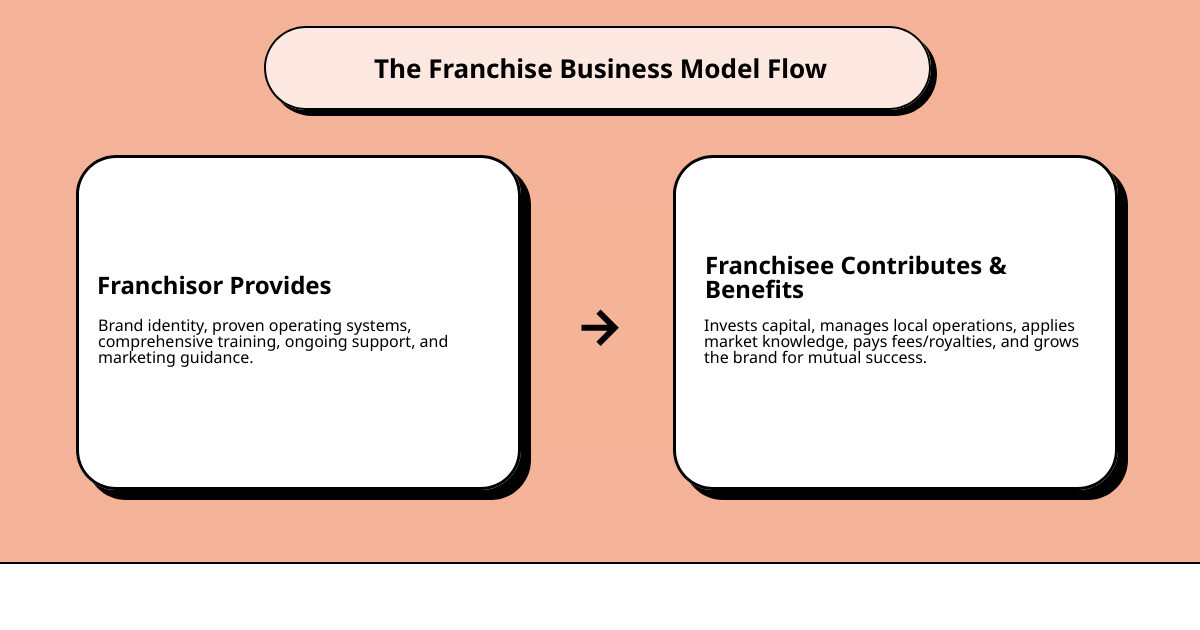
The* franchise business model* is a growth strategy where a business owner (the franchisor) grants independent operators (franchisees) the right to run a business using the franchisor’s brand, systems, and support in exchange for fees and royalties. The franchisor provides the brand name and proven systems, while the franchisee provides capital and manages day-to-day operations. This allows franchisors to expand rapidly without heavy capital investment, and franchisees get a tested business model with built-in support.
Why it matters: According to the International Franchise Association, franchising is a major economic driver, with growth that has consistently outpaced the broader economy.
If you’ve built a successful business and want to grow beyond your current locations without draining capital or losing quality control, franchising could be the answer. It’s about building a system that others can replicate while you maintain the brand standards that made you successful. However, franchising amplifies both strengths and weaknesses. You need a proven, profitable, and teachable business model before you consider offering franchises.
I’m Monique Pelle Kunkle, Vice President of Operations at Franchise Genesis. I’ve spent years helping business owners scale through the franchise business model—from ABA therapy clinics to wellness studios. The key to successful franchising isn’t just growth; it’s creating a foundation where both franchisor and franchisee thrive together.
Franchise business model further reading:
Why Franchising is a Powerful Growth Strategy for Your Business
Traditional expansion means personally guaranteed loans and hoping hired managers care as much as you do. The franchise business model flips this equation. Your franchisees invest their own capital and bring their entrepreneurial energy to their local market. You provide the proven system and brand; they provide the investment and drive.

This makes franchising a capital-efficient expansion strategy. Instead of you spending hundreds of thousands on a new location, your franchisee invests that amount. Multiplied across dozens of franchisees, this represents millions in growth capital that didn’t come from your bank account.
Franchisees also often outperform company-managed locations because they have skin in the game. They are owners building equity in their community, motivated in ways an employee can’t be. This combination of capital efficiency and motivated local ownership creates accelerated market penetration. For a deeper look, check out our article on Franchise Growth Strategies.
Building a New Revenue Stream
Franchising creates entirely new revenue streams.
- Initial Franchise Fee: A franchisee pays an upfront fee (typically $20,000 to $50,000+) for the right to join your system, covering your costs for recruitment and initial training.
- Ongoing Royalties: Franchisees pay a recurring percentage of gross sales for the continued use of your brand and systems. This creates a consistent revenue stream that grows with your network.
- Advertising Fund: Many franchisors collect an additional percentage for a collective advertising fund, which finances national or regional marketing campaigns that benefit the entire system.
- Supply Chain: Some systems generate revenue by selling proprietary products or negotiating bulk purchasing agreements, creating value for franchisees through better pricing.
These combined streams create financial scalability, allowing your revenue to grow without a proportional increase in your overhead.
Mitigating Expansion Risks
Opening new locations is risky. The franchise business model redistributes these risks through a shared risk model. Your franchisee shoulders the primary financial and operational risks of their individual location—signing the lease, hiring the team, and investing the capital.
This dramatically reduces your overhead compared to owning every location. You can focus on refining your systems and supporting your franchisees, not managing the day-to-day challenges of hundreds of locations. The result is a faster growth pace not constrained by your personal balance sheet. While franchising isn’t risk-free (a poorly performing franchisee can still damage your brand), a proper structure allows you to grow faster while spreading financial risk. For more on this, visit our page on the Benefits of Franchising.
The Core Components of a Successful Franchise Business Model
A successful franchise business model is like a perfected recipe, enabling a franchisee to replicate your success even with no prior industry experience.
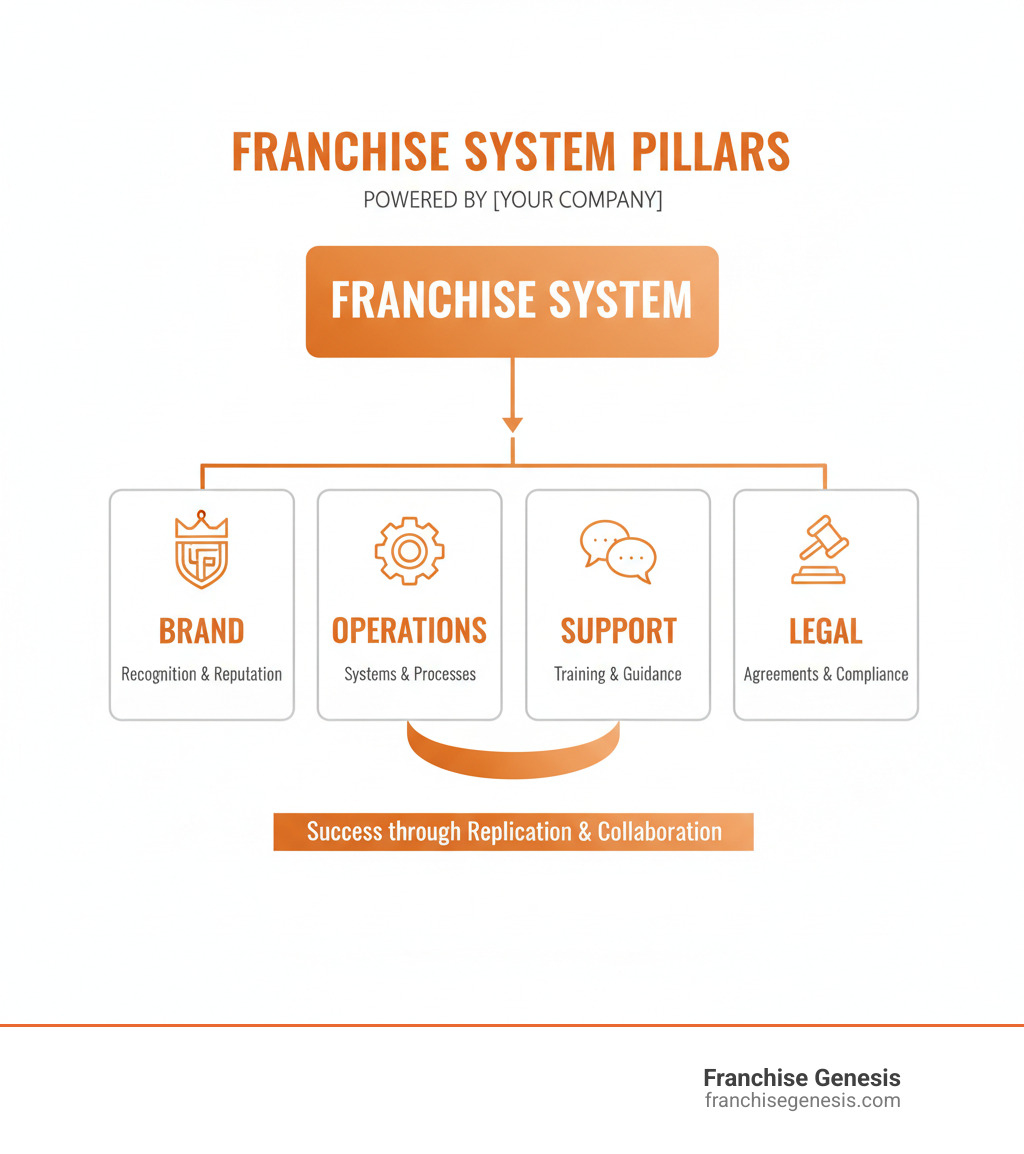
A strong franchise rests on four pillars: a strong brand identity, replicable systems, profitability for both parties, and a comprehensive support structure. When these work together, you create a business that can grow exponentially while maintaining quality and consistency.
Developing a Replicable Operating System
If franchisees can’t deliver the same experience you do, the brand suffers. A replicable operating system means breaking down everything that makes your business successful into clear, teachable steps. This involves:
- Standardized Procedures: Documented processes for every aspect of the business, from customer greetings to service delivery, ensure a consistent experience at every location.
- Quality Control: Clear benchmarks and systems to measure and maintain standards, such as site visits or performance metrics, protect the brand for the entire network.
- Customer Experience Consistency: Predictability builds trust and loyalty. Customers should know they’ll get the same quality service regardless of the location.
All of this is documented in the Franchise Operations Manual, the encyclopedia of your business. This living document evolves as the business improves. For more, see our article on the Franchise Operations Manual.
Providing Robust Training and Ongoing Support
Franchisees invest their dreams and savings into your system; you owe them the support to succeed. This isn’t just a quick orientation—it’s a partnership.
- Initial Training: A comprehensive program covering brand values, operations, marketing, and financial management, often blending classroom, hands-on, and online learning.
- Ongoing Support: Field support staff act as coaches, visiting locations to offer guidance and troubleshoot. You also provide marketing assistance, technology platforms (POS, CRM), and facilitate a peer network through conferences and forums.
- Continuous Improvement: As markets evolve, you innovate your systems and pass those improvements to franchisees through ongoing training.
This level of support is what defines a true franchise business model. You’re not just licensing a logo; you’re building a partnership designed for mutual success.
Structuring Your Franchise: Key Models and Legal Frameworks
Once your concept is proven and your system is replicable, you must choose the right structure and establish a solid legal foundation. Legal compliance is the bedrock of a sustainable franchise business model, ensuring transparency and protecting both your brand and your future franchisees.

This involves structuring your model to align with regulations and crafting clear agreements. For a comprehensive overview, refer to the Franchise Rule Compliance Guide from the Federal Trade Commission.
Choosing Your Franchise Model
The right model depends on your industry and goals.
- Business Format Franchise: The most common model, where you provide a complete system for conducting business, including manuals, training, and marketing plans.
- Product Distribution Franchise: A simpler model where you license franchisees to sell your products (e.g., car dealerships).
- Manufacturing Franchise: You grant the right to manufacture and sell products using your formula and brand name.
- Conversion Franchise: Allows existing independent businesses to convert to your franchise brand.
- Master Franchise: Grants a “master franchisee” exclusive rights to develop a large territory, who then recruits and supports sub-franchisees.
Ownership structures also vary, from single-unit and multi-unit franchisees to area developers who commit to opening multiple units in a specific territory.
Understanding the Legal Requirements
Franchising is a heavily regulated industry. The two cornerstone legal documents are the Franchise Disclosure Document (FDD) and the Franchise Agreement.
- The FDD is a comprehensive legal document mandated by the Federal Trade Commission (FTC). You must provide it to prospective franchisees at least 14 days before they sign an agreement or pay any money. It contains 23 “Items” disclosing crucial information about your company and the franchise offering.
- The Franchise Agreement is the binding contract that outlines the rights and obligations of both parties, including fees, territory, and operational standards.
Many states have their own franchise laws requiring registration. Protecting your intellectual property—trademarks, copyrights, and trade secrets—is also vital.
Franchising vs. Licensing: A Critical Distinction
It’s crucial to understand the difference between franchising and licensing. A franchise business model involves significant control and support, while licensing typically just grants the right to use intellectual property with minimal oversight.
| Feature | Franchising | Licensing |
|---|---|---|
| Level of Control | High: We dictate how the business is operated, ensuring strict brand consistency. | Low: We grant rights to use intellectual property (like a brand name or character), but have little control over operations. |
| Degree of Support | Extensive: We provide comprehensive training, operational guidance, marketing, and ongoing support. | Minimal: We typically provide only the intellectual property; the licensee manages all operations and marketing independently. |
| Fee Structures | Initial franchise fee, ongoing royalties (percentage of sales), advertising fees, and other specific fees. | Flat fee, percentage of sales (royalty), or a combination, usually for the use of intellectual property. |
| Legal Obligations | Heavily regulated (e.g., FDD in the U.S.). Strict contractual relationship outlining mutual obligations. | Governed by contract law; generally less regulated than franchising. |
| Brand Consistency | Primary focus; achieved through detailed manuals, training, and strict adherence to standards. | Not a primary concern; the licensee’s use may vary significantly. |
Franchising offers a more integrated and controlled expansion, as you’re selling an entire proven system, not just a brand name. This structure is essential for building a scalable and consistent business empire.
A Step-by-Step Guide to Franchising Your Business
Turning your business into a franchise business model is a strategic journey that requires careful planning and legal precision. This path involves evaluating your business, building your legal and financial framework, and creating a strategy to attract the right franchisees. For a comprehensive look at this process, explore our Franchising a Business: Complete Guide.
Step 1: Assess Your Business’s “Franchisability”
Before investing time and money, you must honestly assess if your business is ready to be franchised.
- Is your concept proven? You need a track record of success, ideally with at least one profitable location operating for more than a year.
- Is it profitable? The unit economics must be attractive enough for a franchisee to earn a solid return on investment after paying fees and royalties.
- Is it teachable? Your success cannot depend on your personal charisma or unique talent. Can someone with general business sense learn to run it successfully?
- Is there a broad market? Your concept must have sufficient demand across multiple geographic areas and demographics to support growth.
A thorough SWOT analysis (Strengths, Weaknesses, Opportunities, Threats) will help you objectively identify any issues that need to be addressed before you franchise.
Step 2: Build Your Legal and Financial Franchise Business Model
Once you’re confident your business is franchisable, it’s time to build the framework. This phase is technical and requires expert help from franchise attorneys and consultants.
- Draft the FDD and Franchise Agreement: These legal documents are not a DIY project. The FDD must accurately represent your business to comply with federal and state laws, while the Franchise Agreement must fairly protect both you and your franchisee.
- Determine Fees and Royalties: Your initial franchise fee should cover your setup costs, while the ongoing royalty rate must be sustainable for both you and your franchisees. Setting these figures requires strategic analysis of your industry and business model.
- Develop Financial Projections: You’ll need to project a franchisee’s potential costs, revenue, and profit, which can be included in Item 19 of your FDD. You’ll also project your own growth as a franchisor.
This foundational work ensures your franchise business model is legally compliant and financially sound. For more specific guidance, check out our article on How to Franchise My Small Business.
Step 3: Create Your Franchise Marketing and Sales Strategy
With your framework in place, you can now find your first franchisees. This requires a different marketing approach—you’re selling a business opportunity, not a consumer product.
- Develop Marketing Materials: Create a dedicated franchise website, brochures, and presentations that tell your story and explain the opportunity to entrepreneurs.
- Define Your Ideal Franchisee: Create a profile of your ideal candidate, considering their experience, capital, and values. This helps target your marketing efforts.
- Generate Leads: Use channels like franchise expos, online advertising, and franchise brokers to connect with prospective franchisees.
- Establish a Sales Process: Your process should be a professional, mutual evaluation, including inquiry calls, findy days, FDD review, and validation calls with existing franchisees.
- Award Franchises Selectively: Awarding a franchise is a critical decision. Choose partners who align with your culture and will be strong representatives of your brand.
Following these steps methodically helps you build a franchise business model that expands your brand responsibly.
Frequently Asked Questions about Franchising a Business
As you explore turning your business into a franchise business model, questions are natural. Having guided hundreds of business owners at Franchise Genesis, I’ve compiled answers to the most common ones.
How much does it cost to franchise a business?
Franchising your business requires a significant upfront investment. Costs vary based on your business’s complexity but typically include:
- Legal Fees: Preparing your Franchise Disclosure Document (FDD) and Franchise Agreement with an experienced franchise attorney.
- System Development: Creating your operations manual and a structured training program.
- Marketing Materials: Designing a franchise website, brochures, and other materials to attract franchisees.
- Consulting Fees: Working with franchise consultants to guide you through the process.
Prepare for a meaningful investment to build a strong, compliant system that attracts quality franchisees.
How long does it take to become a franchisor?
The process of building a complete franchise business model typically takes four to six months. This timeline allows for the necessary stages:
- Strategic Planning: Assessing your business’s readiness and developing a franchise plan.
- Legal Documentation: Drafting and finalizing your FDD and Franchise Agreement.
- Operations and Training: Documenting your systems and creating your support programs.
Rushing this process can lead to costly mistakes. The time spent building a solid foundation is a crucial investment in your future success.
What are the biggest risks for a new franchisor?
Understanding the risks allows you to build strategies to mitigate them. The most common challenges include:
- Undercapitalization: Underestimating the capital needed to support your franchise network before royalty revenues become substantial.
- Brand Damage: A single poor-performing franchisee can tarnish your brand’s reputation. This makes franchisee selection and quality control critical.
- Legal Disputes: The complexity of franchise law can lead to misunderstandings. Clear communication and fair agreements are your best defense.
- Inadequate Support: Failing to scale your support infrastructure as your network grows can lead to franchisee dissatisfaction and system-wide failure.
These risks are manageable with the right foundation and expert guidance.
Conclusion
The franchise business model is more than a growth strategy—it’s a way to build a legacy, creating opportunities for other entrepreneurs while expanding your vision across the country. It allows you to see your brand and systems replicated by passionate owners in communities you might never have reached alone.
However, franchising amplifies everything, which is why a solid foundation is non-negotiable. You need a proven concept, documented systems, and an unwavering commitment to support and legal compliance before you begin. The relationship between franchisor and franchisee is symbiotic; when both parties fulfill their roles, incredible growth occurs.
At Franchise Genesis, we have walked this path with countless business owners, helping them build sustainable franchise systems that change lives. We understand the challenges and are here to guide you through every step, from the initial assessment to awarding your first franchise.
Turning your business into a franchise business model requires courage and investment, but for the right business with the right partner, it is one of the most rewarding journeys you can take.
Ready to turn your business into a franchise? Let’s map out what your franchise system could look like. Your vision deserves a partner who knows how to turn it into a reality.