
Why Franchise Compliance is the Bedrock of Your Brand’s Expansion
Franchise compliance services ensure your franchise system meets all federal and state legal requirements, protecting your brand from costly litigation, regulatory penalties, and reputational damage while building a stable foundation for growth.
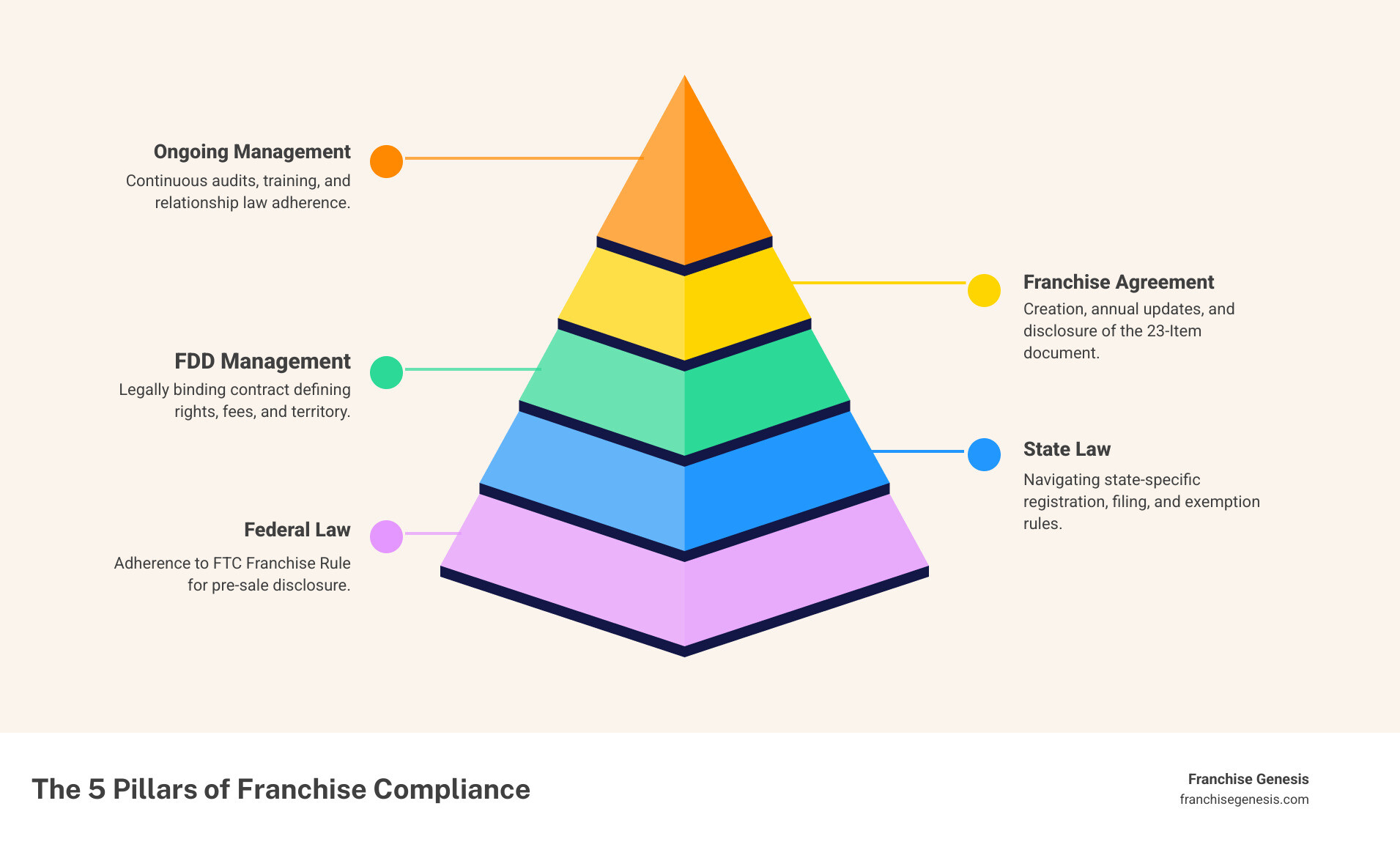
Key components of franchise compliance include:
- Federal Compliance – Meeting FTC Franchise Rule requirements for disclosure
- State Compliance – Navigating registration, filing, and exemption requirements across states
- FDD Management – Creating, updating, and disclosing your Franchise Disclosure Document
- Agreement Preparation – Drafting legally sound franchise agreements and addendums
- Ongoing Monitoring – Managing renewals, relationship laws, and franchisee compliance
The franchise industry has grown to nearly one million establishments in the United States in 2024. Every single one of those franchises operates under strict legal guidelines designed to protect both franchisors and franchisees.
When you’re ready to franchise, compliance isn’t just a legal checkbox. It’s the framework that protects your brand, builds trust with prospective franchisees, and creates a stable foundation for expansion. Good compliance practices help you reduce litigation risk and avoid the regulatory nightmares that can freeze your sales for months.
“Franchise compliance transformed how we handle compliance! Simply put, they manage the tough and tedious tasks while we focus on driving system wide growth,” one franchisor noted. That’s the reality: compliance done right becomes invisible—it just works. Compliance done wrong becomes your full-time job.
The challenge is that franchise compliance operates at two levels simultaneously. You must meet federal requirements under the FTC Franchise Rule while also navigating a patchwork of state-specific laws that vary from full registration to simple filings to no registration at all.
I’m Monique Pelle Kunkle, Vice President of Operations at Franchise Genesis, and I’ve guided dozens of businesses through this process. I’ve seen how proper franchise compliance services create confidence for both franchisors and franchisees—and how cutting corners creates costly problems down the road.
Franchise compliance services vocab explained:
The Legal Framework: Understanding Federal and State Franchise Laws
When exploring franchising, you’re not just dealing with one set of rules. You’re navigating a dual system of federal and state regulations. This system exists for one critical reason: to protect prospective franchisees by ensuring they receive complete, accurate information before investing their life savings into your brand.
The Role of the Federal Trade Commission (FTC)
At the federal level, everything starts with the FTC Franchise Rule. This is your baseline for franchise compliance services across the entire United States.
The FTC Rule doesn’t require you to register with the federal government. Instead, it mandates comprehensive pre-sale disclosure. You must provide prospective franchisees with a detailed Franchise Disclosure Document (FDD) that covers 23 specific items of information, from your financial performance to litigation history. This standardized framework creates a level playing field, allowing prospects to compare opportunities transparently. The goal is to prevent misrepresentation and build trust from day one.
Navigating the Patchwork of State Franchise Laws
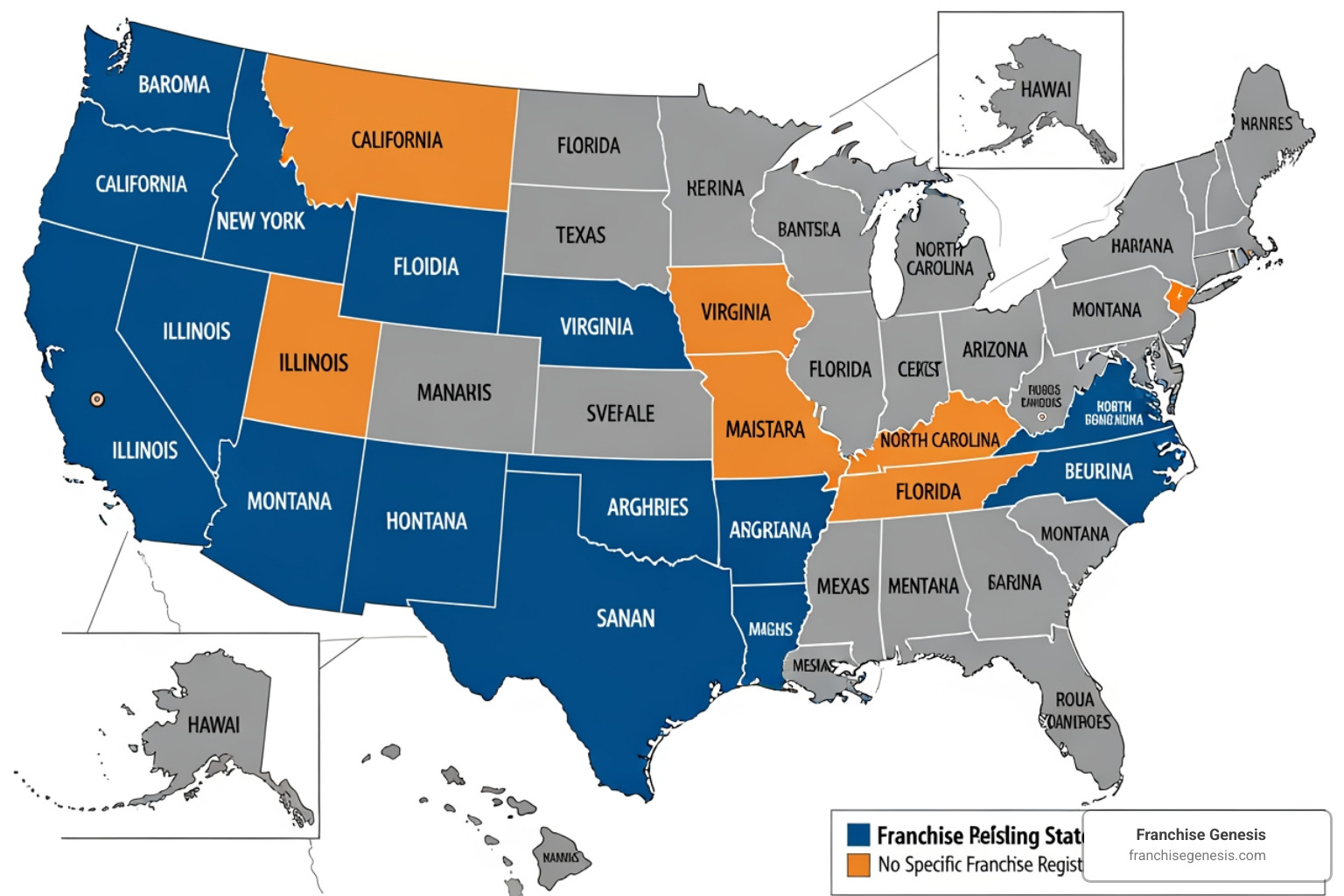
Individual states add their own layers of requirements, creating a patchwork of different rules, timelines, and processes depending on where you want to sell franchises. States generally fall into three categories:
-
Registration States: About 13 states, including California and New York, are the most rigorous. They require you to file your FDD with a state regulator and receive formal approval before you can offer or sell a franchise. This review process can take weeks or months.
-
Filing States: These states take a lighter approach. You must notify the state by filing your documents and paying a fee, but there is no formal approval process.
-
Non-Registration States: These states don’t require any pre-sale filing. However, they often have “franchise relationship laws” that govern termination, renewal, and transfer rights. Many, including North Carolina where Franchise Genesis is based, also have “Little FTC Acts” that allow franchisees to sue for violations of the federal FTC Rule.
This complex landscape means you can’t just create one FDD and use it everywhere. You’ll need to understand each state’s requirements and likely prepare state-specific addenda. Some states may even require financial assurances, like deferring initial fees. This is where professional franchise compliance services become essential. Our team at Franchise Genesis understands both the federal framework and the state-by-state variations, helping you create a roadmap for safe, strategic expansion.
The Core Compliance Documents: FDD and Franchise Agreement
Two documents form the foundation of your franchise system: the Franchise Disclosure Document (FDD) and the Franchise Agreement. They are legal shields that protect your brand and define your relationships, but when crafted correctly, they are also powerful tools that build confidence with prospective franchisees.
Mastering the Franchise Disclosure Document (FDD)
Think of the FDD as your franchise system’s complete biography. The FTC Franchise Rule requires it to contain 23 specific disclosure items that give prospects a comprehensive picture of your opportunity. These items cover everything from your company’s history and management team to the initial investment, supplier restrictions, and financial statements.
One section, Item 19 Financial Performance Representations (FPRs), deserves special attention. This is where you can share information about potential franchisee earnings. If you include an Item 19, every number must be carefully substantiated. Critically, your sales team must be trained to make no financial claims beyond what is stated in your Item 19 to avoid serious legal problems.
Creating an FDD is just the start. It’s a living document that requires ongoing management:
- Annual Update: You must refresh your FDD within 120 days of your fiscal year-end.
- Material Changes: You must also update the FDD immediately for any material changes, such as new litigation or a change in leadership.
- Waiting Periods: The FTC mandates a 14-calendar-day waiting period after a prospect receives the FDD before they can sign an agreement or pay any fees. An additional 7-day period is required if you make material changes to the final agreement.
Mastering these FDD requirements is central to effective franchise compliance services.
Crafting a Protective and Fair Franchise Agreement

Key elements of the Franchise Agreement include:
- Territory Rights: Defines whether the franchisee has an exclusive area.
- Fees and Financial Obligations: Details the initial fee, royalties, and other payments.
- Trademark Usage: Grants the right to use your brand’s intellectual property. We always recommend ensuring your brand’s trademarks are protected before franchising.
- Term and Renewal: Specifies the length of the agreement and conditions for renewal.
- Termination Clauses: Outlines the circumstances for ending the relationship, which often requires “good cause” under state law.
- Operational Standards: Requires franchisees to maintain brand quality and follow system procedures.
Our franchise compliance services ensure your agreements are legally sound, protective of your interests, and attractive to the quality franchisees you want to recruit.
Lifecycle Management: Your Guide to Ongoing Franchise Compliance Services
Creating your initial FDD and franchise agreement is just the starting line. The real work of franchise compliance services begins once you award your first franchise and continues throughout the entire relationship. This ongoing phase is about weaving compliance into your daily operations to reduce long-term risk and support sustainable growth.
Managing the Franchise Relationship Lifecycle
Your relationship with each franchisee is governed by “continuing franchise relationship laws,” which vary by state. These laws focus on protecting both parties during critical moments like termination, renewal, and transfer. State laws often require you to prove “good cause” before terminating a franchise, making meticulous documentation of any breaches essential. Similarly, renewal rights and transfer procedures must be handled fairly and consistently as outlined in your agreement and by state law. To avoid costly litigation, many agreements and state laws encourage alternative dispute resolution methods like mediation or arbitration.
Best Practices for Ongoing Franchise Compliance

Building a thriving franchise system requires creating a culture of compliance. Key practices include:
- Regular Internal Audits: Conduct health checkups to verify that franchisees are following brand standards, maintaining quality, and meeting reporting obligations.
- Proactive Risk Assessment: Regularly review your compliance policies to stay ahead of changing regulations and business needs.
- Meticulous Record-Keeping: Document everything. Thorough records of communications, agreements, and audits are your strongest defense in a dispute.
- Franchisee Training Programs: Educate franchisees on regulations and brand standards to reduce liability risk for everyone.
- Designating a Compliance Coordinator: Assign one person to own your compliance program, ensuring nothing falls through the cracks.
The International Franchise Association’s Franchise Compliance Toolkit offers valuable resources for building your compliance framework.
How Technology Can Streamline Your Franchise Compliance Services
Managing compliance manually is inefficient and risky. Technology transforms compliance from a burden into a strategic advantage. Modern compliance management platforms serve as a central command center to track deadlines, store documents, and monitor your status across all states. They provide real-time registration tracking, send automated deadline reminders, and offer centralized document storage to ensure your team is always working with the most current information. This automation and organization prevent costly mistakes, speed up your sales process, and allow you to focus on growing your system.
The Consequences of Non-Compliance and the Value of Expert Guidance
Cutting corners on compliance isn’t a cost-saving strategy—it’s a ticking time bomb. The financial, legal, and reputational damage from non-compliance is a real threat that can destroy everything you’ve built.
The High Cost of Cutting Corners
Ignoring franchise compliance services can lead to severe consequences that I’ve watched franchisors face firsthand:
- Hefty Fines and Penalties: Federal and state regulators can impose fines that quickly spiral into six figures.
- Franchisee Litigation: If franchisees find you weren’t compliant, they can sue for rescission (a full refund of their investment), damages, and attorney’s fees.
- Unenforceable Agreements: A court may refuse to enforce your franchise agreement if you failed to follow proper disclosure procedures, leaving your brand and intellectual property unprotected.
- State-Mandated Sales Freezes: Missing a renewal deadline in a registration state can halt your expansion overnight, prohibiting you from selling franchises there for months.
- Reputational Harm: Word of compliance issues and litigation travels fast, making your brand toxic to prospective franchisees, lenders, and investors.
The cost of non-compliance is measured in lost opportunities, stalled growth, and broken trust that is nearly impossible to rebuild.
How Professional Franchise Compliance Services Mitigate Risk
Professional franchise compliance services are an investment in your brand’s future. Experts transform compliance from a constant worry into a strategic advantage by:
- Navigating Regulatory Complexity: They understand the intricate dance between federal FTC rules and the patchwork of state laws, ensuring you’re compliant everywhere you operate.
- Expert FDD Drafting: A professionally crafted FDD is not only compliant but also clear and confidence-building for candidates.
- State Registration Management: They handle the entire registration process, from applications to renewals, preventing sales freezes and keeping your expansion on track.
- Ongoing Monitoring: They proactively track changes in franchise laws and advise you when updates are needed, keeping you ahead of potential issues.
- Strategic Legal Advice: They help you structure your system to support growth while minimizing risk, fostering healthy franchisee relationships.
At Franchise Genesis, we build compliance into our entire approach because we know it creates confidence. When your foundation is solid, deals close faster, and you can focus on growing your brand.
A Glimpse into International Franchise Compliance
If your brand eventually expands internationally, the complexity multiplies. Country-specific laws, cultural norms, and disclosure standards vary wildly from the U.S. framework. This reinforces a fundamental truth: expert franchise compliance services are the framework that makes sustainable growth possible, whether you’re franchising in your home state or globally.
Frequently Asked Questions about Franchise Compliance
When business owners consider franchising, the same questions about compliance often arise. Thinking through these issues beforehand is the mindset that leads to long-term success. Here are the three questions I hear most often.
What are the first steps in ensuring my new franchise system is compliant?
The absolute first step is to develop a compliant Franchise Disclosure Document (FDD) and Franchise Agreement with the help of an experienced franchise attorney. These documents are the legal backbone of your system and ensure you meet federal FTC Rule requirements before you offer or sell any franchises. Having these documents ready from the start prevents you from inadvertently violating the law just by discussing your opportunity with prospects.
How often do I really need to update my FDD?
This is a critical point where new franchisors often get tripped up. You must update your FDD in two instances:
- Annually, within 120 days of your fiscal year-end. This is a hard deadline.
- Immediately, if there are any “material changes” to the information, such as new litigation, changes to your leadership team, or modifications to your Item 19.
Missing these deadlines creates a “dark period” where you legally cannot sell franchises, which can freeze your sales momentum. Ongoing franchise compliance services help you stay on track with these critical timelines.
Can I sell a franchise in any state once I have my FDD?
No. While the FDD is a federal requirement, about 13 states are “registration states” (like California and New York) where you must file your FDD and get approval from a state regulator before you can offer or sell a franchise. This review process can take weeks or even months.
Other states have simpler filing requirements or no registration at all, but may still have specific disclosure obligations. For example, North Carolina has additional requirements if you don’t have a federally protected trademark. You must understand the specific laws of each state where you plan to sell, which is why expert guidance from professional franchise compliance services is essential.
Conclusion: Turning Compliance into Your Competitive Advantage
The truth about franchise compliance services is that they aren’t a burden—they’re the foundation that makes sustainable growth possible. When done right, compliance is the invisible infrastructure that allows your brand to expand smoothly, attract quality franchisees, and build something that lasts.
We’ve covered the entire compliance landscape, from federal and state laws to the FDD and ongoing lifecycle management. Each piece protects your brand from costly litigation, regulatory penalties, and reputational damage.
The choice you face is simple: be proactive or reactive. A proactive approach means building compliance into your DNA from day one with expert help. A reactive approach means scrambling to fix problems, facing sales freezes, and dealing with franchisee litigation.
When compliance is woven into your operations, it becomes a competitive advantage. Prospective franchisees see a professional, trustworthy system and feel confident investing in your brand. Your team can sell with confidence, and you can sleep at night knowing your brand is protected.
At Franchise Genesis, we’ve seen how proper compliance transforms nervous business owners into confident franchisors. Our expertise in franchise compliance services isn’t just about filing paperwork—it’s about creating a scalable, protected brand that can grow with confidence. We handle the tough and tedious tasks while you focus on what you do best: growing your business.
Your business is ready for the next chapter. Don’t let compliance concerns hold you back or become a costly mistake. Let us help you build the foundation right.
Ready to turn your successful business into a thriving, protected franchise network? Let’s make it happen together. Franchise Your Business with Confidence.