
Why Franchise Sales Training is Your Most Strategic Investment
Franchise sales training is specialized education for the complex, legally-regulated process of awarding franchise territories. It equips your team with skills in compliance, candidate qualification, consultative selling, and pipeline management.
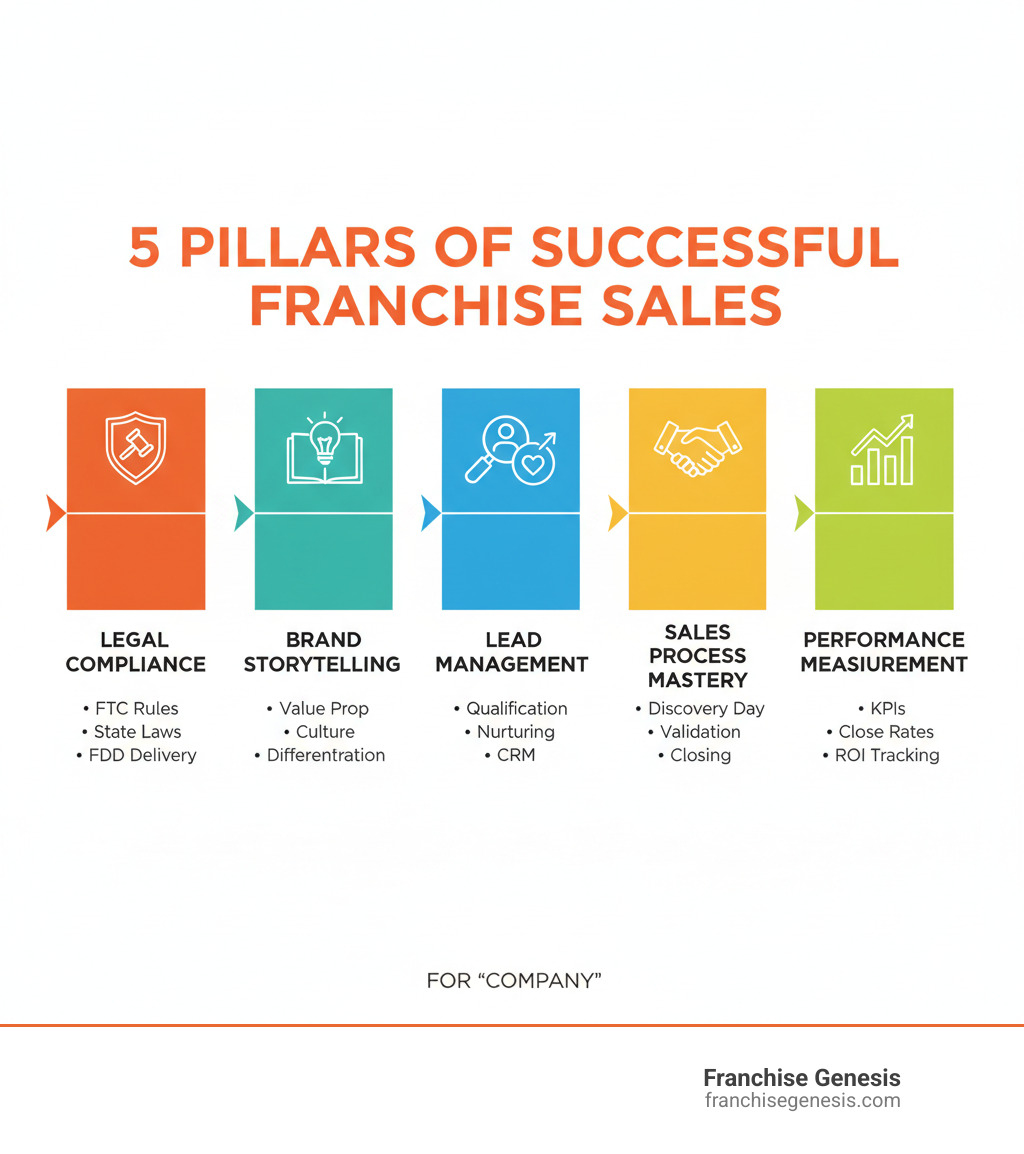
Key components of effective franchise sales training include:
- Legal Compliance – Understanding FTC rules, state laws, and FDD delivery requirements
- Consultative Selling – Shifting from “best product” to “right fit” mindset
- Brand Storytelling – Articulating your value proposition and culture
- Lead Management – Qualifying, nurturing, and moving candidates through the pipeline
- Process Mastery – Structuring findy days, validation calls, and closing strategies
Franchise sales is fundamentally different from selling products. As research makes clear, “nothing you have done has prepared you for franchise sales.” You’re asking candidates to invest their life savings and trust your brand with their future. A single sale has massive repercussions for your brand, the franchisee, and their community. The stakes are high, and the regulations are strict.
The franchise sales process requires a unique blend of skills. Your team must build long-term partnerships, not just close transactions. They need to master consultative selling while navigating complex legal guardrails, all while managing a sales cycle that often stretches for months.
As Vice President of Operations at Franchise Genesis, I’ve guided dozens of emerging franchisors in building effective sales teams, helping concepts scale from launch to over 100 locations. My experience has shown that the difference between a struggling and a thriving franchise system is often the quality of its sales team’s training.
Essential franchise sales training terms:
Why Franchise Sales is a Different Ballgame
Many successful business owners think, “I’ve been selling for years—franchise sales can’t be that different, right?” While understandable, franchise sales training exists because it’s a completely different universe than traditional sales.

When someone buys your product, they make a purchase. When they buy your franchise, they make a life-changing decision. Candidates often quit stable jobs and invest their life savings, betting their family’s future on your brand. This emotional weight fundamentally changes the sales approach.
This shift means moving from a “best product” mindset to a “right fit” philosophy. You’re not closing a transaction; you’re building a long-term partnership that will shape your brand’s reputation for years. Every franchisee becomes a brand ambassador. Get it right, and they build your brand. Get it wrong, and they can damage your entire network.
The good news? You can Transform Leads into Loyal Franchisees with a Proven Sales Strategy when you understand what makes franchise sales unique.
The Consultative Sales Approach
In franchise development, your candidates are potential partners, which changes how you sell. The most effective salespeople adopt a consultative approach, where education matters more than persuasion and trust trumps pressure.
Think of it as mutual due diligence. You’re evaluating the candidate’s skills, capital, and mindset, but they’re also evaluating if your brand, support, and values align with their goals. Both parties must be confident in the partnership.
Your role is to be a trusted advisor. You must understand their motivations, address their fears, and guide them through a complex decision. Building trust and transparency isn’t just nice to have—it’s the foundation of every successful franchise relationship. For more on this approach, explore our Franchise Sales Training Insights.
Addressing Unique Franchise Sales Challenges
The franchise sales cycle is much longer than typical product sales, often stretching across months. Your team needs specialized skills to keep candidates engaged without being pushy.
Managing the long sales cycle and overcoming candidate fear are key challenges. Your team must be experts at addressing concerns and maintaining momentum throughout a process that can take months. They also need to justify your investment requirements, communicating the value of the Franchise Fee Complete Guide far beyond the initial check. Candidates must understand the ongoing support, proven systems, and brand power they are gaining.
Legally, you must convey this value while navigating strict regulations. Making financial performance representations without proper documentation is illegal and can destroy your franchise system. Franchise sales training must equip your team to communicate value compellingly while staying firmly within legal boundaries. The stakes are high, but with the right training, your team can master this different ballgame.
Building Your Winning Playbook: Core Components of Effective Franchise Sales Training
Building a franchise sales team is like coaching a sports team; you need a solid game plan. Franchise sales training is not a one-time workshop but a structured approach that guides your team through the entire buyer journey, from first inquiry to signing the agreement.
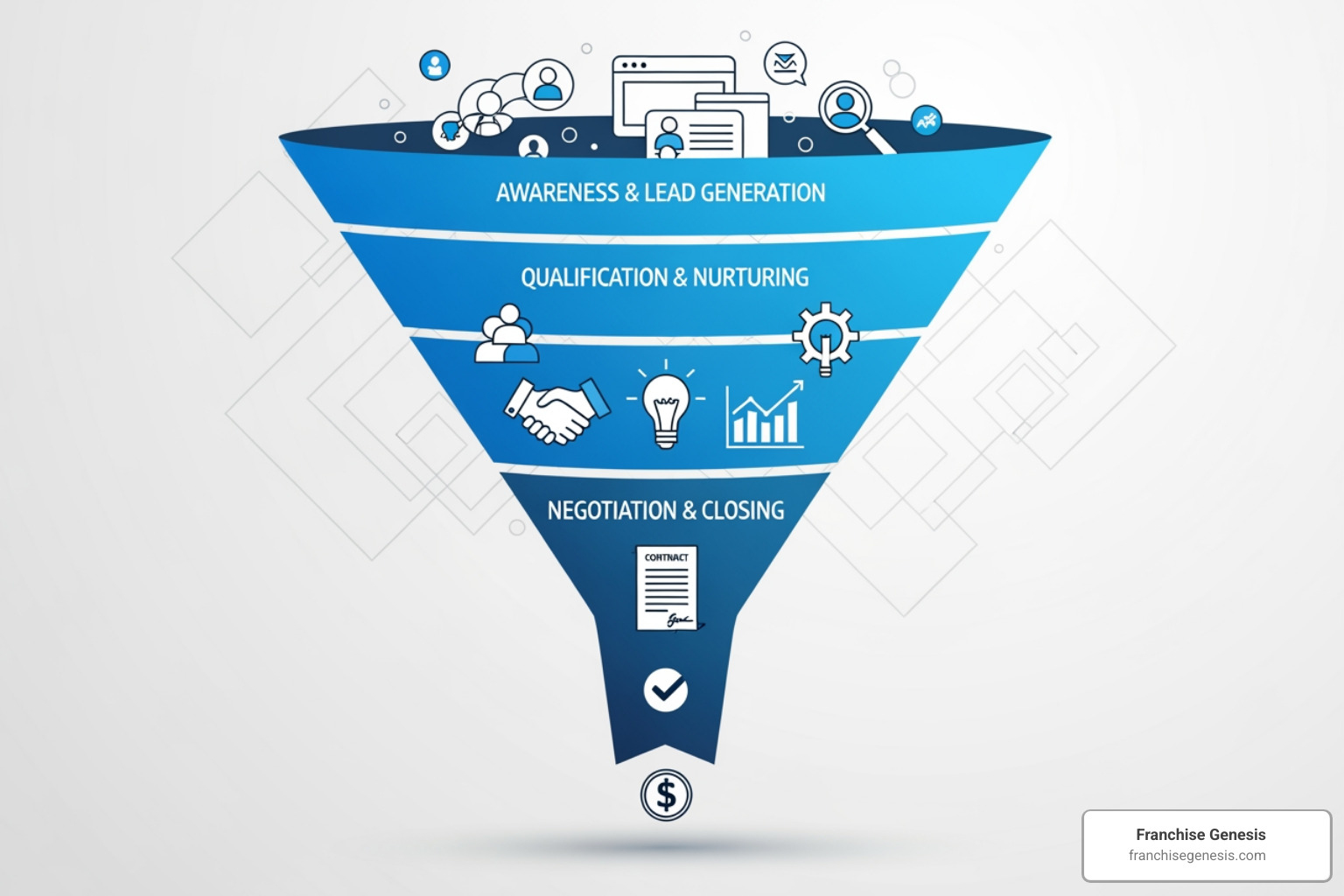
Effective training builds critical capabilities like mastering a structured sales process, compelling brand storytelling, and artful lead nurturing over long timelines. Role-playing real-world scenarios is a powerful tool. It allows your team to practice difficult conversations in a safe environment, building confidence and muscle memory for handling actual prospects.
The best training is personalized to your brand, market, and challenges. Generic advice rarely works. Custom-built training focused on your value proposition and ideal candidate allows for immediate application, leading to better sales strategies and stronger overall Franchise Development Complete Guide outcomes.
Defining the Curriculum for Your Franchise Sales Training
A comprehensive curriculum provides foundational and advanced skills. It starts with understanding your ideal candidate profile—the traits, work ethic, and values that predict success—which transforms lead qualification. Your team must master the FDD Document, not by memorizing jargon, but by using it as a tool for transparency and trust. A team that can explain the FDD in plain English turns it into a sales asset.
Effective lead qualification techniques are crucial for focusing on serious candidates by assessing financial readiness, timelines, and motivation. Training must also cover Findy Day planning, which is pivotal for converting prospects, and ethical closing strategies that guide candidates without pressure. A smooth post-sale handoff to operations is also critical to ensure new franchisees feel supported from day one.
The curriculum should also include lead generation, broker engagement, brand storytelling, and website optimization. Advanced modules can cover interviewing, buyer profiling, objection handling, and pipeline management.
Tailoring Training for Your Development Team
Effective training is not one-size-fits-all. A lead generator’s needs differ from a sales director’s, and a new recruiter requires different support than a veteran closer.
Recruiters and lead generators need training focused on attracting ideal candidates, measuring lead procurement success, and spotting red flags early. As the first point of contact, their authentic brand representation is vital.
Sales directors and managers require advanced training in negotiation, team efficiency, CRM use, and predictive metrics. Their training should also cover coaching and talent development to help them lead effectively.
Finally, the entire team needs regular compliance refreshers. Franchise law changes, so ongoing training is essential to ensure everyone remains current and understands the high stakes of non-compliance. This differentiated approach ensures every touchpoint in your Franchisee Recruitment Consulting process is handled by an expert.
Navigating the Maze: Legal and Ethical Guardrails
A single careless statement from your sales team can lead to massive fines, rescinded agreements, and a ban on selling franchises. This isn’t hyperbole; it’s the reality of operating in a heavily regulated industry.

Franchise expansion is governed by the federal Federal Trade Commission (FTC) Rule and a patchwork of varying state-specific franchise laws. The cost of non-compliance goes beyond fines. It can include contract rescission (returning all fees), financial restitution, severe reputational damage, and even a complete prohibition on selling franchises. In certain states, violations can escalate to felony charges.
That’s why comprehensive franchise sales training focused on Franchise Legal Requirements isn’t optional—it’s the foundation of sustainable growth. Building a culture of ethical sales protects your brand, your franchisees, and your future.
Mastering Franchise Sales Compliance
Your team must know exactly what they can and cannot say. Avoiding illegal earnings claims or financial performance representations is the most critical compliance rule. Unless documented in Item 19 of your FDD, your team cannot project, share, or imply potential franchisee earnings.
Proper FDD delivery and waiting periods are equally non-negotiable. The FTC requires candidates to receive the FDD at least 14 calendar days before signing any agreement or paying money. Your team must understand these timing requirements precisely.
Documenting every step of the sales process creates a protective paper trail. This means tracking FDD delivery, recording conversations, and maintaining detailed notes. Programs like the IFA Fran-Guard™ equip sales teams to spot potential violations, building a culture of ethics and responsibility.
This rigor separates professional franchise organizations from those facing regulatory nightmares. Effective Franchise Sales Compliance Training transforms compliance from a burden into a competitive advantage.
The Role of the Franchise Disclosure Document (FDD)
Many franchisors treat the FDD Document as a necessary evil, which is a missed opportunity. When properly trained, your team can use the FDD as one of your most powerful sales tools for building trust.
Training your team to use the FDD as a sales tool means helping candidates understand what they’re reading. Your people need to walk candidates through each of the 23 Items clearly, from the franchisor’s background to initial investment ranges, anticipating questions and addressing concerns proactively.
One of the most valuable sections is Item 20, which lists franchisee contact information. Directing candidates to franchisee validation calls is essential. Smart salespeople guide candidates to prepare meaningful questions for these calls and encourage them to speak with a variety of franchisees.
Ensuring consistent messaging across the team is critical. When everyone tells the same transparent story, it builds candidate confidence and reduces compliance risk. Handled properly, the FDD becomes the foundation of trust that turns prospects into committed partners.
From Training to Treasure: Measuring ROI and Embracing Technology
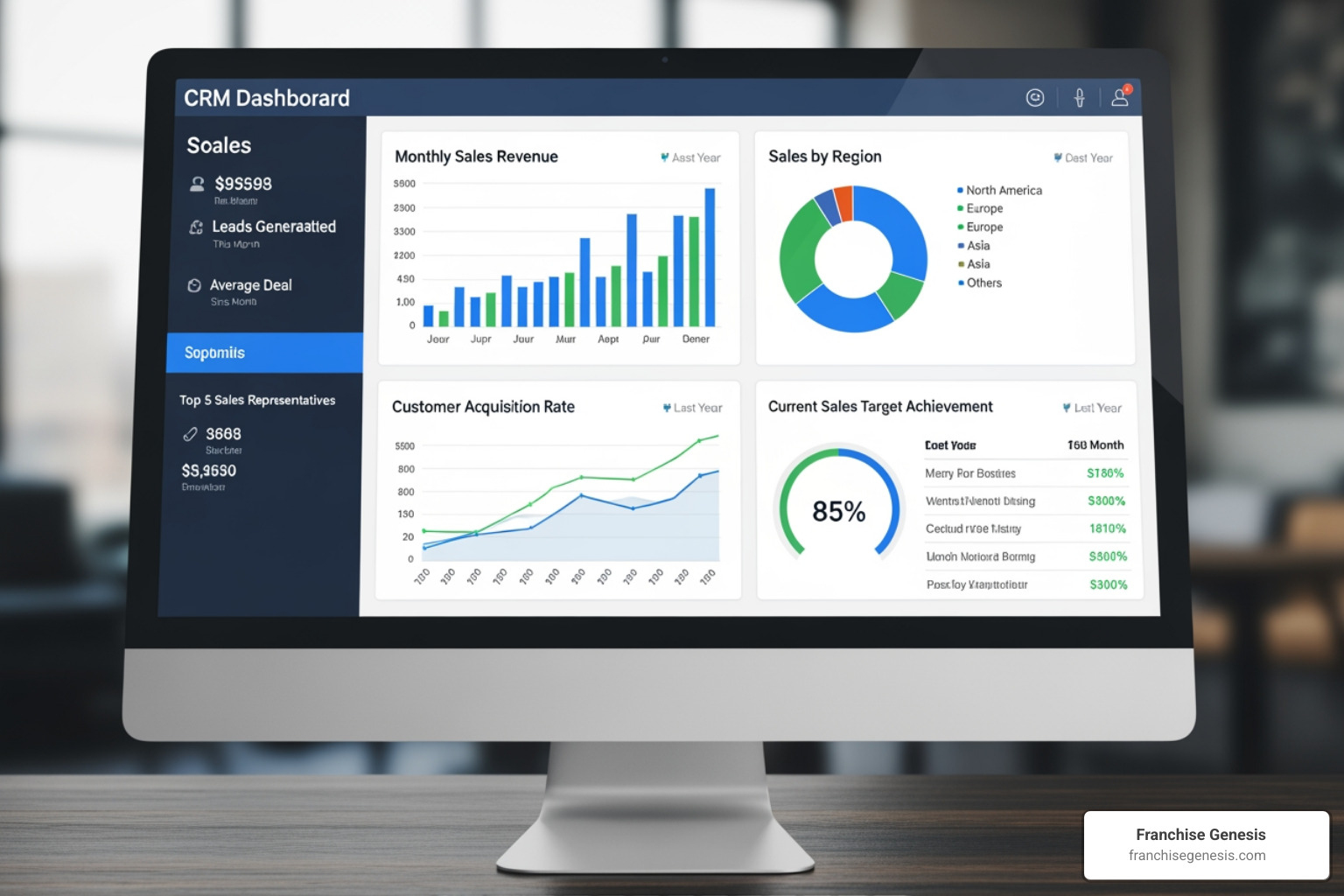
Investing in franchise sales training delivers a measurable, trackable return on your investment in concrete numbers. We focus on specific Key Performance Indicators (KPIs) that tell the real story, such as close rate improvement, the relationship between cost per lead and cost per sale, and sales cycle length.
For an emerging franchisor, even a 0.5% increase in your close rate from training could mean three extra sales. This translates to $75,000-$120,000 in immediate franchise fees and potentially millions in lifetime royalties.
Technology plays an increasingly important role in maximizing your training investment. Modern CRM systems help you track every interaction, automate follow-ups, and spot pipeline patterns. When you combine solid Franchise Growth Strategies with the right technology, you create a powerful engine for sustainable growth.
How to Measure the ROI of Your Training Program
Measuring the true impact of your franchise sales training goes deeper than just counting signed agreements. You need to look at the full picture.
Track lead-to-close ratios before and after training to establish a baseline. Also, monitor franchisee performance in their first year. This shows if your team is making better matches, not just more sales. Calculate the lifetime value of a franchisee to see the long-term impact. Then, use franchisee satisfaction surveys to gather qualitative insights on the sales process and their level of support.
The numbers from successful training programs speak for themselves. Well-trained professionals attract higher-quality candidates who are more likely to succeed. This creates a virtuous cycle: successful franchisees strengthen your brand, making it easier to attract even better candidates. Your Franchise Sales Training ROI becomes a critical metric that guides your ongoing investment decisions.
The Role of Ongoing Franchise Sales Training and Development
Franchise sales training isn’t something you check off a list once. It’s an ongoing commitment to excellence. The franchising landscape changes constantly, so continuous improvement is essential.
Regular compliance updates keep your team sharp on the latest FTC rules and state laws. Advanced skills workshops help experienced team members tackle new challenges, like social media lead generation or multi-unit negotiations.
Leveraging Learning Management Systems (LMS) makes ongoing training practical and consistent. Your team can access modules on-demand, ensuring everyone stays aligned on messaging as your team grows. The real magic happens when you create a culture of learning. When your team is motivated to share insights, role-play scenarios, and refine their approach, training becomes a true competitive advantage. This commitment drives Franchise Training Success across your system.
Frequently Asked Questions about Franchise Sales Training
How long does it take to train a new franchise salesperson?
For someone new to franchise development, initial onboarding takes several weeks to cover brand knowledge, the franchise model, and sales processes. However, becoming truly proficient in franchise sales is a marathon, not a sprint.
True mastery unfolds over months, combining initial training with ongoing coaching and real-world application. A new salesperson needs time to build confidence with difficult conversations, long sales cycles, and complex legal nuances. The goal is to develop an expert, a journey that extends far beyond the first week.
What is the single biggest mistake in franchise sales?
The single biggest mistake is making an illegal earnings claim or financial performance representation. This means sharing any financial information about potential franchisee earnings that is not documented in Item 19 of your Franchise Disclosure Document (FDD).
Violating FTC and state laws can lead to severe penalties: hefty fines, litigation, rescinded agreements (requiring you to return all fees), and even being barred from selling franchises. In some states, it can be a felony. This is why comprehensive franchise sales training emphasizes compliance—to protect your brand and your candidates.
Can I just hire an experienced salesperson from another industry?
It’s tempting to hire a star salesperson from another industry, and while general sales skills are valuable, they aren’t enough. As the saying goes, “nothing you have done has prepared you for franchise sales.”
The legal complexity is a major differentiator. A salesperson must understand the FDD, steer FTC regulations, and avoid illegal earnings claims. Furthermore, the consultative approach is entirely different; you’re building a long-term partnership with someone making a life-altering investment, not just pushing a product.
The emotional journey, long sales cycle, and high stakes are unique. Even an experienced salesperson needs specialized franchise sales training to steer this landscape successfully. General sales skills are the foundation; franchise-specific training builds the house.
Conclusion
A thriving franchise system starts with your sales team. Investing in comprehensive franchise sales training is one of the most strategic decisions for your brand’s future. Equipping your team with the right skills and mindset doesn’t just improve close rates; it builds the foundation for lasting Accelerated Brand Growth.
Every sale shapes your brand’s future reputation. A well-trained team secures the right partners—franchisees who share your vision and values. They build relationships on trust and transparency while navigating complex legal regulations, protecting your franchisees and your brand.
The path to success is clear: focus on compliance, a consultative approach, and continuous improvement. These pillars help you build a sustainable franchise system. Your team will gain confidence, candidates will feel supported, and your brand will grow with the right partners.
You don’t have to figure this out alone. The experts at Franchise Genesis have guided dozens of emerging franchisors through building effective franchise sales teams, and we can help you develop a customized training program that aligns perfectly with your growth objectives. Whether you’re just starting to explore franchising or you’re ready to scale rapidly, we’re here to support you every step of the way.
Ready to start building your sales dream team? Explore our comprehensive services for franchisors and let’s talk about how we can help you turn your franchise development vision into reality. Your future franchisees are out there—let’s make sure your team is ready to welcome them home.