Your Brand is Your Most Valuable Asset
Franchise brand guidelines are comprehensive documents establishing the standards franchisees must follow to maintain a consistent brand identity. These guidelines typically cover:
- Visual identity (logo usage, colors, fonts)
- Verbal identity (brand voice, tone, messaging)
- Operational standards that impact customer experience
- Marketing and advertising requirements
- Quality control and compliance expectations
- Examples of correct and incorrect brand usage
Your brand isn’t just a logo; it’s your franchise system’s most valuable asset. Customers expect the same quality and service at every location, which is what builds loyalty. Brand consistency builds trust, creates recognition, and drives revenue. Research shows that when franchisees comply with national marketing campaigns, they boost local sales while increasing customer awareness on a national scale.
The challenge is maintaining this consistency as you scale. Without clear guidelines, your carefully crafted brand identity can quickly erode as new franchisees bring their own interpretations. The stakes are high: inconsistent branding can damage customer perception, lead to inconclusive marketing data, and erode the trust you’ve worked years to build.
As Monique Pelle-Kunkle, Vice President of Operations at Franchise Genesis, I’ve seen how franchise brand guidelines serve as the foundation for sustainable growth. My experience guiding business owners through franchising has shown that the most successful systems establish clear, comprehensive brand standards from day one.
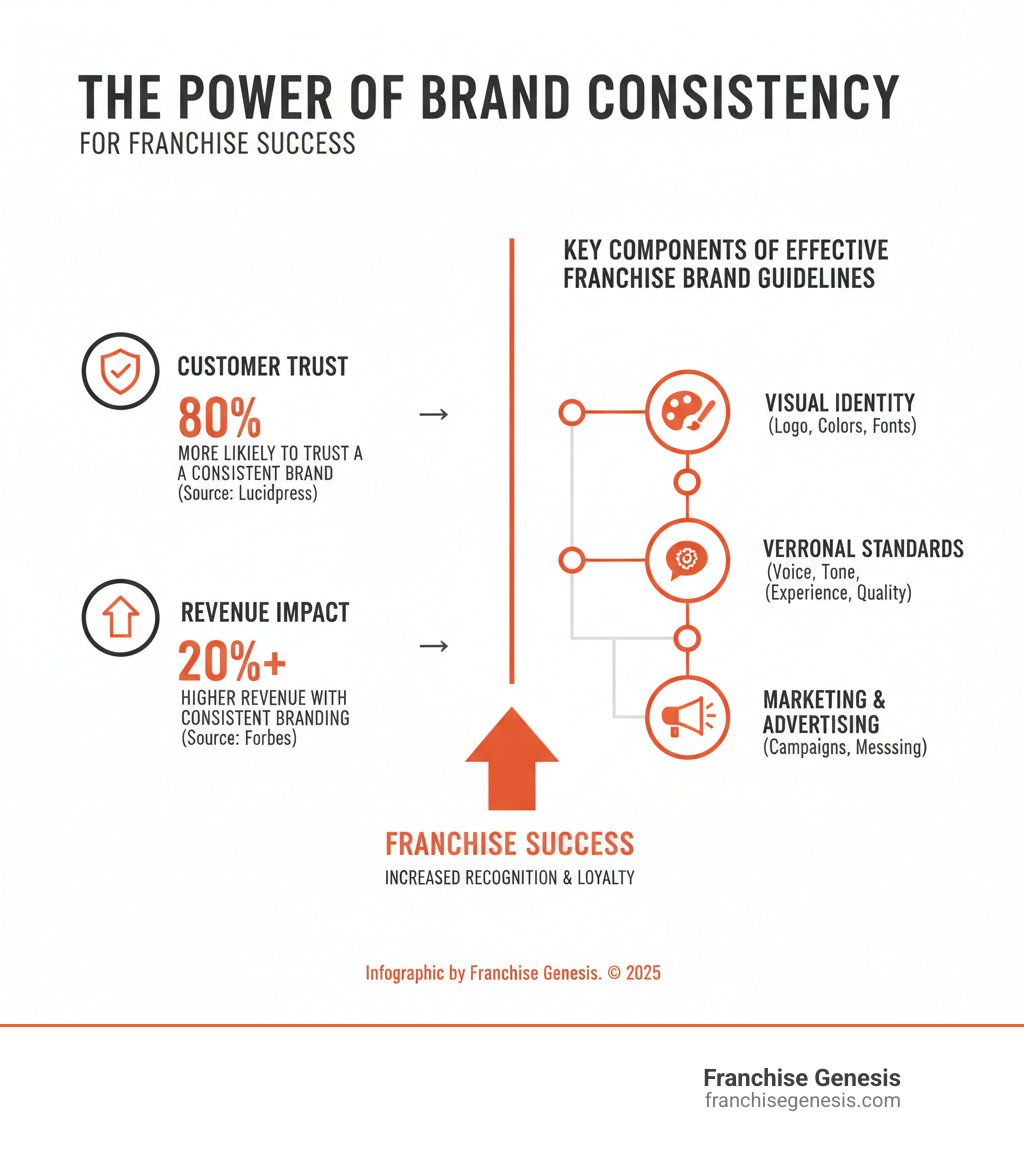
Franchise brand guidelines vocab explained:
The Cornerstone of Consistency: Why a Strong Brand Identity is Non-Negotiable
When you franchise your business, how do you ensure the magic that made you successful is replicated at every location? The answer is franchise brand guidelines. They are your insurance policy against the chaos of rapid growth, protecting the brand equity you’ve spent years building.

From a customer’s perspective, your brand is a promise of a specific experience. If a franchised location fails to deliver, you don’t just lose one customer; you damage the trust of everyone they tell. This is why building loyalty through consistent experiences is critical. Customers buy into your brand promise, creating an emotional connection that leads to repeat business and powerful word-of-mouth marketing.
The Power of a Unified Customer Experience
Customers don’t distinguish between corporate and franchise locationsthey see your logo and expect your experience. Consistent service and predictable quality are not boring; they are reassuring. Meeting customer expectations every time turns a positive first impression into a positive perception of your entire brand. Every satisfied customer becomes an ambassador for your whole system.
Building Trust and Recognition at Scale
Familiarity builds comfort and reliability. A consistent professional image across all touchpoints builds market credibility that individual businesses can’t achieve alone. This unified branding is your most powerful tool for differentiating from competitors. While others build recognition one location at a time, your system can leverage a unified brand to dominate markets more effectively.
As you develop your Franchise Growth Strategies, a strong, consistent brand gives every franchisee a competitive advantage, making your brand one that customers recognize, trust, and actively seek out. This also makes measuring marketing ROI more accurate, as each location reinforces the same message.
Building Your Brand Bible: Essential Components of Franchise Brand Guidelines
Think of your franchise brand guidelines as your brand’s bible. It’s the foundation that ensures every franchisee can authentically represent your brand. A comprehensive guide goes beyond logo placement; it captures your brand’s essence, from its visual and verbal identity to the experiential standards that define your customer interactions.
Effective brand guides should include these key components:
- Brand Foundation: Your story, mission, and values.
- Logo Usage: Clear rules on how, where, and when to use the logo.
- Color Palette: Specific color codes (CMYK, RGB, Hex) for primary and secondary colors.
- Typography: Approved fonts, sizes, and hierarchy.
- Imagery Style: Guidelines for photography and visual content.
- Voice and Tone: How your brand communicates.
- Key Messaging: Core phrases, taglines, and calls to action.
- Experiential Standards: Rules for customer service, store layout, and atmosphere.
- Marketing Rules: Approved templates and campaign requirements.
- Usage Examples: Visual dos and don’ts.
Core Brand Foundation: Story, Mission, and Values
Anchor your brand in its brand purpose. Your brand story is the compelling narrative of who you are and why you matter. Your core values act as a compass for every decision, shaping your culture and customer interactions. When franchisees understand your brand’s philosophy, they can create the emotional connection that turns visitors into fans. A clear mission statement aligns the entire system with your brand promise.
Visual Identity: The Look of Your Brand
Your visual identity is your brand’s first impression. Be meticulous:
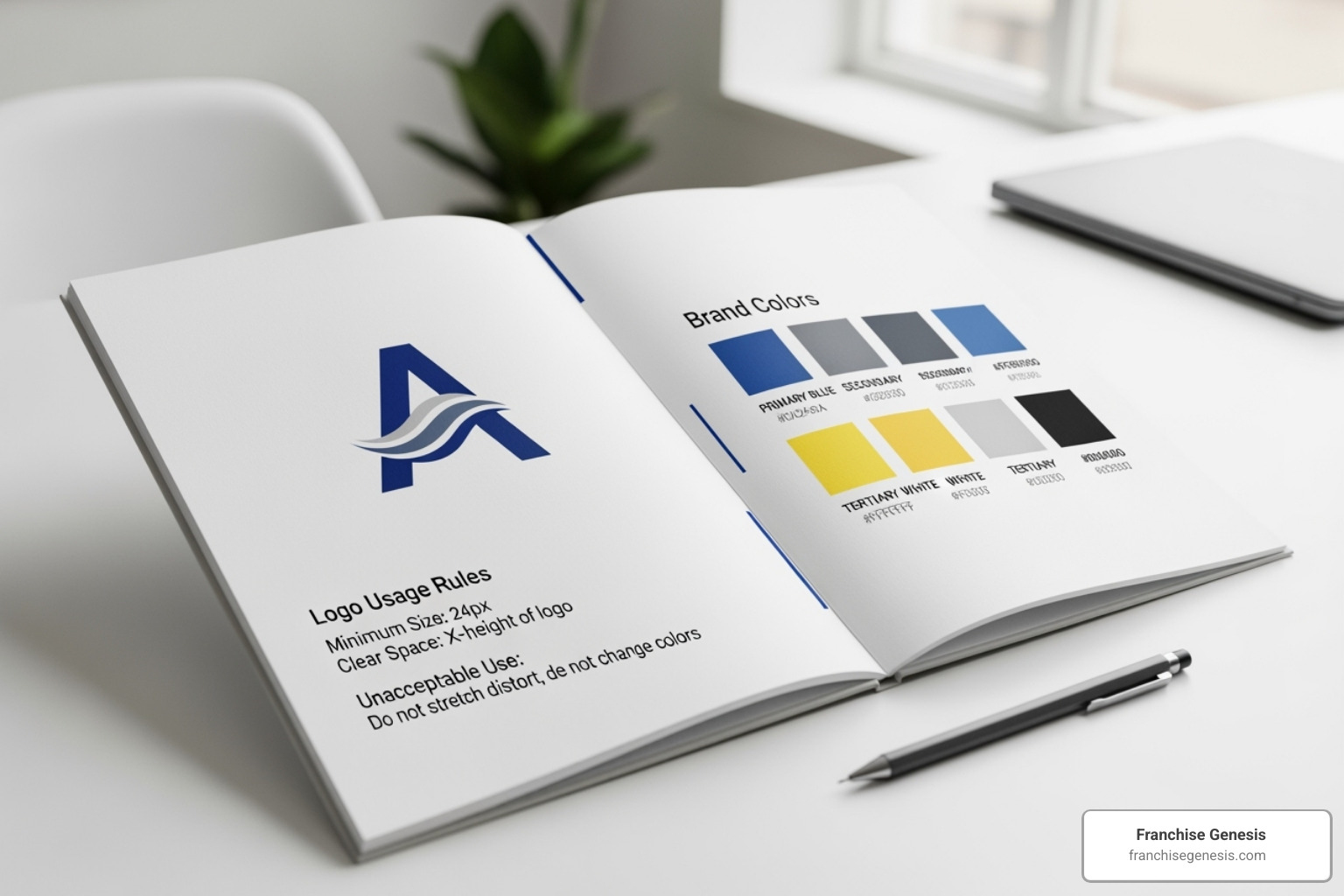
- Logo Usage: Specify minimum sizes, clear space, approved variations, and placement. Show examples of what not to do.
- Color Palette: Provide exact codes (CMYK, RGB, Hex) for all primary and secondary colors.
- Typography: Define approved fonts and hierarchy rules for headlines and body text to ensure a cohesive look.
- Photography & Iconography: Ensure all visual content, from photos to icons, has a consistent aesthetic that reinforces your brand message.
Verbal Identity: The Voice of Your Brand
Your words build relationships. Your brand voice is your consistent personality, while your tone can adapt to different situations (e.g., empathetic for a complaint, celebratory for an announcement). Provide key messaging and taglines so franchisees use the right words to describe your value. Establish clear grammar and style rules, including a glossary of approved terminology.
The Operations Manual vs. Brand Guidelines
It’s crucial to understand the difference between your franchise brand guidelines and your Franchise Operations Manual. The Operations Manual is the A-Z guide to running the business day-to-day. The brand guidelines, which often live within the manual, focus only on brand presentation.
Here’s the critical legal distinction: to avoid joint-employer liability, your manual should focus on “front-office” items that directly impact the customer experience (e.g., service protocols, store cleanliness). Avoid being prescriptive about “back-office” operations like employee benefits, compensation, or hiring procedures. Controlling too many employment-related decisions can make you legally liable for your franchisees’ employment practices. At Franchise Genesis, we help you steer these complexities to protect your brand and your business model.
From Document to DNA: Implementing and Enforcing Your Guidelines
Creating comprehensive franchise brand guidelines is only half the battle. The real challenge is turning them into living standards that franchisees consistently follow. The goal is to make brand compliance feel natural and supported, not burdensome. Franchisees want to succeed; deviations often stem from a lack of understanding or tools, not defiance.

Distribution and Training: Setting Franchisees Up for Success
Your guidelines are only as good as your franchisees’ understanding of them. The onboarding process is your golden opportunity to embed brand standards. During initial training, explain the why behind each rule. When a franchisee understands how consistency builds recognition, compliance becomes a natural choice.
Digital brand portals are essential, giving franchisees 24/7 access to the latest logos, templates, and photos. Starbucks’ creative expression microsite is a great example. Supplement this with ongoing support like interactive workshops and webinars to keep the brand top-of-mind. For more on this, see our guide to Franchise Training Success.
Leveraging Technology for Seamless Compliance
Technology can make brand compliance virtually foolproof. Digital Asset Management (DAM) systems act as a central hub, ensuring everyone uses the most current brand materials. Brand management platforms take this further with customizable templates that allow for local personalization while staying on-brand.
Some platforms even offer automated compliance checks to flag violations before materials go live. This smart technology, combined with centralized communication, keeps everyone connected and informed. Learn more about leveraging tech in our resources on franchise sales and marketing.
Handling Non-Compliance: Correction and Collaboration
Brand violations will happen. How you respond can either strengthen or damage your franchise relationships. Most violations aren’t rebellious acts; they often stem from a franchisee’s attempt to solve a local problem, a misunderstanding, or cost-cutting pressures.
Start with curiosity, not punishment. Ask “why?” to uncover gaps in your support system or confusing guidelines. Treat franchisees as internal customers. By reducing the “friction” in marketing execution—making it easy to access materials and get approvals—compliance naturally improves. Termination should always be a last resort. A collaborative approach focused on education and support will protect your brand far more effectively.
Navigating Nuances: Advanced Strategies and Common Pitfalls
Successful franchising isn’t just about rigid rules. Your brand needs to feel authentic and relevant in every market while maintaining its core identity. Think of your guidelines as a recipe: the core ingredients are sacred, but you might need to adjust for local tastes. The trick is knowing what can be flexible and what cannot.
Balancing Consistency with Local Adaptation
How do you let franchisees connect with local communities without creating a brand free-for-all? The secret is defining your core brand non-negotiables—elements that can never change, like your primary logo, signature colors, and core values. These ensure your brand is recognizable everywhere.
For everything else, build in strategic flexibility. Create guidelines for localization that give franchisees permission to adapt within clear boundaries. For example, DHL adapts its messaging for local cultures while keeping its visual identity rock-solid, as seen in A look at DHL’s brand identity. Empower franchisees with pre-approved templates they can customize for local events or offers. This makes them feel like partners, not robots, and helps them build genuine community connections.
Avoiding Common Pitfalls When Creating Your Franchise Brand Guidelines
After helping dozens of businesses franchise, I’ve seen the same avoidable mistakes repeatedly:
- Being too vague: Phrases like “use warm colors” are subjective. Be specific with color codes, font names, and spacing requirements.
- Being too restrictive: Overly strict rules can kill the entrepreneurial spirit. Allow for autonomy within defined boundaries.
- Neglecting the ‘why’: Explain how each rule connects to the customer experience or business success. Understanding promotes buy-in.
- Poor distribution: If guidelines are hard to find or use, they’ll be ignored. Invest in a user-friendly digital portal.
- Failure to update: Brands evolve. Treat your guidelines as static documents, and they’ll quickly become obsolete. Schedule regular reviews.
- Ignoring franchisee feedback: Your franchisees are on the front lines. Use their input to improve your guidelines.
Evolving Your Brand: How to Update Guidelines Over Time
Your brand is a living document. The most successful franchise systems treat their guidelines as dynamic tools. Your Franchise Agreement should grant you the right to update standards as needed.
When it’s time for a brand refresh, communicate changes early and clearly. Explain the reasoning and benefits for their local businesses. Use version control on your digital portal to ensure everyone uses the current guidelines. Most importantly, use each update as an opportunity for gathering feedback, ensuring your guidelines remain relevant and practical.
Inspiring Examples of Brand Excellence
To see the power of well-executed franchise brand guidelines, look at how leading brands master consistency and adaptation.
-
Starbucks offers a masterclass with its Starbucks’ creative expression microsite. Instead of a dry manual, it’s an immersive digital experience that inspires franchisees to accept the brand’s visual identity.
-
McDonald’s weaves its history and values into its brand book, connecting its visual identity with a powerful narrative. This builds a deep emotional connection across its global network.
-
Subway’s guidelines excel in simplicity and clarity. They are user-friendly and provide generous examples of incorrect usage, which removes guesswork for franchisees.
-
Burger King infuses its bold, playful personality into the guidelines themselves. This makes the document engaging and demonstrates how the brand’s voice should influence everything.
These successful brands share key traits. They inspire rather than dictate, make guidelines engaging and usable, and balance technical specs with brand philosophy. They understand both the “what” and the “why.” Much like successful brand communities unify like-minded people, effective guidelines foster a sense of belonging and shared purpose among franchisees.
Frequently Asked Questions about Franchise Brand Guidelines
As you consider franchising, you’ll have questions about franchise brand guidelines. Here are answers to the most common concerns we hear from business owners.
What is the primary purpose of franchise brand guidelines?
The primary purpose is to protect your brand’s identity, reputation, and value. Guidelines ensure every franchise location delivers the consistent quality and service that customers expect. This predictability builds the trust and loyalty that drive repeat business and positive word-of-mouth. It also allows you to accurately measure marketing results, since all locations are executing the same standards.
How can franchisors balance brand consistency with local market needs?
This balance is key. The solution is to define your “brand non-negotiables”—core elements like your logo and primary colors that must never change. Then, create a framework for flexibility. Provide pre-approved templates that allow franchisees to customize messaging for local promotions or community events. This empowers them to connect with their local audience while you maintain control over the brand’s core presentation.
What are the legal risks of poorly written brand guidelines?
The biggest risk is joint-employer liability. If your guidelines are too prescriptive about “back-office” operations—like hiring practices, employee schedules, or compensation—you can blur the legal line between franchisor and independent franchisee. This could make you legally responsible for your franchisees’ employment practices. Your guidelines should focus on “front-office” elements that directly impact the customer experience and brand presentation. At Franchise Genesis, we help you steer these legal complexities to create guidelines that are both comprehensive and sound.
Your Blueprint for Scalable Success
Creating successful franchise brand guidelines isn’t just about protecting your logo or ensuring consistent colors across locations. It’s about building the foundation for sustainable, profitable growth that benefits everyone in your system.
Think of your brand guidelines as the DNA of your franchise network. Just like DNA carries the essential instructions for life, your guidelines carry the essential instructions for your brand’s success at every location. When franchisees understand and accept these standards, they’re not just following rules – they’re becoming ambassadors for everything that makes your business special.
Strong brand guidelines create a ripple effect of success. Customers develop deeper trust when they know exactly what to expect from your brand. Franchisees feel more confident executing proven strategies. And you, as the franchisor, can focus on growth and innovation instead of constantly putting out branding fires.
The businesses that thrive in franchising are those that recognize their brand as their most valuable asset and protect it accordingly. They understand that every dollar invested in comprehensive guidelines pays dividends through increased customer loyalty, easier marketing measurement, and a stronger competitive position in the marketplace.
At Franchise Genesis, we’ve guided countless business owners through this exact journey. We’ve seen how the right brand foundation transforms a single successful location into a network of thriving franchises. The difference between systems that struggle with consistency and those that scale smoothly often comes down to one thing: franchise brand guidelines that are thoughtfully created, clearly communicated, and consistently enforced.
Your brand has brought you this far – now it’s time to prepare it for the next level. Ready to build the framework that will support your franchise expansion dreams? Transform your business into a thriving franchise with our expert guidance. Let’s work together to create the blueprint that will make your brand’s success scalable, sustainable, and unstoppable.