
Why Data is the Real Secret to Scaling Your Franchise
Franchise data analytics is the process of using operational, financial, and performance data to make informed decisions about growth, franchisee success, and brand consistency. It replaces gut instinct with measurable insights, allowing you to build a scalable, profitable franchise network.
While instinct works for a few locations, it fails as you grow. By 10 units, patterns blur, performance varies, and standards slip. Without clear data, you can’t distinguish isolated incidents from systemic problems. The metrics you track in your first 10 units become the blueprint for scaling to 50 or 100.
The numbers prove it: data-driven businesses are 5% more productive and 6% more profitable. For franchises, analytics can improve key performance indicators by 10-20%. Data-driven brands are 23 times more likely to acquire new customers.
I’m Monique Pelle Kunkle, Vice President of Operations at Franchise Genesis. I’ve guided countless brands through scaling, and franchise data analytics is the foundation of every successful system. I’ve seen how the right data transforms chaos into clarity, turning a great business into a great franchise.
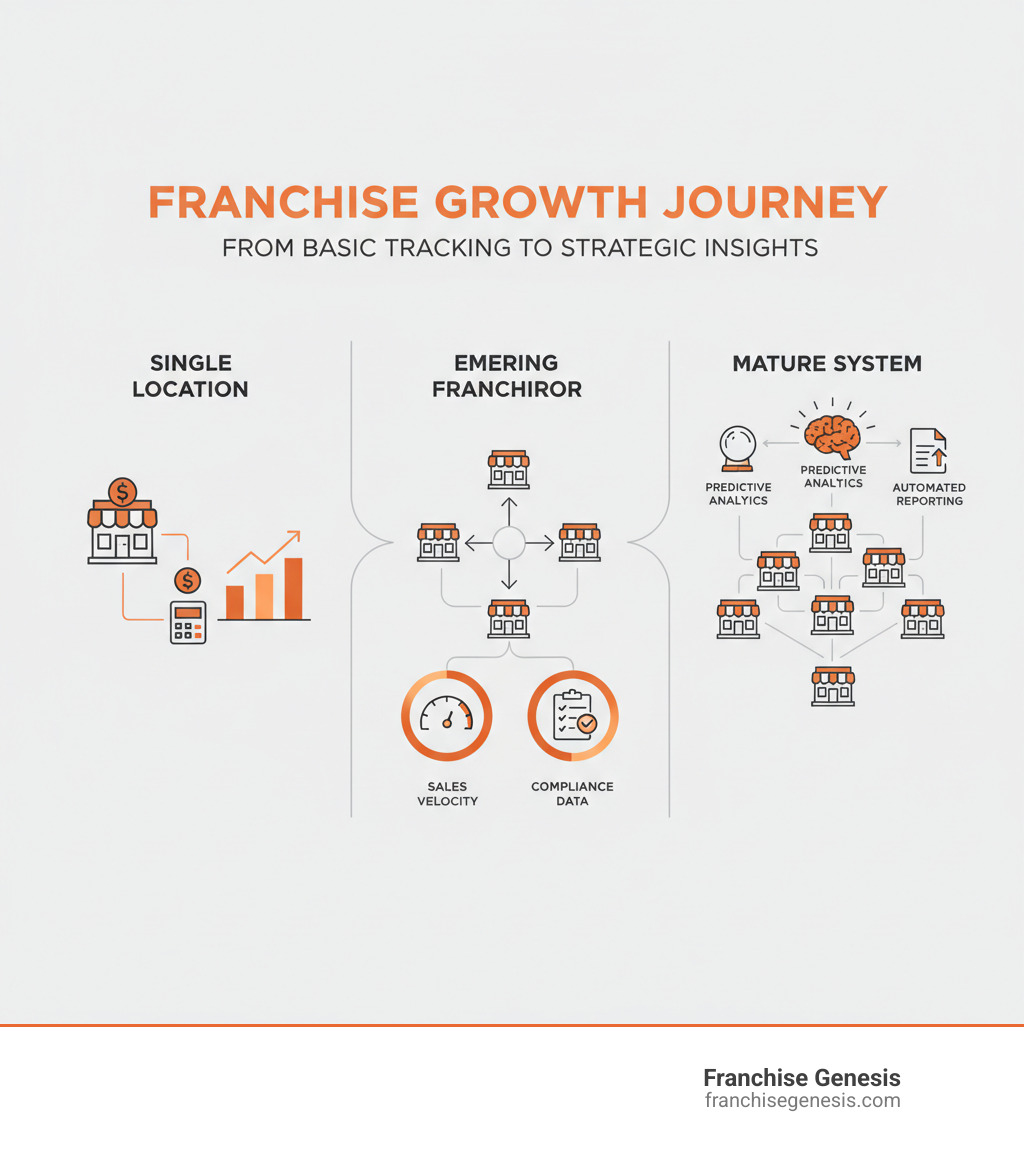
Franchise data analytics terms made easy:
The Foundation: What is Franchise Data Analytics and Why It’s Your Blueprint for Growth
Franchise data analytics acts as your system’s compass, helping you interpret patterns in everything from sales figures to customer feedback. Instead of wondering why one location thrives while another struggles, analytics provides the answers. This shift from guesswork to strategy is critical in the early days of franchising. The metrics you track now become the foundation for scalable growth, allowing you to replicate success and solve problems before they spread.
Analytics proves your business model is a repeatable system. When you can show prospective franchisees which practices drive profitability, you’re not selling hope—you’re selling a proven blueprint. This data also empowers your franchisees, giving them clear insights into their own performance so they can act with confidence.
Core KPIs for Emerging Franchise Brands
For new franchisors, it’s best to start with three core Key Performance Indicators that provide a clear view of your system’s health.
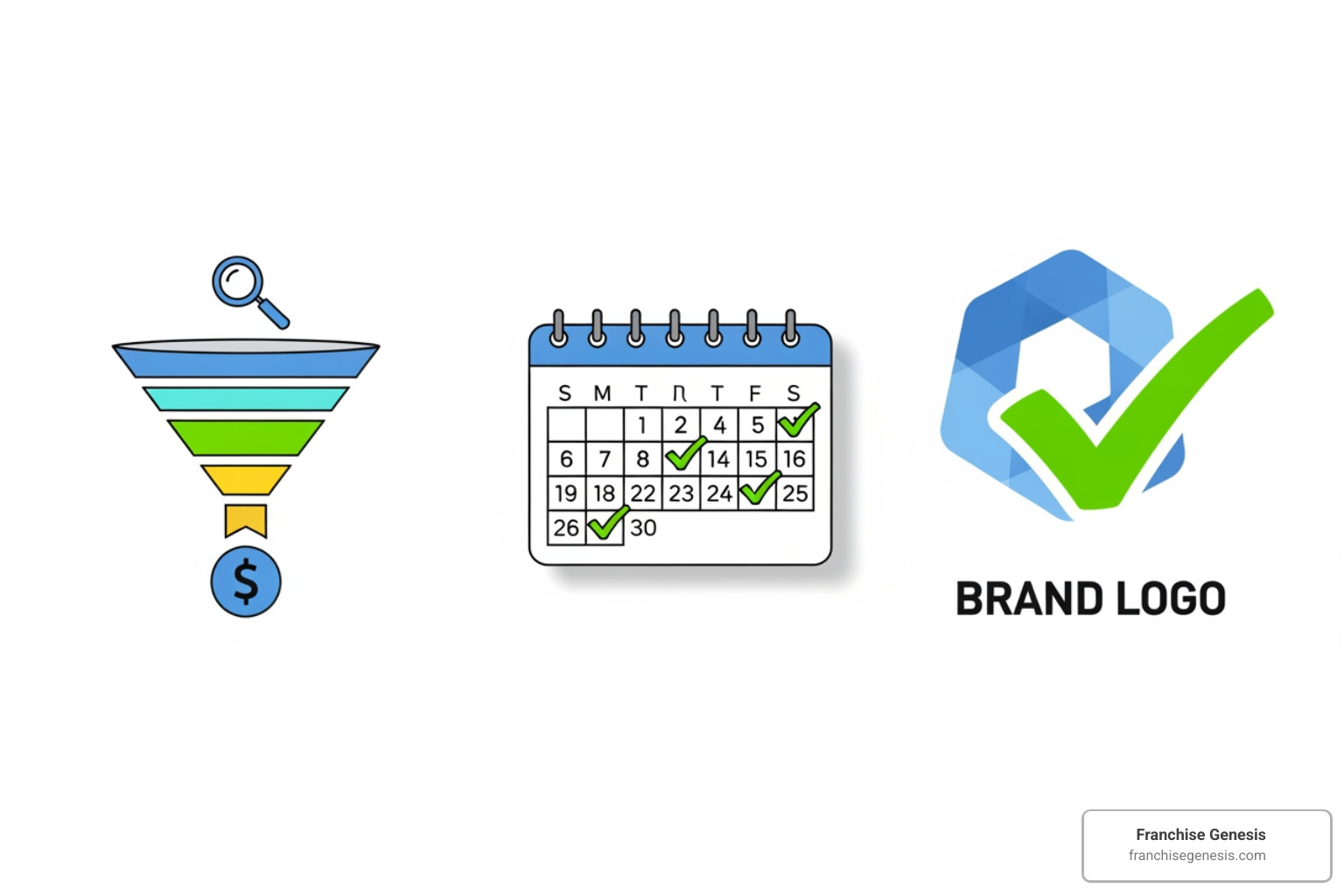
Franchise Sales Velocity measures the speed from initial lead to a signed agreement. A slow process indicates a broken sales funnel, while fast velocity signals a healthy development pipeline.
Location Readiness tracks if new units meet critical opening milestones on time. Delays cost franchisees money and hurt your growth projections. This KPI ensures locations open as planned.
Operational Compliance measures adherence to brand standards. This protects your brand’s value and reputation, ensuring a consistent customer experience across all locations.
These three KPIs are your early-warning system, telling you where to focus your energy before small challenges become system-wide crises.
The Difference Between Financial and Operational Franchise Data Analytics
To get a complete picture, you need both financial and operational analytics.
Financial analytics tracks the money: P&L statements, balance sheets, and royalty management. It answers the question: are we profitable?
Operational analytics tracks the activities that drive financial results: POS data, customer surveys, employee metrics, and brand audits. It answers the question: why are we (or aren’t we) profitable?
Financial data tells you what happened (e.g., sales dropped). Operational data tells you why it happened (e.g., customer satisfaction fell due to understaffing). The real power is linking the two. When you can show that higher compliance scores lead to higher profits, you move from reporting numbers to providing actionable, cause-and-effect insights that help franchisees succeed.
Building Your System: Using Analytics for Performance and Compliance
Once you know what data to collect, franchise data analytics moves from theory to practice. It’s about using insights to improve franchisee performance, ensure brand consistency, and build a system that lasts.
Improving Sales Velocity and Location Readiness
Efficient growth means signing the right franchisees and getting them open on time. Analytics helps you identify sales bottlenecks by tracking your lead-to-signing process. Data reveals where prospects stall, so you know where to focus your efforts.
Similarly, monitoring site approval to grand opening highlights common delays in your readiness timeline. By tracking milestones like site selection, construction, and training, you can spot friction points and streamline the process. Reducing opening delays protects your growth projections and builds franchisee confidence, setting them up for success from day one.
Identifying and Supporting At-Risk Franchisees

Analytics acts as an early warning system, helping you spot struggling franchisees before a problem becomes a crisis. By monitoring KPIs like sales trends and compliance scores, you can see when a franchisee needs help.
This allows you to shift from auditing to coaching, offering proactive support and targeted training. When you approach these conversations with data, you’re not criticizing—you’re problem-solving together. This approach improves franchisee satisfaction and profitability, turning them into brand advocates. Moving from auditing to coaching transforms your relationship into a partnership focused on winning.
The Power of Benchmarking in Franchising
Benchmarking provides context by comparing performance across your franchise network. It’s a strategic way to identify opportunities for improvement.
Seeing how they stack up against peers motivates franchisees. It inspires high-performers to aim higher and helps you guide under-performers with specific, proven solutions. For example, if a franchisee’s labor costs are high, you can share scheduling strategies from top performers.
For fair comparisons, create cohorts by grouping franchisees based on market, revenue, or tenure. This ensures the insights are actionable. Benchmarking fosters a culture of continuous improvement that separates good franchise systems from great ones.
Scaling Your Insights: Advanced Strategies for Growth
As your franchise grows beyond 15 units, basic spreadsheets become inadequate. Franchise data analytics must mature with your brand, requiring a scalable data infrastructure and a culture of trust in the data.
The ‘Analytics Franchise’ Model and Governance
To scale your analytics, treat it like a franchise within your franchise. This model combines centralized expertise with decentralized execution. A central ‘Center of Excellence’ team sets standards and provides tools, acting as the franchisor. Decentralized analytics teams within departments like operations and marketing act as ‘franchisees,’ using central resources to generate custom insights for their specific needs.
This hybrid approach avoids conflicting reports and corporate bottlenecks. However, it requires strong data governance to ensure data quality, consistency, and security. As you scale, you’ll need content certification to verify the accuracy of reports, clear access controls, and defined roles. This structure empowers local teams while maintaining central oversight, allowing you to scale analytics effectively.
Implementing a ‘Prototype-Pilot-Production’ Model for Franchise Data Analytics
Avoid rolling out a new analytics solution systemwide at once. Instead, use a prototype-pilot-production model, just as you would for a new menu item.
- Prototype: Experiment with rough drafts of dashboards or reports in an ‘analytic sandbox.’ The goal is to learn and fail fast without significant investment.
- Pilot: Test promising prototypes with a small group of franchisees. Gather real-world feedback, measure impact, and refine the solution.
- Production: Once proven, scale the solution across the entire network with full support and training.
This systematic approach minimizes risk and maximizes adoption. For rapidly expanding franchises, this disciplined model ensures you build capabilities that support sustainable growth, reducing time-to-insight by up to 30%.
The Future of Franchising: AI, Data Culture, and Competitive Advantage
Staying ahead in franchising means building a foundation for long-term success. Sophisticated franchisees notice when you use advanced analytics, seeing it as proof you have the infrastructure to help them win.
The Role of AI and Advanced Analytics
The use of AI in franchise data analytics is growing over 25% annually, augmenting human judgment with powerful predictive insights.
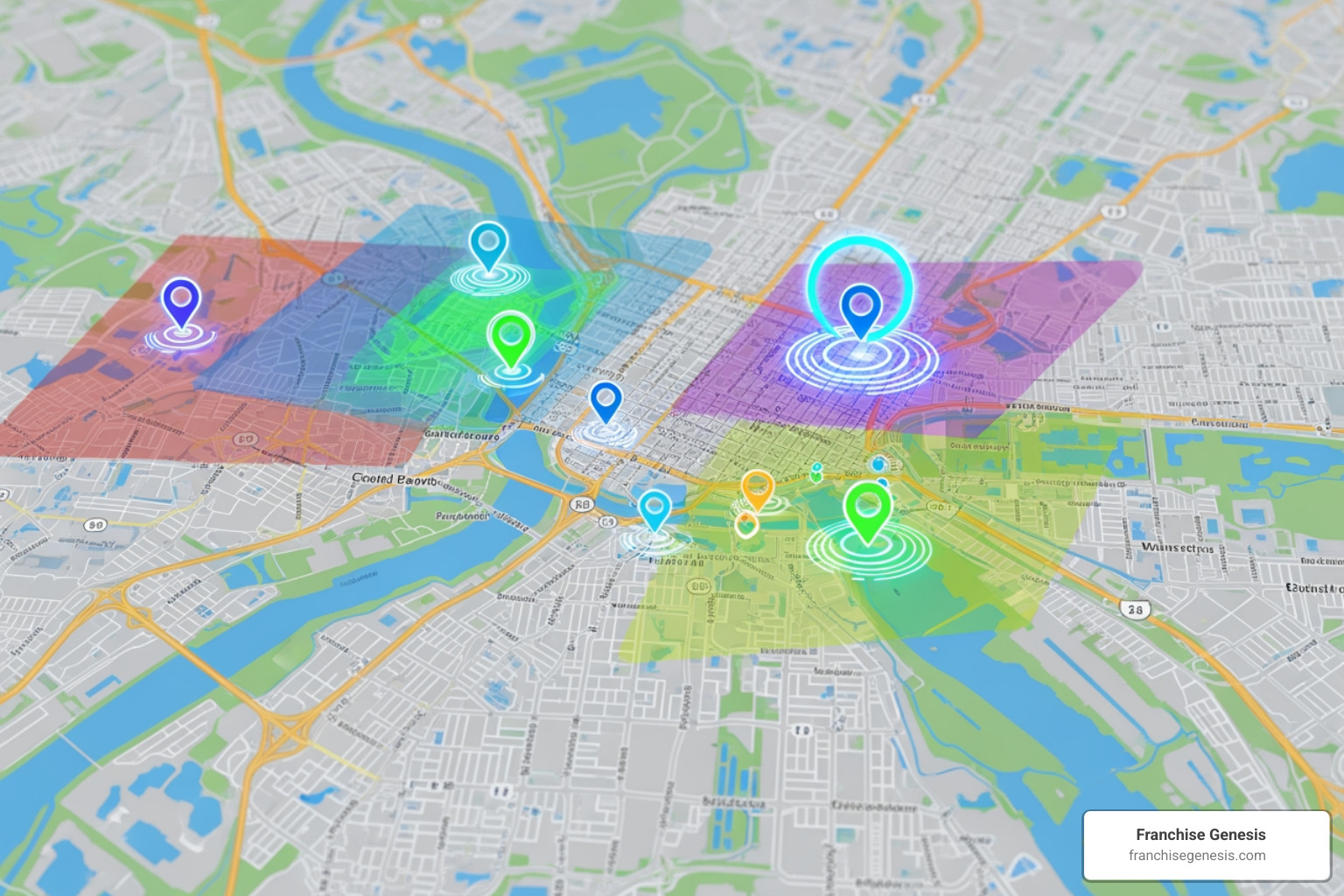
- AI for site selection: Algorithms analyze thousands of data points to validate location decisions, reducing the risk of choosing a poor site.
- Forecasting sales: AI models adapt to real-time market conditions, helping franchisees optimize staffing and inventory.
- Identifying ideal franchisee profiles: Analyzing the traits of your top performers helps you recruit candidates who are most likely to succeed.
While AI requires clean data and specialized skills, franchisors who accept it gain a significant competitive advantage.
Fostering a Strong Data Culture
A sophisticated analytics platform is useless if no one uses it. Building a strong data culture is just as important as the technology.
This starts with leadership buy-in and using storytelling with data to make insights memorable and actionable. Make data part of every role, from the franchisee to the field consultant to the executive team. This creates shared accountability and transforms data collection from a chore into a tool for growth. For emerging brands, this is more about mindset than technology; it’s about consistently asking, “What does the data say?”
Data Collection Frequency and Challenges
How often should you review data? It depends on the metric. The key is a rhythm that’s frequent enough to catch problems early without creating noise.
The biggest challenges are integrating disparate systems and ensuring data accuracy. The solution is to standardize reporting and, eventually, invest in integrated platforms. To overcome franchisee reporting problems, automate collection where possible and demonstrate the value they receive from the data they provide. When franchisees see how data helps them become more profitable, they become willing partners.
At Franchise Genesis, we help franchisors design data systems that steer these real-world challenges to build stronger, more profitable networks.
Frequently Asked Questions about Franchise Data Analytics
What are the first KPIs a new franchisor should track?
For a new franchisor, focus on three core KPIs. Franchise Sales Velocity measures how efficiently you convert prospects into franchisees. Location Readiness ensures new units open on time. Operational Compliance protects your brand consistency. These three metrics provide a foundational view of your system’s health and prove your model is scalable. Tracking and improving them shows investors and prospects that your franchise is built on measurable success, not just hope.
How can I collect data if my franchisees use different systems?
This is a common challenge. The key is standardization. Start with standardized reporting templates that franchisees submit regularly. This establishes the expectation that data reporting is required. As you grow, invest in a central franchise management platform that can integrate with various POS and accounting systems. This automates data collection, reduces manual work, and improves reliability. When franchisees see that franchise data analytics helps them improve their own performance, resistance fades.
Is implementing franchise analytics expensive for an emerging brand?
It doesn’t have to be. You can start with simple dashboards using spreadsheet software like Excel or Google Sheets to track your core KPIs. The initial investment is minimal. As you scale, you can graduate to more robust platforms. The return on investment (ROI) is significant, as data helps you avoid costly mistakes like choosing a bad location or failing to support a struggling franchisee. Businesses using franchise data analytics are 6% more profitable on average. For emerging brands, analytics isn’t an expense—it’s a smart investment in long-term success.
Conclusion
The shift from gut instinct to data-driven decisions is essential for scaling a franchise. Franchise data analytics provides the foundation for sustainable growth, helping you prevent problems, support franchisees, and build a stronger, more consistent brand.
The results are clear: data-driven franchises are more profitable and productive. These aren’t small gains; they are the difference between struggling and building a thriving network that grows with purpose.
You don’t have to steer this transition alone. At Franchise Genesis, we specialize in helping business owners like you manage the complexities of franchising. We can help you establish the right data systems and strategies from day one.
Your business has proven itself. Now, let’s prove it can scale smartly.