
Why Your Franchise System’s Future Depends on Planning for Transitions
Franchise succession planning is the strategic process of preparing for ownership transitions to ensure business continuity, protect brand standards, and maintain network stability when franchisees exit. A comprehensive plan includes clear transfer protocols, successor qualifications, training requirements, and resources to guide franchisees through family transfers, internal sales, or external acquisitions.
Here’s a sobering reality: while over half of family businesses expect a generational transfer soon, only 30% have a formal succession plan. In franchising, this gap is more dangerous. A single unplanned exit can ripple through your system, eroding brand value and franchisee confidence.
The wave of Baby Boomer retirements—the “Silver Tsunami”—is accelerating this risk. Systems without clear succession frameworks face unit closures, brand damage, and legal disputes. But proactive planning isn’t just about managing exits; it’s about building a franchise system designed for lasting value. Clear transition protocols create confidence, attract better candidates, and protect your brand legacy.
Your role as a franchisor is to guide franchisees through this critical business decision, preventing disorganized transfers and family conflicts. I’m Monique Pelle Kunkle, Vice President of Operations at Franchise Genesis. I’ve helped dozens of brands establish succession frameworks that protect both franchisors and franchisees. Franchise succession planning is essential for building a resilient system that maintains excellence through every ownership change.
Franchise succession planning vocab to learn:
Why a System-Wide Succession Strategy is Essential
Building a franchise system without a solid franchise succession planning strategy is like building on shaky ground. When a franchisee exits, the impact ripples through your entire brand ecosystem, affecting your reputation, operational standards, and the collective value of the network.

Unplanned exits lead to rushed sales, undervalued units, and even temporary closures, chipping away at your brand’s market position. Franchisees who know there’s a clear path for their eventual exit build stronger, more sellable businesses. They operate with confidence, invest in growth, and become your best brand ambassadors. Proactive succession planning creates stability that protects franchisee investment and maintains system health. For more insights, explore our guide to building a thriving franchise network.
The Franchisor’s Role in Franchisee Exits
As a franchisor, you must guide franchisees through this significant transition. Setting clear expectations from the start is essential. Your franchisees need to understand the transfer process, qualification requirements, and the support you’ll provide. This transparency builds trust and prevents panic during unexpected exits.
The approval process is where you protect your brand. It’s your opportunity to vet potential successors for financial stability, operational experience, and commitment to your standards. This isn’t about being controlling; it’s about facilitating smooth transitions. Your franchise agreement should clearly define transfer terms, including your right of first refusal, transfer fees, and successor qualifications. When these standards are consistently applied, transitions become predictable and manageable. For a deeper dive, check out our article on Succession Planning Considerations for Franchising.
The Risks of Neglecting Succession Planning
Ignoring franchise succession planning is a preventable mistake with severe consequences. A sudden franchisee crisis without a plan can lead to chaos: temporary unit closures, confused customers, and worried employees and fellow franchisees.
These disruptions cause visible gaps in your market presence, damage your brand’s reputation, and can lead to legal disputes. The damage compounds quickly, leading to:
- Decreased system-wide valuation
- Difficulty attracting quality candidates
- Disrupted supply chains and loss of market share
- Stalled growth trajectory
These situations drain your resources and undermine network confidence. Proactive planning builds resilience into your system, protecting your brand through every transition. For more strategies on maintaining healthy growth, explore our Franchise Growth Strategies Guide.
Key Components of a Comprehensive Franchise Succession Planning Program
A solid franchise succession planning program is a framework that protects your brand, your franchisees, and your customers. It’s a blueprint for long-term stability and growth, woven from several essential components.

Designing Your Franchise Agreement and FDD for Smooth Transitions
Your franchise agreement and Franchise Disclosure Document (FDD) are your first and best tools for setting clear transition expectations. Key clauses to include are:
- Right of First Refusal: Gives you the option to purchase a franchisee’s business on the same terms as a third-party offer, maintaining strategic control over your network.
- Transfer Fees: Clearly outlined fees to cover your costs for vetting candidates, processing paperwork, and providing training.
- Successor Approval Criteria: Specific, measurable standards for financial capacity, operational experience, and brand alignment.
- Training Requirements: Mandatory training for all new owners, regardless of their background, to ensure they understand your systems.
- Non-Compete Clauses: Protects your system by preventing former franchisees or rejected successors from opening a competing business.
Embedding these elements into your Franchise Legal Requirements and FDD Document creates a clear roadmap that minimizes ambiguity and potential disputes.
Establishing a Vetting and Training Protocol for Successors
Your vetting protocol is a critical filter for maintaining quality control. Start by defining your ideal successor profile, including financial liquidity standards, relevant operational experience, and leadership skills. Once a successor is approved, they need comprehensive preparation. Mandatory franchisor training is non-negotiable, teaching them your systems, processes, and culture. Consider implementing mentorship programs, pairing new owners with experienced franchisees to create a support system. This combination of rigorous vetting and thorough training ensures operational continuity. Learn more in our Franchise Training Success guide.
Providing Resources to Guide Your Franchisees
Most franchisees are not experts at selling their business, so your guidance is crucial. Provide resources to help them steer the process:
- Preferred Vendor Lists: Curated lists of trusted franchise attorneys, CPAs specializing in valuations, and reputable business brokers.
- Valuation Tools: Recommendations to help franchisees understand their business’s true worth. Encouraging them to build a sellable business from day one increases its value.
- Educational Materials: Webinars and templates to explain the process and empower franchisees to plan proactively.
Your Franchise Operations Manual also serves as a key resource for ensuring operational readiness for any new owner. Providing these tools demonstrates your commitment to your franchisees’ long-term success.
Navigating Common Franchisee Exit Scenarios
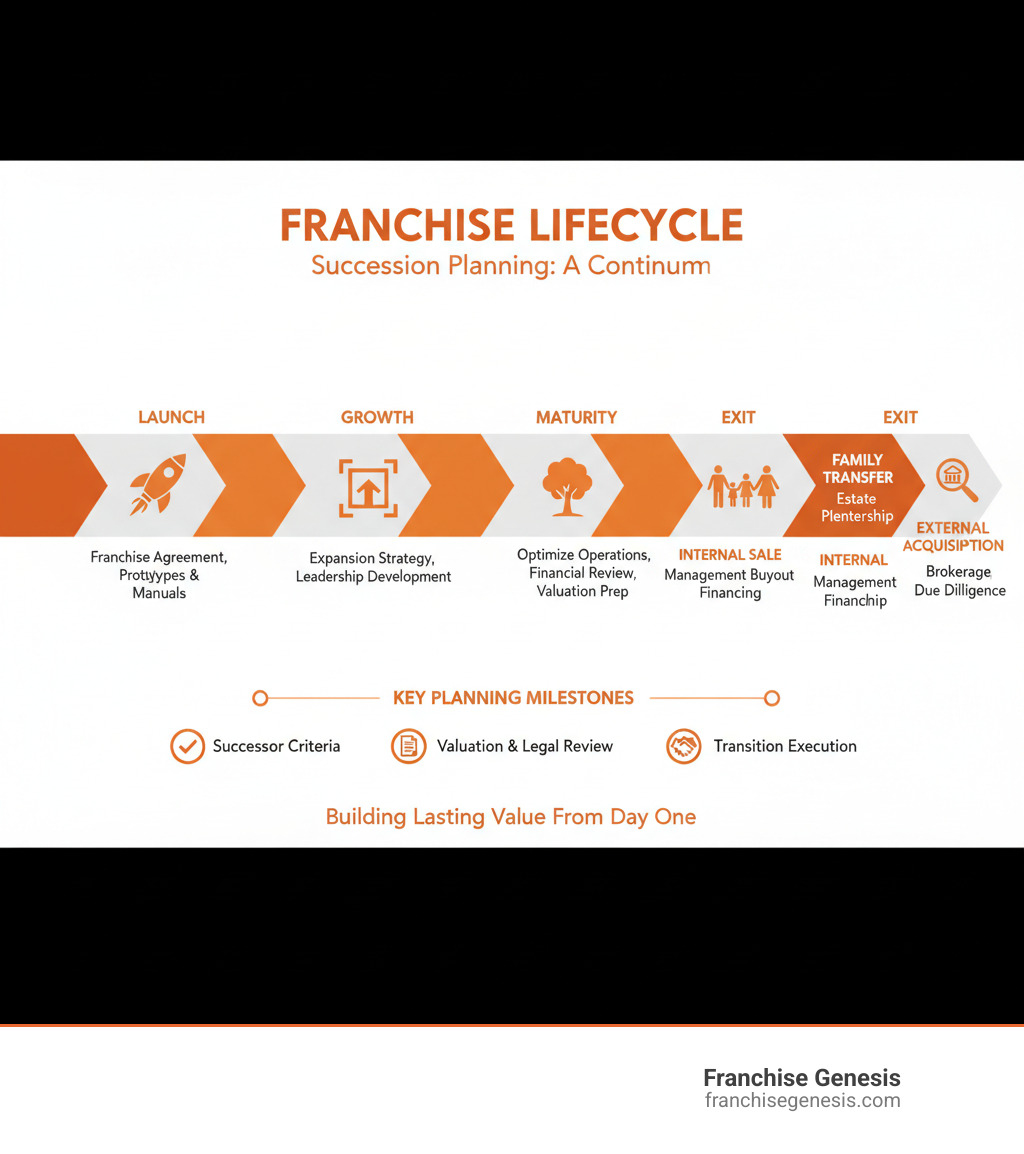
Franchisee exits typically follow one of three paths: a family transfer, an internal sale to employees, or an external sale to a third party. As a franchisor, your role is to guide the franchisee through their chosen path while upholding brand standards.

The Family Transfer: Balancing Legacy and Brand Standards
Family transfers require balancing legacy with brand integrity. The goal is to ensure the successor is genuinely qualified, not just related. Encourage franchisees to have family members work their way up from entry-level positions to learn the business inside and out. A smart strategy is separating ownership from daily management, allowing family to hold equity while a qualified manager runs operations. Crucially, family successors must meet the same rigorous financial and operational qualifications as any outside buyer. For family members not interested in the business, the plan should equalize the estate through other assets to maintain harmony. You can read more about how real franchisees steer these challenges in our Franchisee Stories on Succession Planning.
The Internal Sale: Promoting from Within
An internal sale to a manager or key employees—a Management Buyout (MBO)—is often a smart franchise succession planning move. These individuals already know your brand, systems, and customers, ensuring a smooth transition. Encourage franchisees to “build your leadership bench” early by sharing financial insights and decision-making responsibilities with their managers. Owner financing can make these sales feasible for capable employees who lack capital, where the exiting franchisee provides a loan to the new owner. This approach rewards loyalty and preserves institutional knowledge. For more insights, check out our Ultimate Business Scaling Guide.
The External Sale: Welcoming New Ownership
An external sale often maximizes the exit value and can inject fresh energy into the business. Encourage franchisees to work with trusted advisors, like business brokers specializing in franchise resales, to market the business and find qualified buyers. Your vetting process must remain rigorous, assessing candidates for business acumen, cultural fit, and operational experience—not just financial capacity. Effective knowledge transfer from the exiting owner to the new one is critical for success. Multi-unit owners from within your system often make ideal external buyers, as they already know your brand and are looking to expand. A well-managed external sale strengthens the entire network. For marketing strategies, see our Franchise Sales Marketing guide.
Legal and Financial Guardrails for a Healthy Franchise System
Legal and financial guardrails ensure every ownership transition is fair, compliant, and financially sound. These frameworks for your franchise succession planning program protect your system from costly disputes and brand damage by addressing valuation, tax implications, legal documentation, and due diligence.
Critical Legal Considerations in Franchise Transfers
Navigating the legal side of transfers is crucial for minimizing risk. Key considerations include:
- Lease Assignments: Ensure the commercial lease can be assigned to the new owner, which almost always requires landlord approval.
- Lender Agreements: If the franchisee has an SBA loan or other financing, the lender must approve the new owner.
- Legal Compliance: Adhere to all state and federal laws governing franchise transfers. Our Franchise Registration States Guide details these requirements.
- Proper Documentation: Carefully draft and review all transfer documents, including the purchase agreement and assignment of the franchise agreement, to prevent future disputes.
- Indemnification Clauses: Protect the franchisor from liabilities arising from the previous owner’s operations.
A Franchisor’s Guide to Franchisee Valuation and Financial Health
A well-valued, financially sound unit is central to a smooth transfer. Franchisees must maintain pristine financials, including clean P&L statements and transparent books. Educate them on standard valuation multiples in your industry, but also on the premium commanded by a business that is truly “built to sell” with stable operations.
As a franchisor, you should regularly review franchisee profitability and set clear financial benchmarks for sale approval. This protects your brand by ensuring only viable units change hands. For insights on financing, see our Franchise Acquisition Financing guide.
Sales are typically structured as either asset or stock sales:
| Feature | Asset Sale | Stock Sale |
|---|---|---|
| What’s Transferred | Specific assets (equipment, inventory, goodwill). A new franchise agreement is often required. | Ownership of the corporate entity (shares) that owns the franchise. The entity remains the franchisee. |
| Franchisor Control | Higher. Franchisor approves the new buyer and typically issues a new franchise agreement with updated terms. | Lower. Franchisor approves new shareholders of the existing entity. The original franchise agreement often remains. |
| Assumption of Liabilities | Generally, the buyer only assumes specific liabilities. Less risk for the franchisor. | The buyer assumes all past, present, and future liabilities of the entity. Higher risk if not carefully vetted. |
| Buyer Preference | Often preferred by buyers and franchisors to avoid unknown liabilities. | Less common for single units; more common for larger corporate acquisitions. |
Asset sales give franchisors more control and are often preferred for single-unit transfers. Stock sales require extensive due diligence because the buyer assumes all liabilities.
Frequently Asked Questions about Franchise Succession Planning
Understanding the fundamentals of franchise succession planning will save you countless headaches. Here are answers to some of the most common questions we hear from franchisors.
How early should a franchisor implement a succession planning framework for their system?
From day one. Your succession planning framework should be a core component of your initial Franchise Development Complete Guide. Waiting until a franchisee wants to retire is a reactive approach that leads to rushed decisions and value loss.
Building this into your foundation from the start shows potential franchisees that you are building a system for longevity. It attracts more sophisticated candidates and integrates transition protocols seamlessly into your legal documents and operations manuals, building long-term value and stability into your brand.
What is a franchisor’s “right of first refusal” and why is it important?
A right of first refusal is a contractual right giving you, the franchisor, the option to purchase a franchisee’s business on the same terms as any third-party offer they receive. Before they can sell to an outsider, they must present the offer to you.
This right is crucial because it gives you strategic control over who joins your system. It allows you to prevent an unsuitable buyer from entering your network and gives you the option to reacquire key locations for strategic purposes. It is a vital tool for maintaining brand standards and protecting the entire network.
Can a franchisor dictate who a franchisee sells their business to?
While you cannot dictate the specific buyer, you can and should set strict, pre-defined qualification criteria that any potential buyer must meet. Your franchise agreement should clearly outline these standards, covering financial capacity, operational experience, background checks, and cultural fit.
The franchisor retains the right to approve or deny any successor based on these established criteria. If a proposed buyer fails to meet your standards, you can decline the transfer. This protects your brand and existing franchisees by ensuring that all owners in the system are qualified, maintaining quality control across the network.
Secure Your Brand’s Legacy for Generations to Come
The brands that thrive long-term are built with the end in mind. Franchise succession planning isn’t about preparing for failure; it’s about ensuring your success outlasts any single owner. It’s good stewardship that safeguards the collective investment of your entire network.
Proactive franchisors build a sellable system from day one, embedding succession frameworks into their Franchise Development Complete Guide from the start. This approach creates a franchise system designed for lasting success. When potential franchisees see you’ve planned for their entire lifecycle, they invest with greater confidence. When current franchisees have a clear exit path, they build stronger businesses.
Your brand’s legacy depends on maintaining excellence through every ownership transition. That’s the kind of franchise worth building and the legacy worth protecting.
At Franchise Genesis, we help you create franchise systems that stand the test of time. Contact us to build a franchise system designed for lasting success that protects your franchisees, your brand, and your future growth.