
Why Understanding How to Franchise Business Matters for Your Growth
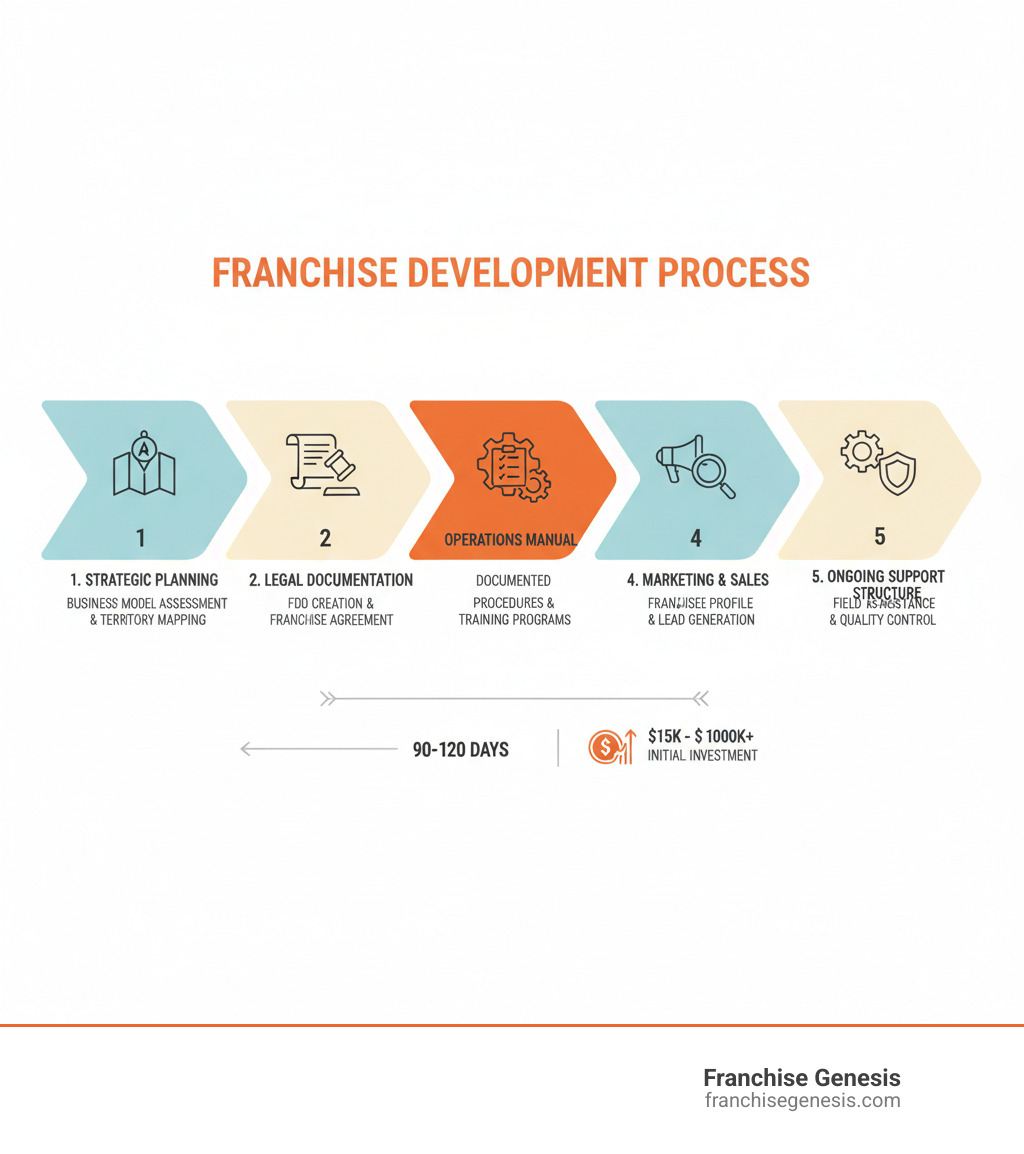
How to franchise business involves turning your successful operation into a replicable system that others can own and operate under your brand name. At its core, franchising requires:
- Legal Documentation – A Franchise Disclosure Document (FDD) and franchise agreement.
- Operations Systems – A comprehensive operations manual detailing your processes.
- Financial Structure – A clear model for franchise fees, royalties, and support costs.
- Marketing & Sales – A strategy to attract qualified franchisees.
- Ongoing Support – A plan for training, field support, and quality control.
The timeline typically spans 90-120 days to launch your franchise system, with costs ranging from $15,000 to over $100,000.
Franchising is a powerful model for rapid growth, allowing you to expand without the capital burden of opening every location yourself. In 2024, franchising supported over 8.4 million jobs and generated $860 billion in economic output, proving its effectiveness.
However, not every business is ready to franchise. Your concept must be profitable, replicable, and supported by strong systems. The decision requires careful planning across legal, operational, and financial domains. You’ll shift from being a business owner to a brand leader, responsible for guiding franchisees and protecting quality across all locations.
I’m Monique Pelle Kunkle, Vice President of Operations at Franchise Genesis. I’ve guided dozens of owners through how to franchise business successfully—including scaling one brand to over 100 locations in its first year. My experience has shown that proper preparation and strategic execution are the keys to building a thriving franchise.
How to franchise business terms at a glance:
Is Your Business Ready to Franchise?

Just because you’ve built a successful business doesn’t automatically mean it’s ready to become a franchise. Rushing into franchising without a solid foundation is a costly mistake. How to franchise business starts with an honest self-assessment, which is why we recommend a Franchise Feasibility Study to get an objective look at where you stand.
We look for a profitable model with brand recognition, replicable operations, clear customer demand, and the ability to be scalable without sacrificing quality. If you’re curious about the broader picture, our guide on Why You Should Franchise explores the strategic advantages. But first, let’s ensure you’re ready.
Assessing Your Business Model
Your business model is the foundation. It must be a proven concept, typically with 2-3 years of successful operation to show it can weather market fluctuations. It must also be profitable enough for a franchisee to earn a reasonable return on their investment after paying your fees. Your unique selling proposition—what makes you special—must be transferable to new markets and appealing to both customers and potential franchisees. Finally, and most critically, you need systematized operations. If your business depends on you personally, it’s not ready. You must be able to document every process so that someone with no industry experience could be trained to replicate your success.
Understanding the Franchisor’s Role
Becoming a franchisor is a fundamental shift from operator to leader and mentor. Your primary job becomes providing ongoing support, including training, operational guidance, and marketing assistance. You are responsible for brand protection and quality control to ensure consistency across the network, which protects the investment of all franchisees. You’ll also drive innovation to keep the brand competitive and manage the territory strategy to ensure each location has a viable market. Becoming A Franchisor is demanding, but it allows you to create opportunities for other entrepreneurs while building something much larger than you could alone.
The Legal & Financial Blueprint for Franchising

Once you’ve confirmed your business is ready, it’s time to build the legal and financial framework. This part of how to franchise business is critical for protecting your brand, ensuring compliance, and creating a sustainable revenue model. It also answers the key question: How Much Does It Cost To Franchise My Business?
How to franchise your business: The legal requirements
Franchising is a regulated industry. Compliance is not optional.
- Franchise Disclosure Document (FDD): Mandated by the Federal Trade Commission, this comprehensive document provides prospective franchisees with all the essential information about your franchise. Creating a compliant FDD Document is a foundational legal step.
- The FTC Franchise Rule: This is the federal regulation governing the sale of franchises in the U.S. It requires the FDD and prohibits deceptive practices.
- Franchise Agreement: This is the binding contract between you and the franchisee, detailing the rights and responsibilities of both parties.
- Intellectual Property Protection: Your brand name, logos, and trademarks must be legally protected, typically through federal trademark registration.
- State Registration: Many states have their own franchise laws. Some require you to register your FDD before you can offer franchises. Our Franchise Registration States Guide can help you steer these requirements.
Calculating the Costs and Revenue Streams
Franchising requires upfront investment but also creates new revenue streams. Here’s a look at both sides from the franchisor’s perspective.
| Category | Franchisor Costs | Franchisor Revenue Streams |
|---|---|---|
| Development | FDD preparation, legal fees, operations manual creation, marketing materials, franchise development staff salaries | Initial Franchise Fees (one-time payment from franchisee) |
| Ongoing Support | Training programs, field support staff, technology platforms, R&D for new products/services, quality control audits | Ongoing Royalties (typically 4-8% of franchisee’s gross sales or a flat fee) |
| Marketing | National advertising campaigns, brand building initiatives, lead generation for new franchisees | Advertising Fund Contributions (typically 1-4% of franchisee’s gross sales, collected and managed by franchisor) |
| Other | CRM software for franchisee management, legal defense costs, compliance updates, broker commissions (if applicable) | Territory Fees (for multi-unit or area development agreements), Vendor Rebates, Sale of proprietary products/equipment |
Your main revenue will come from initial franchise fees and ongoing royalties (typically 4-8% of gross sales). Many franchisors also collect contributions for a national advertising fund. On the cost side, expect significant development expenses for legal work, operations manual creation, and marketing. A typical project ranges from $15,000 to over $100,000. For a deeper look at the capital required, check out our guide on Franchise Startup Costs. Investing in a proper legal and financial foundation is essential for sustainable growth.
How to Franchise Your Business: A Step-by-Step Guide
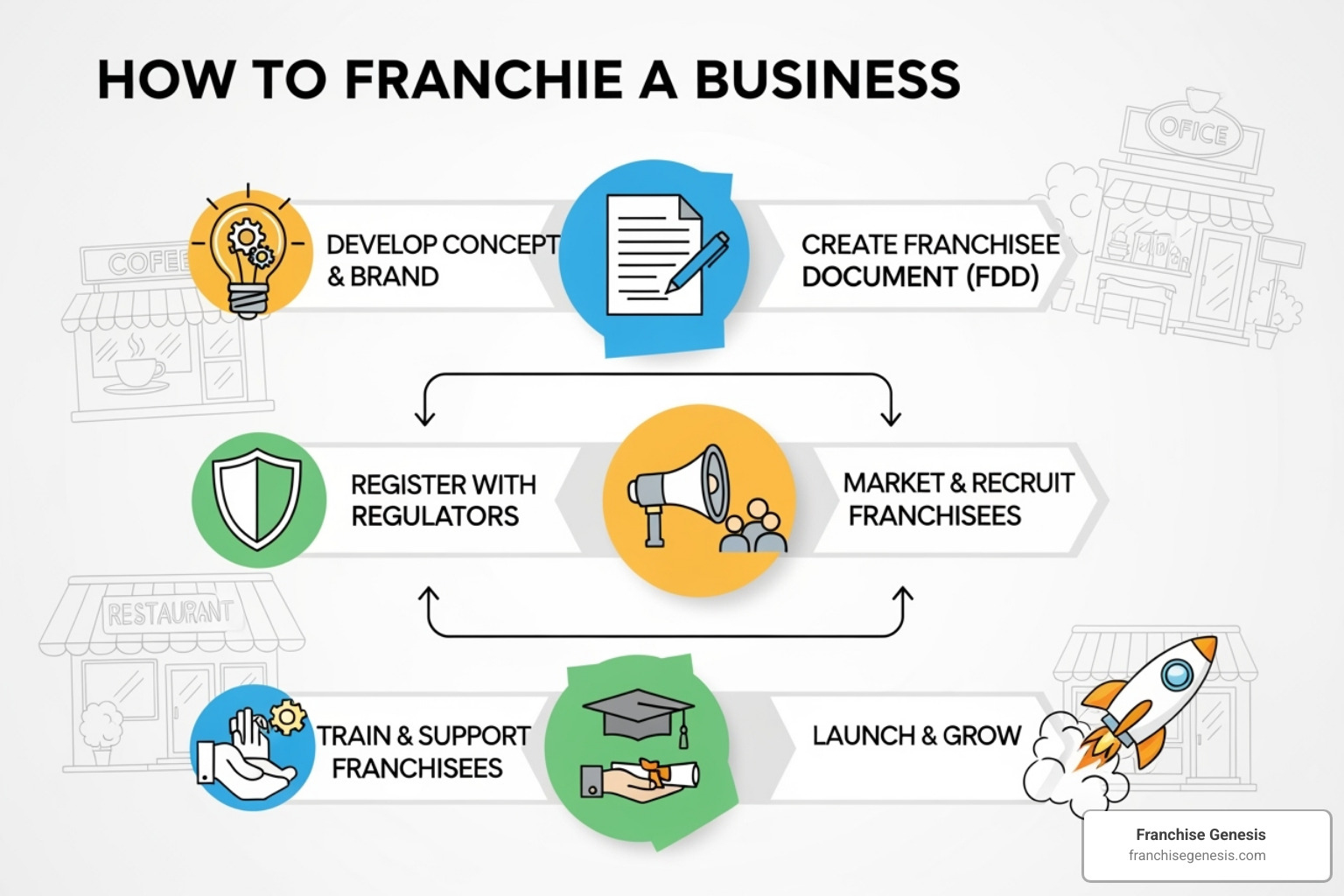
Franchising your company is a structured journey that averages 90 to 120 days from planning to launch. This process ensures your brand’s successful expansion. For a full overview, check out our Franchising A Business Complete Guide.
Step 1: Strategic Planning & Development
This is the blueprint phase. We create a business plan for franchising that outlines your growth objectives, target franchisee profile, and financial projections. We also develop a territory strategy to ensure franchisees have viable markets, map out your support structure, and finalize a competitive fee structure (initial fee, royalties, etc.). This foundational work is where our Franchise Development Services help craft a viable franchise model.
Step 2: Creating Your Legal Documents
With your plan in place, we translate it into legally sound documents. This involves drafting the FDD and the franchise agreement with experienced franchise attorneys to ensure full compliance. We also handle trademark registration to protect your brand. These documents form the legal backbone of your franchise system and may include supporting agreements like an Agreement For Future Purchase Of Franchise for multi-unit developers.
Step 3: Developing Your Operations Manual & Training
Your operations manual is the “bible” that allows franchisees to replicate your success. It’s a detailed guide documenting every procedure, from daily operations to marketing and financial management. This manual is paired with comprehensive training programs to ensure every franchisee can execute your system flawlessly. We help you build these tools to ensure Franchise Training Success. A well-crafted Franchise Operations Manual is the key to maintaining quality and consistency as you scale.
It typically includes:
- Brand standards and history
- Pre-opening and daily procedures
- Product/service guidelines
- Marketing and sales protocols
- Technology and HR policies
- Financial management and reporting
Step 4: Building Your Franchise Marketing & Sales Strategy
Now it’s time to find the right people to join your network. We start by creating a franchisee profile to identify your ideal candidate. Then, we execute a lead generation strategy using franchise portals, digital marketing, and PR to attract qualified prospects. We also design a structured, educational sales process to guide candidates from inquiry to signing. This is supported by professional marketing materials (website, brochures, etc.) that tell your brand story. A strong Franchise Sales Marketing strategy is about building long-term partnerships, not just making sales. Our focus on effective Franchise Lead Generation brings in candidates who are a true fit for your brand.
Building and Supporting Your Franchise Network

Signing your first franchisees is just the beginning. Building a thriving franchise network is an ongoing commitment to their success. Your role is to ensure every franchisee operates in harmony to build a powerful, unified brand. This is the essence of effective Franchise Growth Strategies.
How to franchise your business: The operational framework
Your support structure provides franchisees with the tools to succeed. This starts with onboarding, where you guide new owners through site selection, build-out, and pre-opening marketing. Ongoing field support from consultants helps troubleshoot challenges and ensure brand standards. You’ll also provide marketing assistance for local campaigns, manage the supply chain to leverage buying power, and implement technology systems to streamline operations. This comprehensive approach to Franchise Operations allows franchisees to focus on running their businesses.
Driving Franchise Unit Growth
Supporting existing franchisees and strategically expanding the network go hand-in-hand. Happy, successful franchisees provide powerful validation to prospects. Through performance monitoring and tracking KPIs, you can identify trends and offer targeted support. As you grow, you’ll manage renewal strategies for long-term relationships and encourage multi-unit ownership with your top performers to achieve Accelerated Brand Growth. Finally, your franchise agreement must include clear termination clauses to protect your brand’s integrity if a franchisee fails to meet standards. This commitment to support and quality is what drives sustainable Franchise Unit Growth.
Frequently Asked Questions about Franchising a Business
You’re not alone in your curiosity about franchising. Over the years, I’ve heard the same thoughtful questions from countless business owners standing right where you are now. Let me address the ones that come up most often, with honest answers based on real experience.
How long does it take to franchise a business?
The process to how to franchise business typically takes 90 to 120 days. This timeline covers four key phases:
- Strategic Planning: Assessing feasibility and defining your franchise model.
- Legal Documentation: Drafting your Franchise Disclosure Document (FDD) and franchise agreement.
- Operations Manual Creation: Documenting all your business processes.
- Marketing Setup: Developing your franchisee recruitment strategy and materials.
The key is to do it right, not just fast.
What are the pros and cons of franchising my business?
I’m a big believer in franchising as a growth strategy, but I’d be doing you a disservice if I didn’t paint the complete picture. Let’s talk about both sides honestly.
Pros:
- Rapid Expansion: Grow faster with less capital.
- Lower Capital Investment: Franchisees fund their own locations.
- Motivated Owners: Franchisees are invested in their own success.
- Brand Building: A larger network increases brand visibility.
Cons:
- Loss of Control: You don’t manage day-to-day operations.
- Shared Profits: You receive a royalty instead of all unit profits.
- Support Obligations: You are committed to ongoing training and support.
- Brand Risk: The actions of one franchisee can affect the entire brand.
In my experience, for businesses with the right preparation and systems, the benefits absolutely outweigh the drawbacks.
Can any business be franchised?
I wish I could tell you yes, but the honest answer is no. Not every successful business is franchisable, and that’s perfectly okay. What matters is understanding the specific factors that determine franchisability.
- Profitability: The business model must be consistently profitable with a strong ROI.
- Replicability: The system must be easy for others to learn and replicate successfully.
- Brand Appeal: There must be customer demand for your concept in different markets.
- A Teachable System: Your operations must be documented and teachable to someone without deep industry experience.
Businesses that rely heavily on the owner’s personal relationships, require highly specialized non-transferable skills, or operate on razor-thin profit margins often aren’t good franchise candidates. The businesses that thrive in franchising have these essential ingredients baked in from the start.
Conclusion
You’ve now walked through the roadmap of how to franchise business. From evaluating your concept to building your legal and operational systems and growing a network, each step is crucial.
Franchising is a fundamental shift from running a business to leading a brand. It requires dedication and investment, but the payoff is seeing your vision multiplied across many markets. The businesses that thrive are those that master their systems and commit to making their franchisees successful, understanding that their franchisees’ success is their success.
The journey has its challenges, from legal complexities to finding the right partners. This is why having an experienced guide matters. At Franchise Genesis, we’ve helped countless owners steer this path. We partner with you to build a franchise system designed for sustainable, long-term growth.
Your business has already proven itself. Now imagine that success story unfolding in dozens of locations. That’s the power of franchising done right.
Ready to turn your vision into a national brand? Explore our expert services to franchise your business.