
Why Franchising Could Be Your Path to Exponential Growth
How to start a franchise begins with one question: Is your business model strong enough to replicate? For owners with a proven concept, franchising is a powerful way to expand without the massive capital investment of opening company-owned locations. Here’s what it involves:
Quick Answer: The Core Steps to Start a Franchise
- Assess readiness – Ensure your business has proven profitability, documented systems, and a replicable model.
- Create legal documents – Develop your Franchise Disclosure Document (FDD) and franchise agreement.
- Build operations framework – Document all procedures in a comprehensive operations manual.
- Structure financials – Set franchise fees, royalty rates, and investment requirements.
- Develop training systems – Create programs to support franchisees from launch through operations.
- Market and recruit – Identify and attract qualified franchise candidates.
The franchise industry generates over $2.1 trillion and employs 18 million Americans, reflecting its power as a growth strategy. Success, however, requires careful planning.
The franchisor (you) provides the brand, systems, and support. The franchisee invests capital, operates the location, and pays ongoing fees. This creates a win-win: you expand rapidly without shouldering all the financial risk, while franchisees get a proven business model with built-in support.
I’m Monique Pelle Kunkle, VP of Operations at Franchise Genesis. I’ve helped dozens of business owners learn how to start a franchise successfully, including scaling one concept to over 100 locations in its first year. My role is to turn established businesses into scalable franchise systems.
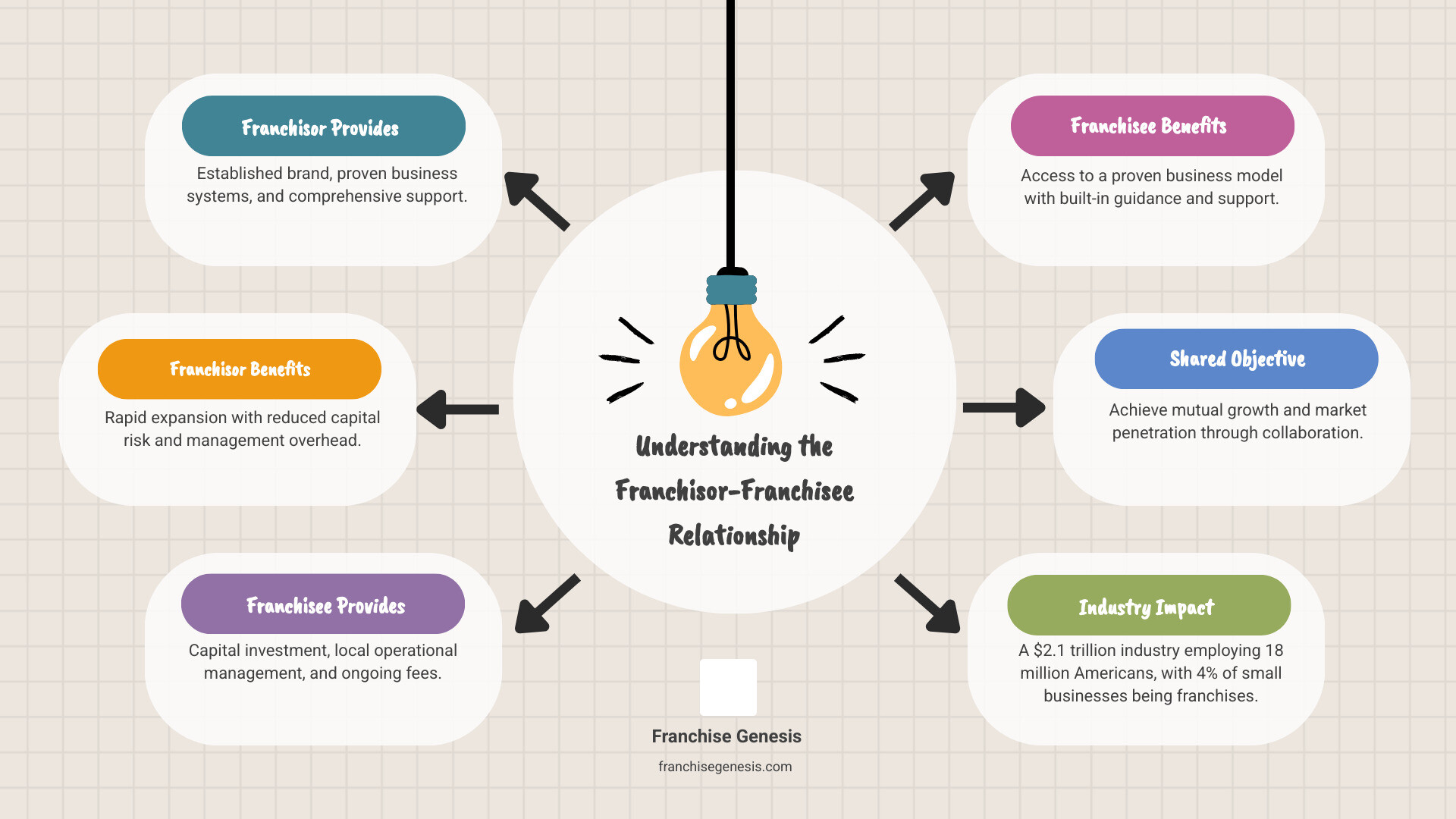
How to start a franchise basics:
Is Your Business Ready for Franchising?
Before diving into how to start a franchise, you must assess if your business is ready. Not every successful business can be franchised. The key is moving from a great local business to a system that anyone can follow to replicate your success.

Your business needs profitability, brand strength, replicable systems, and market demand beyond your current location. This is scalability, and it’s critical. A Franchise Feasibility Study can objectively determine if your concept can support multiple locations under different owners.
If your business relies heavily on your personal touch, it may need structural changes. What is Franchising? is about creating a system that delivers consistent results without you being there.
The Hallmarks of a “Franchise-able” Business
We evaluate businesses for franchise potential based on six key characteristics:
- Strong Brand Identity: More than a logo, it’s the entire customer experience and story.
- Documented Processes: Every procedure must be written down to become the operations manual that franchisees will follow.
- Consistent Profitability: A proven track record of reliable returns is necessary to attract franchisees.
- Unique Selling Proposition (USP): This is your competitive advantage that sets you apart in the market.
- Leadership Team: You need a team ready to support franchisees in operations, training, and marketing.
- Capital for Expansion: While franchisees fund their locations, you need capital to build the franchise system, create legal documents, and market the opportunity.
Why Franchise Instead of Corporate Expansion?
Why not just open more corporate locations? Franchising offers distinct advantages for rapid growth.
With corporate expansion, you shoulder all the financial risk and capital investment, which limits growth speed. In franchising, franchisees provide the capital, allowing for faster expansion.
Franchisees are owner-operators who have invested their own savings. Their motivation and commitment often exceed that of a hired manager. They bring passion and local market knowledge.
Franchising is also more efficient from a management overhead perspective. You provide systems and support while franchisees handle daily operations, letting you focus on strategic growth.
Corporate expansion offers more control but requires massive capital and slows growth. Franchising distributes risk, accelerates expansion, and leverages the energy of motivated entrepreneurs. Our Franchise Business Model Complete Guide explores these differences in more detail.
The Step-by-Step Guide on How to Start a Franchise
Let’s get practical about how to start a franchise. This is a significant undertaking, but breaking it down into phases makes the path clear. The process involves strategic planning, legal documentation, operations development, and a marketing strategy.
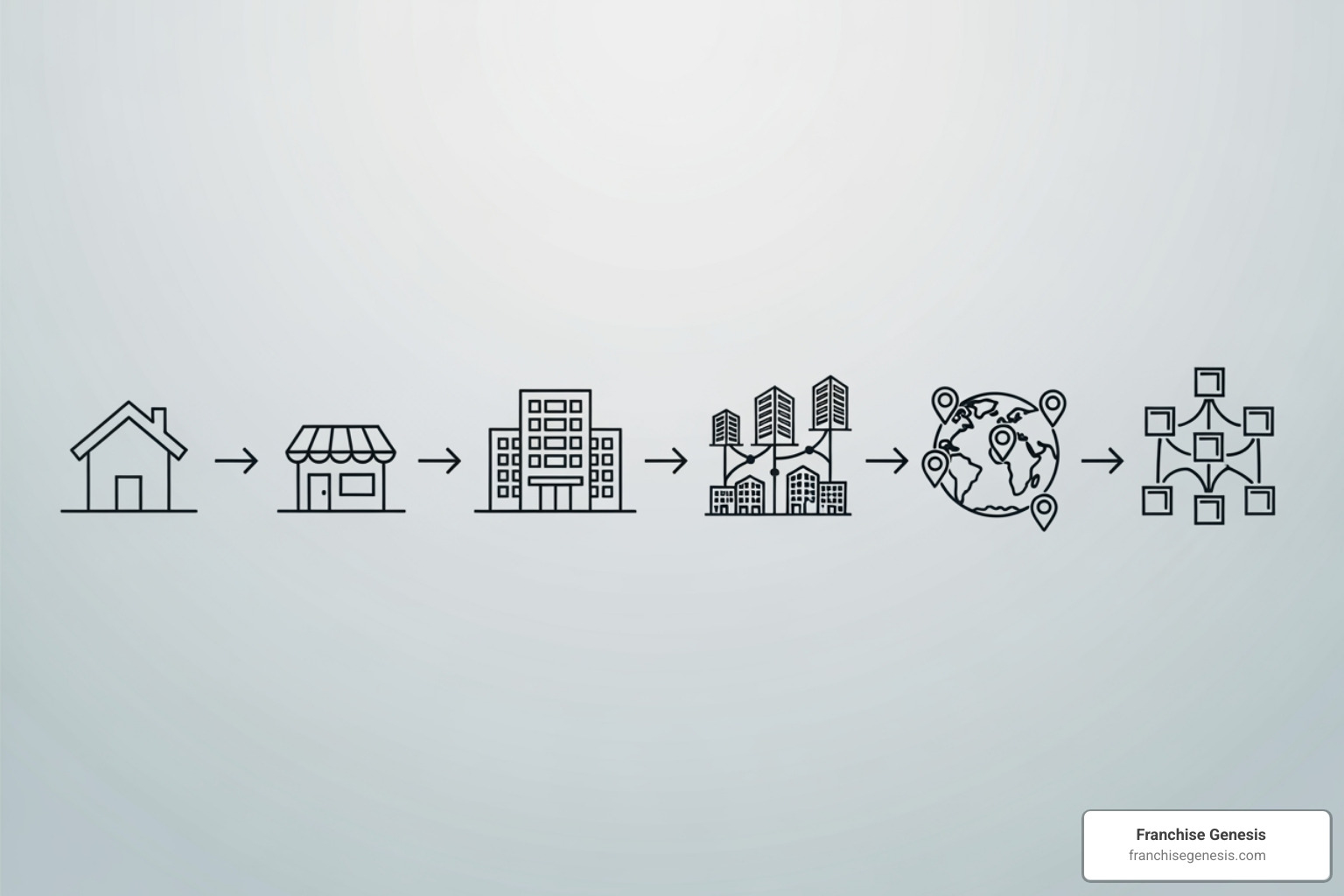
The journey unfolds over several months, starting with your franchise strategy and moving to legal documents, operational frameworks, and support systems. Our Franchise Development Complete Guide and Guide to Franchising cover this in depth, but here are the essentials.
Key Legal Steps in How to Start a Franchise
The legal side of franchising is strict and detailed. Getting this wrong can lead to costly challenges.
- Franchise Disclosure Document (FDD): This is a legally mandated disclosure with 23 specific sections covering your company history, costs, and obligations. You must provide the FDD Document to prospects at least 14 days before they sign or pay anything.
- Franchise Agreement: This is the binding contract that governs your relationship with each franchisee, detailing the terms, fees, support, and territory.
- Trademark Registration: Federal trademark registration is non-negotiable. It protects your brand name and logo, which are your most valuable assets.
- Business Entity Formation: Many franchisors create a separate legal entity for their franchising operations to provide liability protection and operational clarity.
- State Registration Laws: Beyond federal rules, many states have their own registration or filing requirements. Our guides on Franchise Legal Requirements and Franchise Registration States can help. Also review A Consumer’s Guide to Buying a Franchise to understand the franchisee’s perspective.
Building Your Franchise Operations Playbook
Your operations manual turns your successful practices into a teachable business model. This is the recipe book for your franchisees.
- Documenting Procedures: Break down every aspect of your operation into clear, step-by-step instructions, from opening to closing.
- Creating Training Materials: Use the documented procedures to build effective training materials, including checklists and visual aids.
- Supply Chain Management: Specify approved vendors, ordering procedures, and quality standards to ensure consistency across all locations.
- Quality Control Standards: Detail how franchisees will maintain brand standards, what metrics to track, and how you’ll monitor compliance.
A comprehensive Franchise Operations Manual is the backbone of your system and answers the question, How Does a Franchise Work?.
Developing Your Franchisee Training and Support System
Your success as a franchisor is directly tied to your franchisees’ success. Robust training and support are the foundation of your system.
- Initial Training Program: A one- to three-week program blending classroom learning with hands-on practice to cover operations, marketing, and management.
- Ongoing Support: Regular check-ins, availability for problem-solving, and sharing best practices across the network.
- Field Support: In-person visits from consultants for personalized coaching, operational assessments, and real-time problem-solving.
- Marketing Assistance: Provide professionally designed materials, proven strategies, and guidance on system-wide and local campaigns.
- Technology Platforms: Implement POS systems, CRM software, and other tools to streamline operations and provide valuable data.
Investing in training and support builds a stronger, more resilient franchise system for everyone.
The Financials of Franchising Your Business
One of the most attractive aspects of how to start a franchise is that franchisees bring capital to the table, funding expansion. However, structuring the financial model requires careful planning to create a fee structure that is attractive to candidates, sustainable for you as the franchisor, and profitable for franchisees.

This section explores the fees and financial requirements of your franchise offering. Our guides on Franchise Startup Costs and The Cost to Start a Franchise and Financing Options offer more perspective on franchisee investments.
How to Structure Your Franchise Fees and Royalties
The financial structure funds your ability to support franchisees and grow the brand. There are three main components:
- Initial Franchise Fee: This is the upfront payment a franchisee makes to join your system. It typically covers your costs for training, site selection guidance, and access to your operations manual and brand.
- Ongoing Royalty Percentages: These are regular payments, usually a percentage of gross sales, that franchisees pay for the continued right to operate under your brand. This revenue stream funds your ongoing support, R&D, and administrative costs.
- Brand Development or Advertising Fund: Many systems require franchisees to contribute to a collective marketing fund. This allows for larger, more professional campaigns that benefit the entire network.
Our Franchise Fee Complete Guide digs deeper into structuring these fees effectively.
Financial Planning for How to Start a Franchise
Becoming a franchisor also requires a significant upfront investment from you to build the support infrastructure. A typical project to franchise a business can range from $25,000 to over $100,000.
Your budget must account for:
- Legal Costs: Your largest initial expense will be creating a compliant FDD and Franchise Agreement.
- FDD Development: This includes compiling, printing, and state filing fees.
- Franchise Marketing: You’ll need a budget for a recruitment website, marketing collateral, and advertising to attract qualified candidates.
- Initial Support Staff: You’ll need dedicated people for recruitment, training, and support.
- Technology and Infrastructure: This includes software for franchisee management, communication, and performance tracking.
Understanding Franchise Capital Solutions can help ensure you have the resources to launch a professional franchise program.
Marketing Your Franchise and Recruiting the Right Franchisees
Once your system is built, the next challenge is finding the right people to join your network. This is about building a community of entrepreneurs who will be ambassadors for your brand. Our approach to Franchise Sales Marketing and Franchisee Recruitment Consulting is strategic and intentional.
First, we create your ideal franchisee profile. Beyond financial capacity, we define the skills, leadership abilities, and cultural alignment that make a perfect partner. This profile guides all recruitment decisions.
With this profile, we generate qualified leads through digital marketing, franchise portals, and professional network referrals. The goal is to reach aspiring entrepreneurs actively searching for opportunities.
The franchise sales process is a consultative, relationship-driven cycle:
- Initial Qualification: A conversation to understand a candidate’s background, goals, and financial capacity.
- FDD Review: If they are a potential fit, we provide the FDD for their 14-day review period.
- “Findy Day”: Serious candidates visit your headquarters (perhaps in Huntersville, NC) to meet the team, see operations, and experience the company culture. This is a two-way evaluation.
- Validation Calls: We encourage candidates to speak with existing franchisees to get a real-world perspective. This builds trust and credibility.
- Awarding the Franchise: When both parties are confident, the franchise is awarded. Legal documents are signed, fees are paid, and the new franchisee begins their journey.
Getting recruitment right is critical when learning how to start a franchise. Your franchisees are the face of your brand, and their success directly impacts your entire system. We focus on finding partners who embody your brand’s values and vision.
Frequently Asked Questions about Franchising a Business
As you consider how to start a franchise, several common questions are likely to arise. Let’s address the most frequent concerns business owners have.
How much does it cost to franchise my business?
The investment to franchise your business typically ranges from $25,000 to over $100,000, depending on your concept’s complexity. This is an investment in building a system that attracts quality franchisees and supports sustainable growth.
Key costs include:
- Legal Fees: Developing your Franchise Disclosure Document (FDD) and Franchise Agreement is the largest and most critical expense.
- Consulting Fees: Expert guidance for feasibility analysis, operations manual development, and recruitment strategy.
- Marketing Materials: Professional brochures, a recruitment website, and other collateral to attract candidates.
- Training Program Setup: Developing the curriculum and systems to train new franchisees.
- Trademark Registration: Federally protecting your brand name and logo.
How long does it take to franchise a business?
Typically, the process to start a franchise takes about 4 to 6 months to become market-ready. This timeline assumes you’re working with experienced consultants and have strong operational systems in place.
The most time-intensive phases are creating the FDD and developing the operations manual. Simultaneously, we build your marketing plan and handle any required state registrations. For example, in franchise filing states like North Carolina, we must file notice with regulators before offering franchises. This 4-6 month timeline prioritizes building a quality system over speed, preventing costly mistakes.
What are my legal obligations as a franchisor?
As a franchisor, you have significant legal responsibilities designed to protect your franchisees and your brand. Your primary obligations are:
- Provide the FDD: You must give the FDD to every prospective franchisee at least 14 days before they sign an agreement or pay any money. The FDD must be accurate and updated annually.
- Comply with Franchise Laws: You must adhere to the Federal Trade Commission’s (FTC) Franchise Rule and any additional state-specific laws. We help you steer these requirements.
- Fulfill Your Promises: You must deliver on every commitment made in your Franchise Agreement, including training, support, and marketing assistance. Honoring these promises builds a system based on trust and mutual success.
For more on federal requirements, learn about the FTC’s Franchise Rule.
Conclusion
We’ve covered the essential steps of how to start a franchise, from assessing your business readiness to building the legal, operational, and financial frameworks. The potential for growth is extraordinary, allowing you to create a network of passionate entrepreneurs who believe in your vision.
This journey, however, demands a solid foundation. Your legal documents must be airtight, your operations perfectly documented, your financials fair, and your support systems robust. This is where expert guidance makes all the difference.
At Franchise Genesis, we are partners committed to building a franchise system that is legally sound, operationally excellent, and attractive to the right franchisees. We’ve walked this path with dozens of business owners, understanding both the potential and the complexities.
If you’re ready to turn your successful business into a thriving franchise system, we’re here to help you lay the foundation and steer the process. Let’s turn your proven concept into a national success story.
For a comprehensive dive into this venture, explore our Franchise Your Business Complete Guide. Let’s build something amazing together.