Why Franchise Industry Insights Matter for Your Business
To open up your brand’s potential and explore new expansion avenues, understanding franchise industry insights is essential. The franchise sector is a powerhouse that consistently outpaces the broader U.S. economy, offering a proven path for accelerated brand growth. For business owners considering expansion, these insights reveal key opportunities and how to capitalize on them.
Here’s a quick look at the projected growth for the franchise industry in 2025:
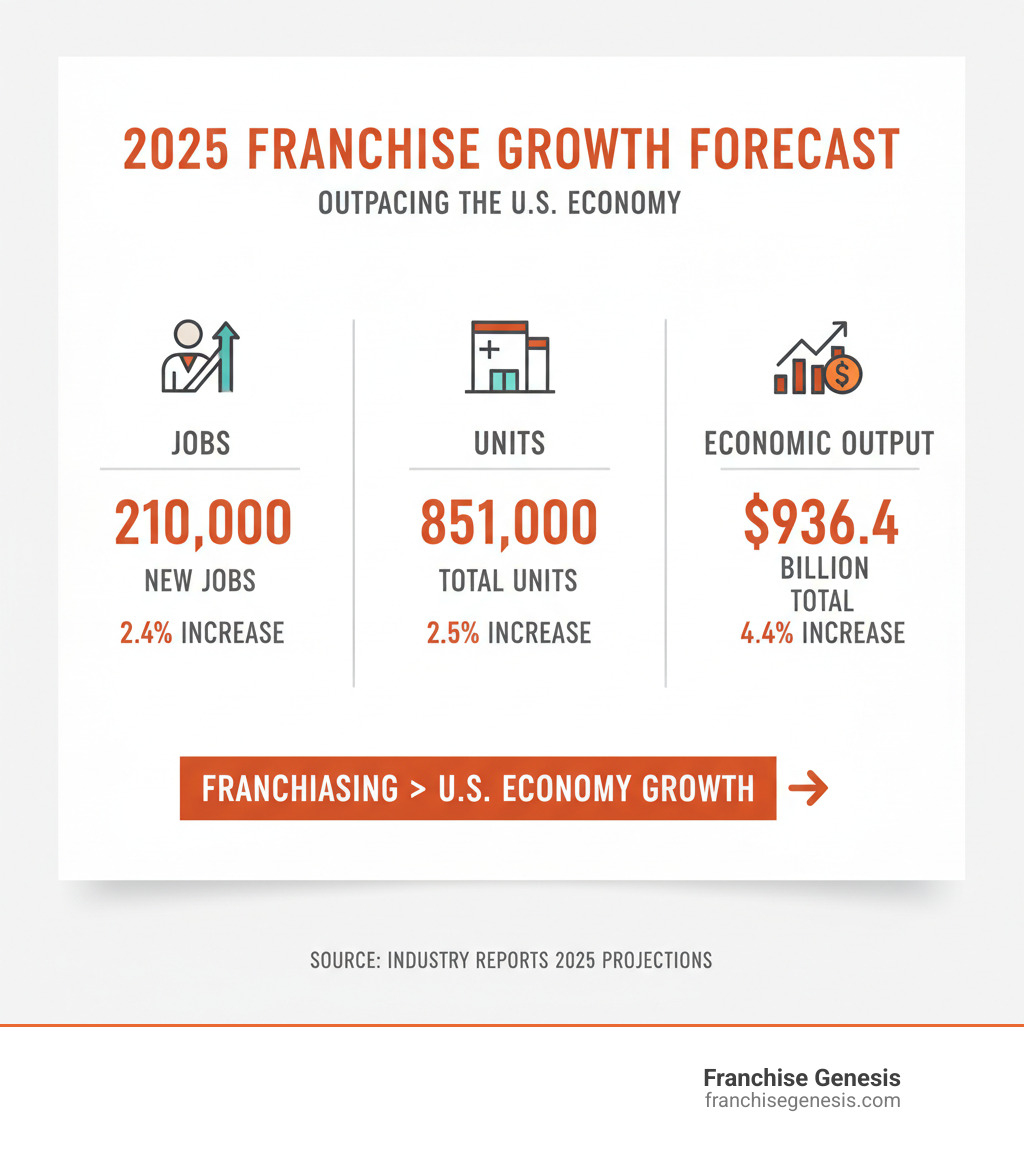
- Economic Output: Expected to exceed $936.4 billion, growing by 4.4%.
- Establishments: An increase of over 20,000 units (2.5%), reaching 851,000 total units.
- Job Creation: Approximately 210,000 new jobs, a 2.4% growth, bringing total employment to over 9 million.
- GDP Contribution: Set to grow by 5% to $578 billion.
I’m Monique Pelle Kunkle, VP of Operations at Franchise Genesis. I use deep franchise industry insights to lead development and scaling strategy, guiding business owners through successful expansion from initial concept to sustainable growth.
The 2025 Economic Outlook: Why Franchising is a Premier Growth Strategy
The 2025 economic outlook for franchising is incredibly bright, making it a prime time for business owners to consider turning a successful venture into a thriving franchise system.
The franchise sector is a powerhouse, with total output projected to exceed $936.4 billion in 2025 (a 4.4% growth). Franchise GDP is set to climb 5% to $578 billion. This growth translates to approximately 210,000 new jobs, bringing total franchising employment to over 9 million, and over 20,000 new franchise establishments, for a total of 851,000 units.
These franchise industry insights are compelling because franchising is forecast to outpace the broader U.S. economy, which is projected to grow by 1.9% in 2025. This robust performance highlights franchising as a top-tier strategy for businesses eager to expand. For a deeper dive, you can view the full 2025 Franchising Economic Outlook. These numbers signal an exceptional moment to explore how to franchise your business.
Capitalizing on Top-Performing Industries
Understanding market activity is crucial when planning to franchise. The latest franchise industry insights for 2025 point to several thriving sectors, driven by shifting consumer habits.
Personal Services are expected to see robust growth of 4.3% in 2025, while Retail Food, Products, and Services are projected to increase by 3.5%. Other high-performing areas include Home Services and Health & Wellness.
Why these sectors are booming:
- Personal Services: High demand for convenience and specialized help—from personal care to fitness—as consumers outsource tasks to save time.
- Retail Food, Products, and Services: Fueled by the demand for engaging retail experiences and healthier, customizable food options with convenient delivery or pickup.
- Home Services: Increased time at home has boosted the need for reliable home repair, maintenance, and improvement services, from cleaning to landscaping.
- Health & Wellness: A post-pandemic focus on health has led to explosive growth in fitness, healthy food, mental health support, and holistic wellness services.
If your business is in one of these categories, you’re well-positioned. If not, these insights can help you identify related services to integrate into your franchise model, increasing its appeal. Aligning your business model with strong consumer demand is key to attracting great franchisees and ensuring sustainable growth. There are franchise opportunities in all industries.
Integrating Technology for a Scalable System
Technology is the backbone of modern franchising. To turn your business into a franchise, you must build a scalable system that leverages the latest tools.

Technology, including AI, is reshaping franchise operations and customer experience:
- Streamlining Operations: Centralized digital platforms for inventory, CRM, and performance tracking are essential for ensuring consistency across all locations.
- AI-Driven Marketing: AI-powered chatbots can handle initial customer inquiries, while algorithms can personalize marketing campaigns for each franchisee’s local market, boosting engagement and sales.
- Improved Training and Support: Virtual training modules and augmented reality can make franchisee onboarding more efficient and engaging. A robust franchise operations manual becomes a dynamic, interactive guide in this context.
By integrating these technologies, you create a more efficient system for franchisees and make your franchise offering more attractive to potential partners. Technology becomes a key selling point, showcasing your commitment to innovation and a future-proof system designed for success.
The Rise of Flexible and Niche Franchise Models
One of the most exciting franchise industry insights is the emergence of flexible and niche franchise models that are changing how businesses grow.
Micro-franchising, mobile franchising, and home-based models are gaining traction. With rising real estate costs, these lower-investment models appeal to a new generation of entrepreneurs seeking flexible, scalable options with lower startup costs and overhead. Home-based models, in particular, allow franchisees to operate with minimal overhead and a better work-life balance. This flexibility makes your franchise offering more accessible to a wider pool of talent.
Beyond flexibility, sustainability and ethical practices are now essential. Younger entrepreneurs and consumers are drawn to brands that demonstrate environmental responsibility and social impact. Weaving green technologies, ethical sourcing, and community engagement into your business model is a powerful way to stand out, attracting both customers and high-quality franchisees who share these values.
By embracing these trends, you can adapt your business into an attractive small business franchise that resonates with today’s entrepreneurial spirit.
Architecting Your Franchise: Core Franchise Industry Insights for New Franchisors

Turning a successful business into a franchise network requires a deep understanding of the franchise industry insights that define thriving systems. It means shifting from running one location to architecting a blueprint that empowers others to replicate your success under your brand. This section provides the core insights needed for that transition.
Understanding Today’s Evolving Franchisee Profile
The face of franchising is changing. Today’s franchise landscape is diverse, and understanding this shift is essential for attracting the right partners.
- Younger entrepreneurs are entering franchising in record numbers. Millennial franchise ownership has increased 2.6 times since 2022. They seek autonomy and work-life balance but also value a proven model with structure, support, and technology.
- Women, minorities, and diverse entrepreneurs are reshaping the franchise world. Female franchise ownership is up 25% over the past year. Black or African-American franchisee ownership has doubled, while Asian or Asian-American ownership grew by 86%.
These diverse groups are seeking fulfillment, legacy, and community contribution. They want to align with brands that share their values. For franchisors, this means your recruitment message must speak to these varied motivations. Highlight your comprehensive support, model flexibility, and commitment to values that matter to modern entrepreneurs. Understanding what drives today’s franchisees helps you transform leads into loyal franchisees with a proven sales strategy.
Structuring Your Fees and Financials for Success
Getting your fee structure right is critical for attracting qualified franchisees while ensuring your system remains profitable. As a franchisor, your primary revenue streams are initial franchise fees and ongoing royalty fees.
Recent franchise industry insights show that over the past five years, franchise fees increased by an average of 9.5%, while royalty fees rose by about 3.2%. This reflects the growing value franchisors provide through technology, marketing, and support. One key insight is that brands with very low initial investments (under $25,000) often experience higher failure rates, as these franchisees may lack sufficient capitalization or business experience.
Your initial investment level should be substantial enough to attract serious, prepared franchisees but not so high that it excludes qualified candidates. Fee structures often vary by business type:
| Franchise Model | Typical Initial Investment | Initial Franchise Fee | Ongoing Royalty Fee |
|---|---|---|---|
| Service-Based | $50,000 – $150,000 | $25,000 – $50,000 | 6% – 10% of gross revenue |
| Brick-and-Mortar | $150,000 – $500,000+ | $40,000 – $80,000 | 5% – 8% of gross revenue |
Beyond these, consider marketing fund contributions (typically 1-4% of gross revenue) and transparent technology fees for centralized software and IT support. Understanding your franchise startup costs from both the franchisor’s and franchisee’s perspective is the foundation of a sustainable financial model.
Building a World-Class Franchisee Support System
A franchisor’s success is tied directly to the success of its franchisees. A world-class support system is the key differentiator for thriving franchise networks. Franchise industry insights are clear: robust, ongoing support is the number one factor in franchisee satisfaction.
World-class support includes:
- Comprehensive Training: Go beyond initial onboarding with ongoing training on operational best practices, customer service, local marketing, and financial management. Ensuring franchise training success is an investment in your network’s competence.
- Marketing Support: Provide professional marketing materials, digital tools, and social media templates that franchisees can localize. This combines national brand-building with grassroots marketing that drives local sales.
- Technology Platforms: A centralized system for communication, data sharing, and performance tracking keeps the network connected. Integrating your franchise operations manual with digital platforms makes it a dynamic, accessible resource.
- Fostering Community: Facilitate connections through mentorship programs, regional meetings, and online forums. A strong internal culture where franchisees support each other attracts higher-quality candidates and reduces turnover.
By committing to this level of support, you build a resilient, thriving network that strengthens your brand’s reputation and market position. Their success becomes your success, multiplied across every location.
Strategic Growth: Geographic Targeting and Business Model Choices
Franchising your business involves strategic choices about where and how to expand. These decisions are critical to your franchise system’s success, and franchise industry insights can guide you toward smart growth.
Pinpointing High-Growth Regions for Expansion
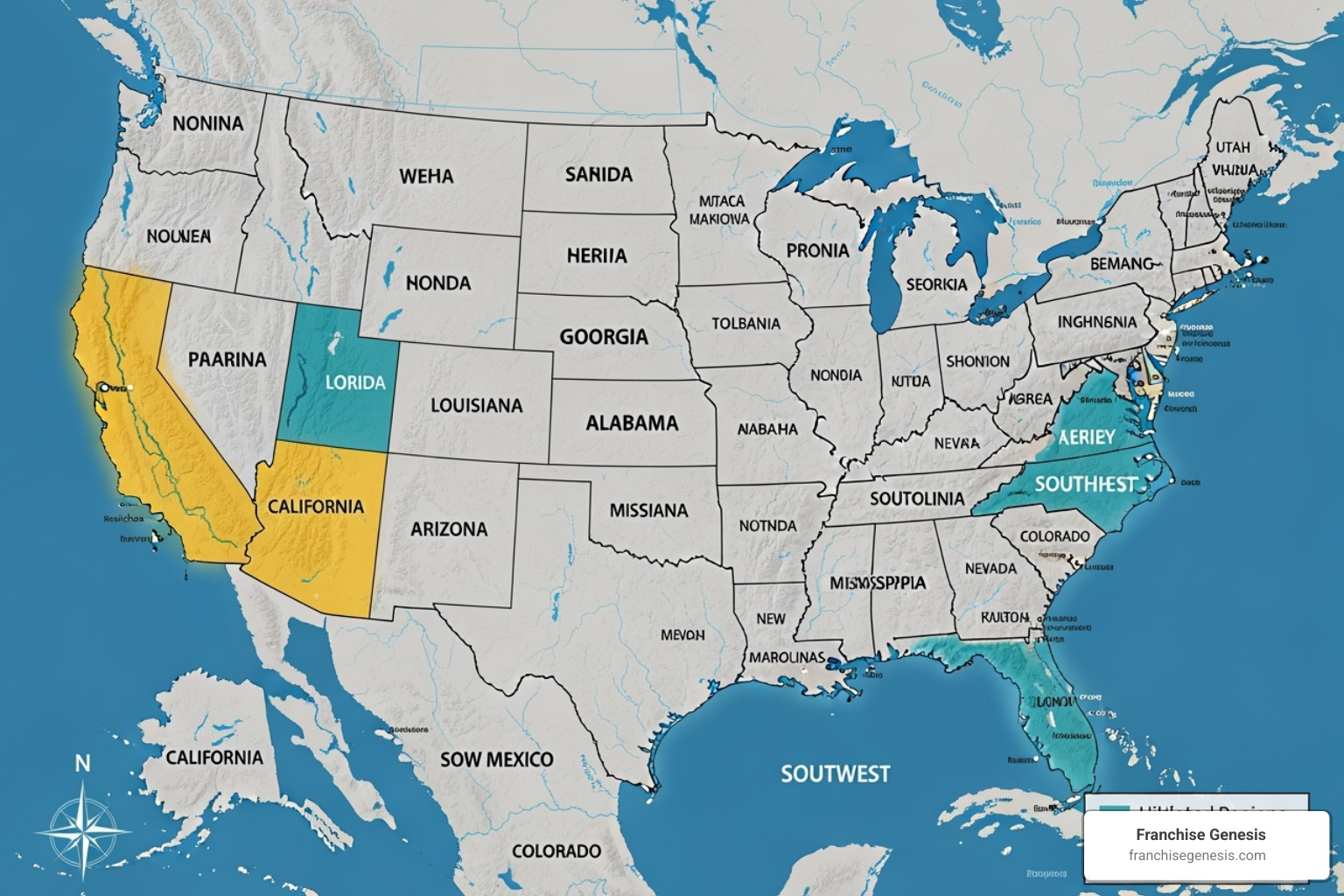
Not all markets offer the same opportunity. For 2025, franchise industry insights show the Southeast and Southwest are ready for the most significant growth, with projected franchise output growing by 6.2% and 8.5% respectively—well above the national average.
This growth is driven by business-friendly policies, favorable tax structures, and major population shifts. The top 10 fastest-growing states for franchising in 2025 are projected to be Georgia, North Carolina, Virginia, Arizona, South Carolina, Pennsylvania, Tennessee, Florida, Colorado, and Maryland. Targeting these states can give new franchise units the best chance to succeed.
However, simply picking a state isn’t enough. Each market has unique demographics and competition. Conducting a thorough franchise feasibility study for specific territories is essential to identify the cities and neighborhoods most receptive to your brand.
Franchising vs. Corporate Expansion: Making the Right Choice
As you plan for expansion, you face a key choice: open company-owned locations or franchise. For most businesses seeking rapid growth and national brand reach, franchising is the superior choice.
Here’s a breakdown of the pros and cons:
Pros of Franchising:
- Rapid Growth with Less Capital: Franchisees fund their own locations, allowing for faster expansion without draining corporate reserves.
- Motivated Local Owners: As owners, franchisees are personally invested in their unit’s success, leading to better operations and customer service.
- Reduced Management Overhead: Franchisees handle daily operations, allowing the corporate team to focus on brand growth and support.
- Local Market Expertise: Franchisees bring valuable knowledge of their local communities, customers, and competition.
Cons of Franchising:
- Less Direct Control: Franchisors influence operations through systems and support rather than direct day-to-day management.
- Profit Sharing: Revenue is shared with franchisees through the royalty structure.
For most businesses ready to expand, the benefits of franchising—speed, reduced capital needs, and motivated local ownership—far outweigh the trade-offs. The key is building the right foundation with solid systems, comprehensive training, and a clear value proposition to attract quality franchisees.
Frequently Asked Questions about Franchising Your Business
As business owners explore franchising, several key questions consistently arise. Here are answers to the most common concerns, based on franchise industry insights and our experience.
What are the first steps to franchising my business?
The journey begins with an honest assessment of your business’s readiness. The first steps are:
- Confirm Franchiseability: Evaluate your business for consistent profitability, a replicable system that others can follow, and a strong brand identity.
- Develop Legal Documents: Work with a franchise attorney to create your Franchise Disclosure Document (FDD), a legally required document outlining your franchise opportunity.
- Build Operational Infrastructure: Create detailed training programs, standardized operations manuals, and the support systems your future franchisees will need to succeed.
A franchise consulting complete guide can provide a detailed roadmap for navigating these complexities.
How much does it cost to turn my business into a franchise?
The investment to franchise your business typically ranges from $25,000 to over $100,000, depending on your business’s complexity. Key expenses include:
- Legal Fees: For drafting the FDD and franchise agreement.
- Operations Manual Development: To document every aspect of your business operations.
- Marketing Materials: To attract qualified franchisee candidates.
- Consulting Fees: For expert guidance through the process.
Understanding the franchising consulting cost guide is essential for realistic budgeting. While a significant investment, it positions you for exponential growth.
What makes a business a good candidate for franchising?
Not every successful business is a good fit for franchising. The best candidates share these key characteristics:
- A Proven and Profitable Model: You must understand the specific systems that drive your success and be able to teach them.
- A Unique Brand Identity: Your business needs a clear differentiator that makes it stand out to both customers and potential franchisees.
- Teachable and Replicable Operations: Your processes must be documented and easy for others to learn and execute consistently.
- A Market with Sufficient Demand: There must be room for multiple locations to thrive without cannibalizing each other’s business.
If these traits describe your business, you may be an excellent candidate. Learn more about how to make your business a franchise to see if your concept has what it takes.
Conclusion: Turning Insight into Action
We’ve explored the essential franchise industry insights shaping the market for 2025 and beyond. The franchise industry is a dynamic powerhouse, offering a proven path for business expansion. The key takeaway is that successful franchisors must be strategic—leveraging industry trends, building robust franchisee support systems, and making smart growth decisions.
The journey from a single successful business to a thriving national brand is complex, but you don’t have to steer it alone. Partnering with an expert like Franchise Genesis can de-risk and accelerate your expansion, providing the guidance and strategic frameworks needed to turn your vision into reality.
Ready to take the next step? To begin your expansion journey and open up your business’s full potential, we invite you to explore our comprehensive services for franchisors and franchisees. Let’s build your franchise empire together.